The Arabian heartland, opening to travellers for the first time. Long closed to leisure travel, Saudi Arabia now welcomes tourists with an e-visa and an ambitious Vision 2030 makeover. Expect ancient Nabataean tombs, dramatic desert escarpments, Red Sea reefs and fast-modernising cities — a frontier destination for the genuinely curious.
Egypt is one of the driest, sunniest countries on earth. Expect hot summers, mild winters and rain so rare it makes the news — but conditions shift by region.
Hot, dry summers and mild, sunny winters. Rain is rare — pack for sun and cool evenings from December to February.
Warm and bright all year with sea temperatures of 22–28°C. Prime diving visibility in spring and autumn.
Extreme daytime heat in summer but crisp, cold nights in winter. Best explored October to March.
June–September brings intense desert heat, often above 45°C inland. Outdoor sightseeing is tough; the Red Sea coast stays warm and good for diving. This period also coincides with the Hajj pilgrimage.
November–March is the season to travel: mild 18–25°C days, cool evenings, and festival season in Riyadh and AlUla. The best window for desert and heritage sites.
From Nabataean tombs to Red Sea reefs — the places worth building a trip around.
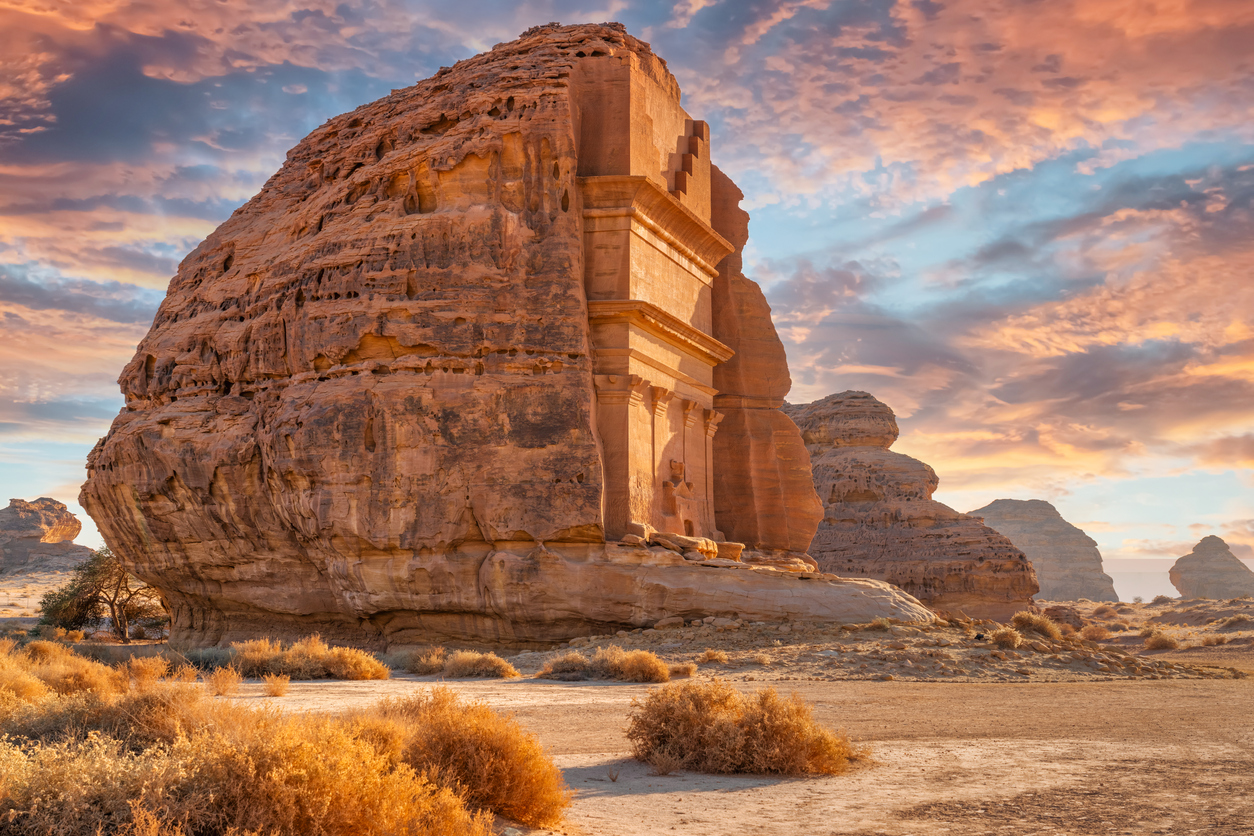 AlUla
AlUla
Saudi Arabia's first UNESCO World Heritage Site — over a hundred monumental Nabataean tombs carved into desert rock, a quieter cousin of Petra.
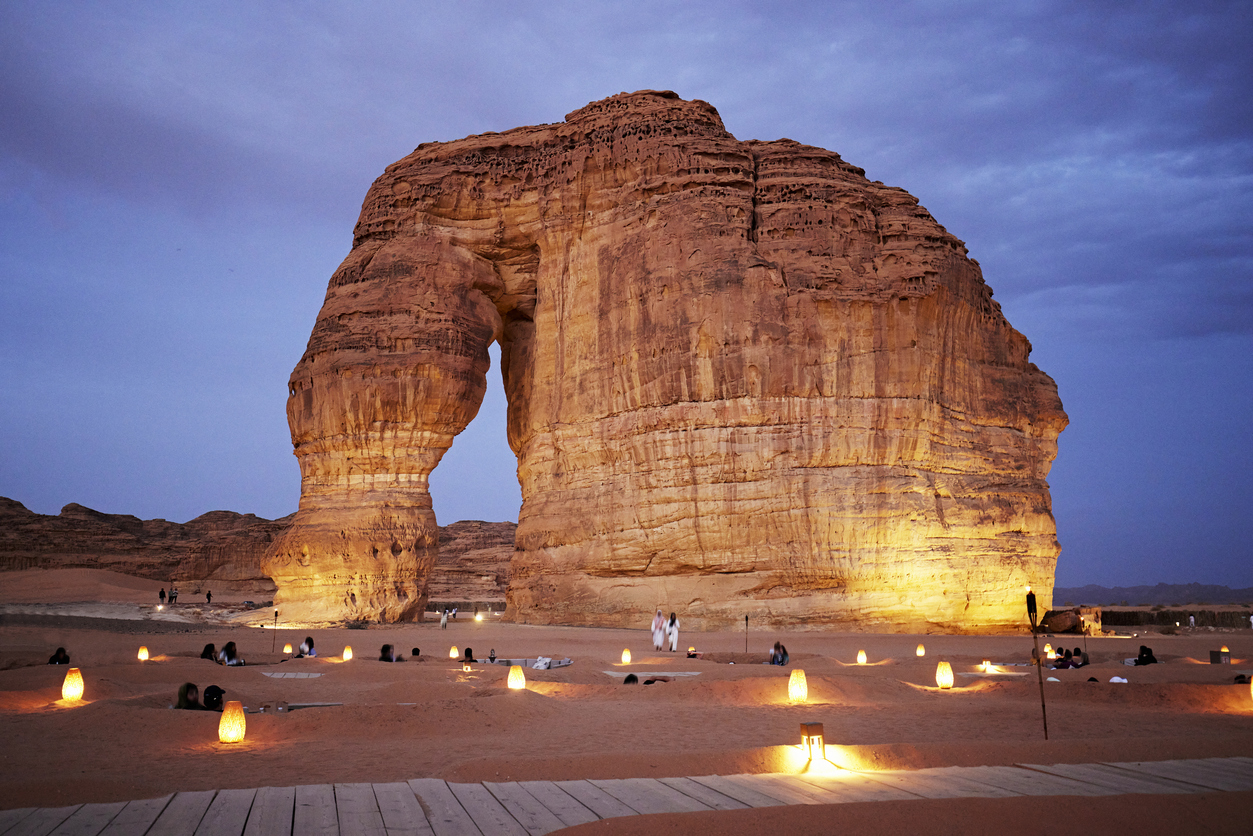 Elephant Rock
A honeycomb of mud-brick houses beneath a sandstone citadel, with surreal wind-carved rock formations nearby.
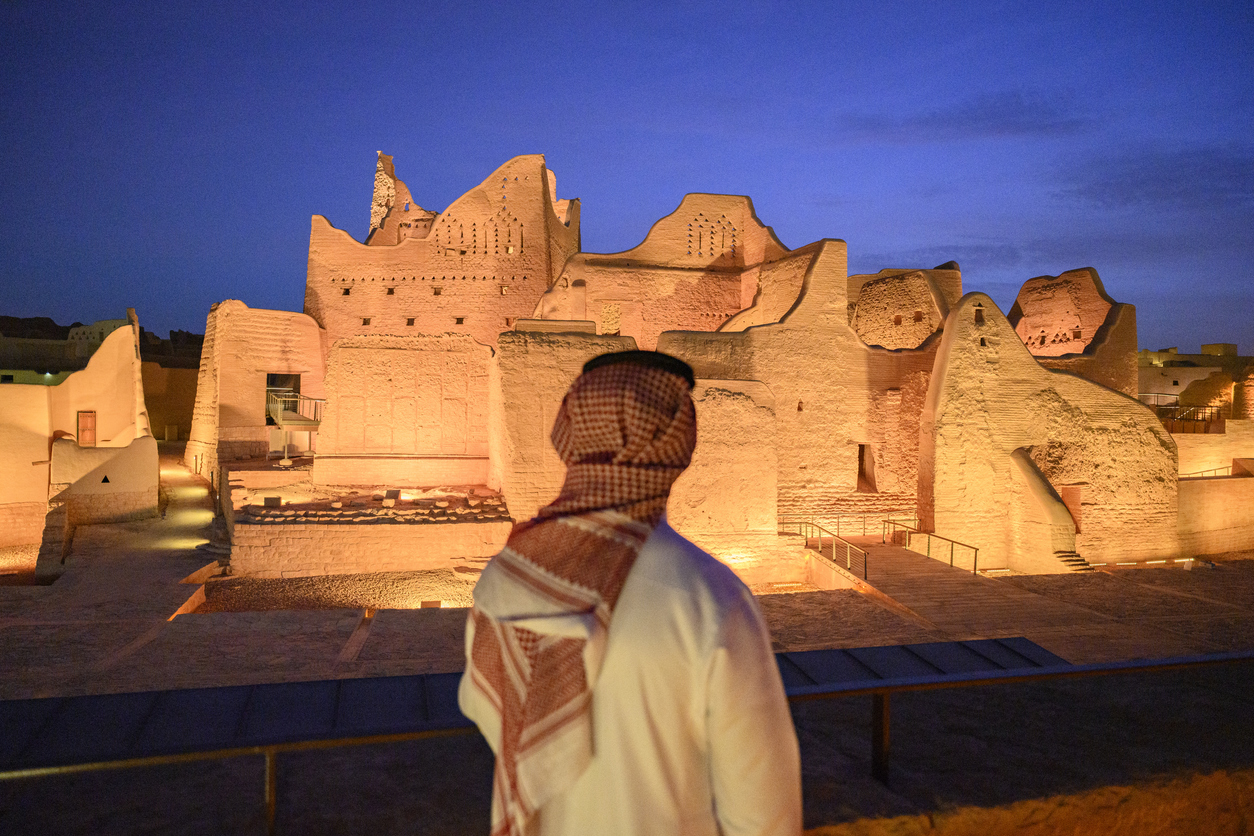 Diriyah
The mud-brick birthplace of the first Saudi state, restored as a UNESCO-listed heritage district of alleys and palaces.
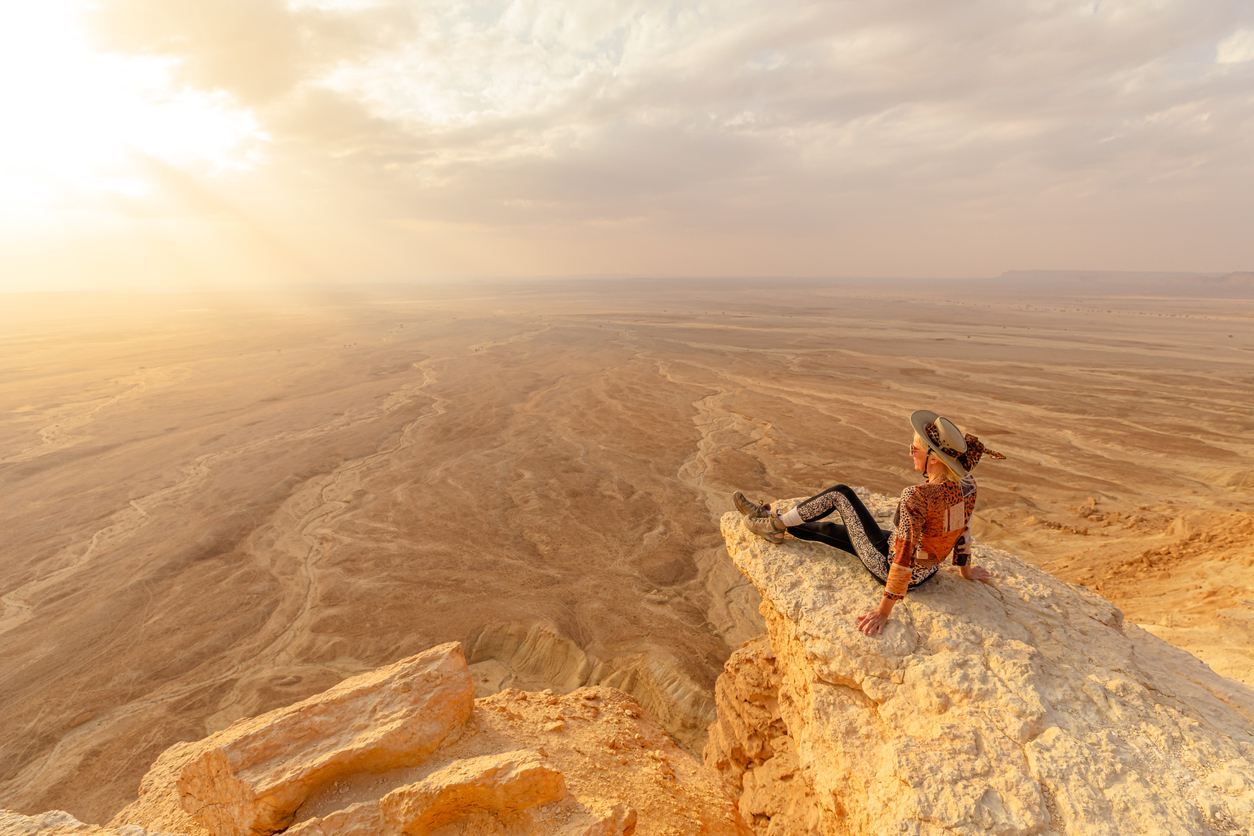 Jebel Fihrayn
A dramatic cliff in the Tuwaiq escarpment near Riyadh, where the desert simply drops away to the horizon.
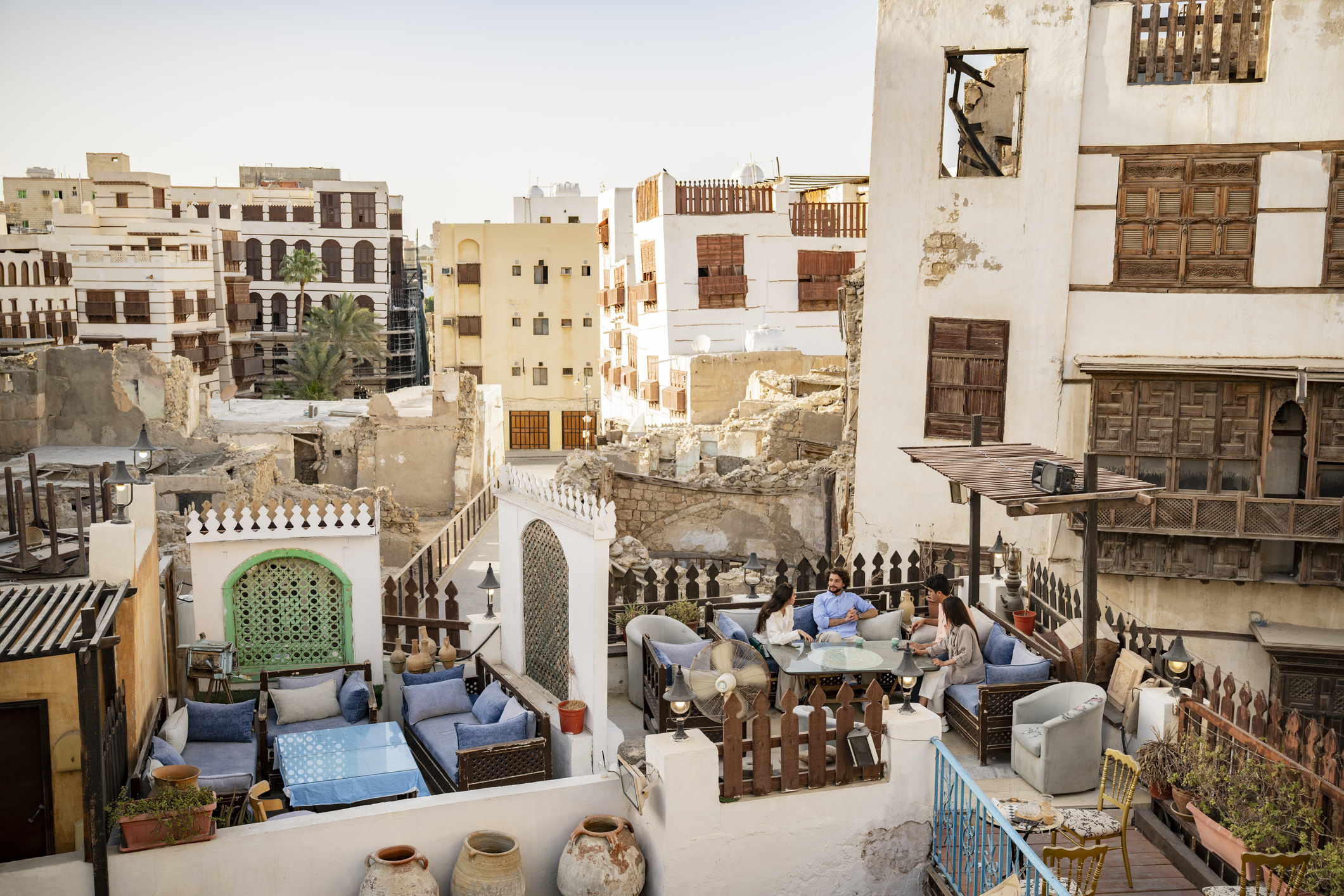 Historic Jeddah
The Red Sea port's UNESCO-listed old town, all coral-stone houses and carved wooden balconies, gateway to Makkah.
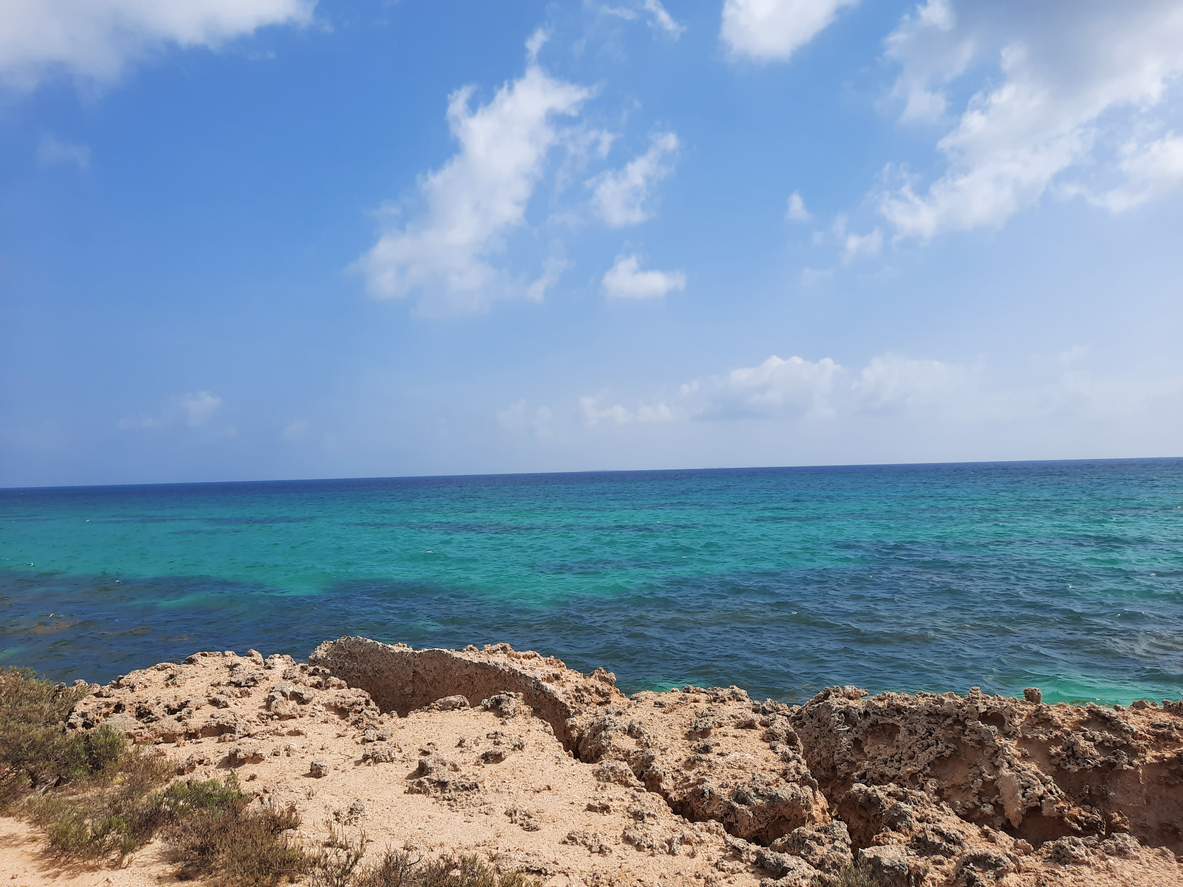 Farasan Island
Untouched reefs and turquoise shallows — some of the least-crowded diving anywhere on the Red Sea.
Saudi Arabia rewards very different travellers. Pick the trip that matches your Travel DNA.
Hegra's Nabataean tombs, Diriyah and old Jeddah.
The Edge of the World, dune camps and the Empty Quarter.
Untouched reefs and the Farasan Islands.
Riyadh Season, AlUla festivals and a fast-growing art scene.
Makkah and Madinah, for Muslim travellers.
Getting there, getting around and getting the most from your trip.
Tourist e-visa available online for many nationalities; major hubs Riyadh and Jeddah are well connected.
Domestic flights are the fastest way to cover the distances; the Haramain high-speed train links Makkah, Jeddah and Madinah.
Uber and Careem operate in cities; car rental and an excellent highway network suit road trips to AlUla and beyond.
Makkah and central Madinah are reserved for Muslim pilgrims; AlUla and the wider country are open to all.
The most comfortable window, with mild days and the Riyadh Season and AlUla's Winter at Tantora festivals in full swing.
Pleasant shoulder months — warming up but still good for heritage and desert travel.
Intense desert heat, often above 45°C inland; hot and quiet, but the Red Sea coast stays in play for diving.