




-
Spain: Where Dinner Starts When Most People Are Already Asleep
-
Japan: The Country That Takes Breakfast Seriously
-
France: The Sacred Hour of Lunch
-
Turkey: Breakfast as a Celebration, Every Single Morning
-
Mexico: The Comida Is Everything
-
India: Time Is Relative, But Chai Is Always On Time
-
What Are We Actually Losing When We Eat at Our Desks?
-
Getting the Timing Right
-
FAQs
I once ate dinner alone at 7 pm in Madrid.
The restaurant was empty. Not quite empty. The waitstaff looked at me with a kind of gentle pity, the way you might look at someone who shows up to a party three hours early and starts eating the chips before the host has even changed their shirt.
By 9:30 pm, the place was full of families, couples, and groups of friends settling in for a long, unhurried evening. Children were there — laughing, staying up late, completely unbothered by what I assumed was a totally unreasonable dinner hour.
I had eaten at the wrong time. And in doing so, I had missed the whole point.
Because in Spain — and in cultures all over the world — when you eat isn't a logistical detail. It's a value system. It tells you what a society prioritises: rest, family, productivity, pleasure, and community. Get the timing wrong, and you don't just eat alone. You miss the conversation, the ritual, the atmosphere that makes the food mean something.
So let's fix that. Here's a tour of the world's most fascinating meal schedules — and what each one quietly reveals about the people who keep them.
Spain: Where Dinner Starts When Most People Are Already Asleep
Let's start with the most famous example of meal-time culture shock: Spain.
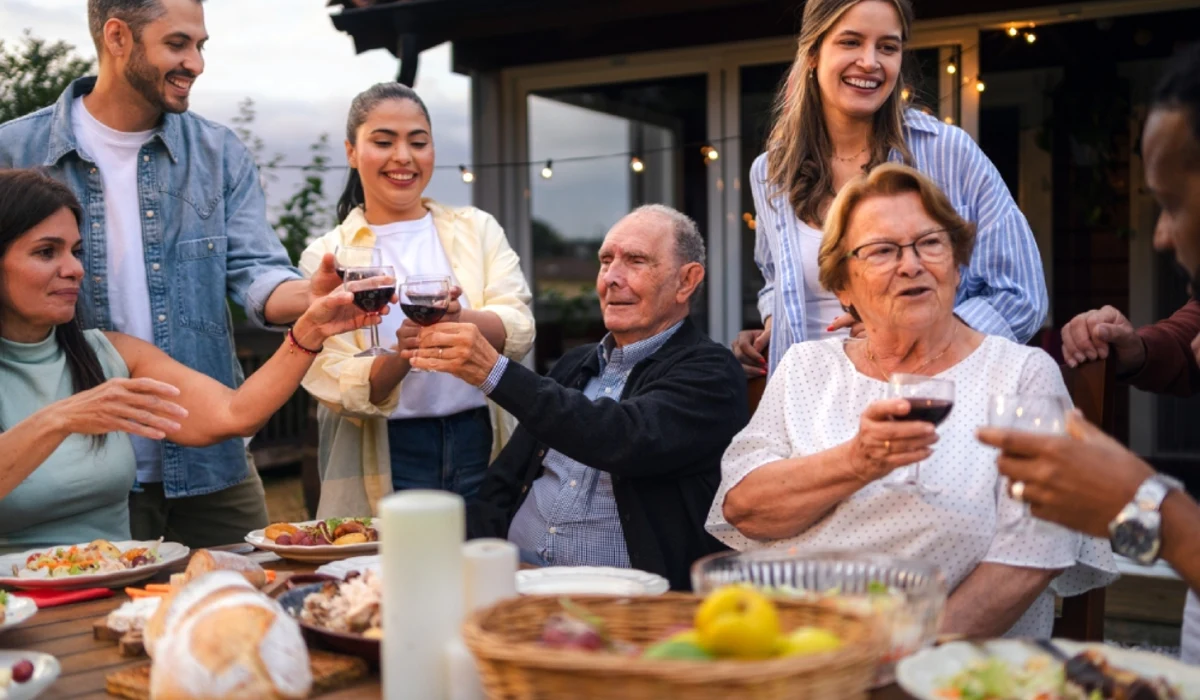
In Spain, lunch — the main meal of the day — happens between 2 pm and 4 pm. Dinner doesn't start until 9 pm at the earliest. In many cities, especially in the south, eating at 10 or 11 pm is completely normal on a weeknight. Restaurants don't reach full capacity until well after most British families have been asleep for an hour.
Why? The answer is partly historical, partly climatic, and partly cultural. Spain sits in the wrong time zone for its geography — it technically shares longitude with the UK but operates on Central European Time, meaning sunset arrives late and the day stretches long. Add to that a culture that prizes lingering over meals, family presence, and the sacred afternoon rest (the siesta), and suddenly a 10 pm dinner makes complete sense.
There's also the tapas structure to understand. A Spaniard doesn't sit down hungry at 9 pm and attempt to eat a three-course dinner from scratch. They've been grazing since 7 pm — a few olives here, a slice of tortilla there, a small glass of wine at a bar while standing up. Dinner isn't a single event. It's the closing act of an evening-long ritual.
What does this tell us about Spanish values? Simple: time belongs to people, not schedules. The meal is not something to rush through before bed. It is the point of the evening.
If you're visiting Spain and you eat at 7pm, you will technically be fed. But you'll miss the energy, the noise, the families three tables over who've been talking for two hours and are now ordering dessert. You'll miss the whole show.
Japan: The Country That Takes Breakfast Seriously
In Japan, breakfast is not optional. It is not a protein bar eaten over a sink. It is a meal.
The traditional Japanese breakfast — asagohan — includes steamed rice, miso soup, grilled fish, pickled vegetables, and sometimes a soft-boiled egg. It's nutritionally balanced, carefully prepared, and eaten at the table before the day begins.
Even in modern Japan, where convenience culture is everywhere, breakfast retains a seriousness that surprises many Western visitors. Hotel breakfast buffets in Tokyo are extraordinary — not continental pastries and cold cereal, but warm rice, fermented soybeans (natto), freshly made tamagoyaki egg rolls, and multiple types of soup.
A colleague of mine who spent a year teaching English in Osaka told me about her morning routine there. Her Japanese neighbour, a woman in her seventies, would begin preparing breakfast at 6am every single day — not because she had to, but because starting the day with a proper meal was simply what you did.
'She looked at my instant coffee and granola bar like I had personally offended her ancestors,' my colleague told me. 'And honestly? She wasn't wrong.'
What does Japan's breakfast culture reveal? A deep respect for starting things properly. There's a philosophy embedded in Japanese culture — often connected to concepts like katachi (form) and junbi (preparation) — that says how you begin something shapes everything that follows. Breakfast isn't fuel. It's intention.
How do you start your mornings? And does your breakfast reflect what you actually value?
France: The Sacred Hour of Lunch
France has a meal time that the rest of the modern world has almost entirely abandoned: the proper sit-down lunch.
Between noon and 2pm, France stops. Shops close. Business calls go unanswered. Offices empty. Everyone goes to eat — at a table, with colleagues or family, for at least an hour, usually longer.
I once made the mistake of trying to run errands in a small French town at 12:30pm. The boulangerie was closed. The pharmacy was closed. The hardware store was closed. A handwritten sign on one door simply said 'Fermé' — shut — with no indication of when it might open again. The whole town had vanished.
At 2:15pm, everything reopened as if nothing had happened.
To an efficiency-obsessed culture, this seems wasteful. To the French, the question doesn't even compute. Why would you eat quickly and alone when you could eat properly and together?
French lunch culture is protected by more than just habit — it's encoded in employment law. Many French companies are legally required to provide adequate time and facilities for a midday meal. The idea that lunch is a right, not a reward, is deeply embedded.
What France is saying with its noon ritual is this: rest is productive. Pleasure is not a distraction from work — it is what work is for.

Turkey: Breakfast as a Celebration, Every Single Morning
In most countries, breakfast is something you survive. In Turkey, it is something you celebrate.
The Turkish kahvalti — which literally translates as 'before coffee' — is one of the most extravagant morning meals on earth. We're not talking toast and a fried egg. A proper Turkish breakfast involves dozens of small dishes spread across the table: fresh tomatoes, cucumbers, olives, multiple types of cheese, honeycomb, clotted cream, cured meats, soft-boiled eggs, pastries, and warm bread that arrives in relays.
And tea. Always tea — çay — poured from a double-stacked kettle into small tulip-shaped glasses, refilled constantly, a quiet pulse running beneath the whole meal.
On weekends, kahvalti is a social event. Families gather late in the morning — around 10 or 11am — and the meal stretches for two, sometimes three hours.
Nobody is in a hurry. There are no phones out. There is simply the table, the food, and the people around it.
I once joined a Sunday kahvalti at a friend's family home in Istanbul. I assumed it would last forty minutes. Two and a half hours later, I was still at the table, on my fifth glass of çay, learning about my host's grandmother's recipe for walnut jam. I hadn't moved. I hadn't wanted to.
Turkey's breakfast culture says something profound: the best time to connect with people isn't after work, when everyone is tired. It's in the morning, when the day still holds possibility. Start with abundance, and abundance tends to follow.

Mexico: The Comida Is Everything
In Mexico, the most important meal of the day isn't breakfast. It isn't dinner. It's la comida — the midday meal, served between 2pm and 4pm.
And it is not a light affair. La comida is typically three to four courses: soup, then a rice dish, then a main — often slow-cooked meat, mole, or stew — and sometimes dessert or fruit. It takes time. It is meant to take time.
Schools in Mexico often release children at midday so they can come home for comida with their families. Businesses structure their days around it. The idea that this meal might be replaced by a desk lunch is — in traditional Mexican culture — genuinely baffling.
By contrast, dinner — la cena — is light. A bowl of soup, some tortillas, maybe leftovers from earlier. The day's serious eating is done. The evening is for rest.
There's a beautiful logic to the Mexican eating schedule that modern nutrition science is only just catching up with. Eating your largest meal in the middle of the day — when metabolism is most active — and keeping evenings light is, it turns out, extremely good for you.
The body knew. The culture knew. The science confirmed it later.

India: Time Is Relative, But Chai Is Always On Time
India is a country of extraordinary regional diversity, and meal times reflect this beautifully.
In West Bengal, the main meal is at noon — dal, rice, fish curry, served in a precise sequence that has cultural and even spiritual significance. In Punjab, a hearty dinner around 8pm is the anchor of the day. In Tamil Nadu, breakfast is an elaborate event — idli, dosa, sambar, and chutneys — that takes real preparation and real time.
But what cuts across almost every region, every state, every household, is chai.
Chai is not just a drink in India. It is a pause. A transition. A marker of time. There is morning chai, mid-morning chai, afternoon chai, post-work chai. Chai when a guest arrives. Chai when a conversation needs to begin. Chai when something difficult needs to be said.
My friend Priya, who grew up in Mumbai and now lives in London, talks about chai with a particular kind of longing. 'In London, tea is something you drink. In Mumbai, chai is something you do,' she told me once. 'It tells you where you are in the day. Without it, the day doesn't have a shape.'
What does this teach us? That even when the exact timing varies, cultures create their own food-based rhythms — rituals that structure time and create connection.

What Are We Actually Losing When We Eat at Our Desks?
Here's the uncomfortable question underneath all of this.
In the UK, the US, and much of the developed world, meal times have collapsed. Breakfast is rushed or skipped. Lunch is eaten in front of a screen. Dinner is earlier and earlier — or skipped in favour of snacking. The average American now spends just 67 minutes a day eating. The average Frenchman spends 135.
And research increasingly suggests we're paying a price — not just physically, but socially. Studies from Oxford's Social Brain Sciences Unit found that the single strongest predictor of social connection in adults is eating with other people. Not texting them. Not following them on Instagram. Eating with them.
Every culture on this list has known this for centuries. The Ethiopian gursha. The Spanish sobremesa — the conversation that lingers long after the food is gone. The Mexican comida that pulls children home from school. These aren't inefficiencies. They're the point.
When you eat at your desk, alone, in ten minutes, you are technically fuelled. But something is missing. And the world's oldest food cultures can tell you exactly what that something is.
Getting the Timing Right
I went back to Madrid two years after that lonely 7pm dinner.
This time, I waited. I had tapas at a bar at 7:30pm — a few bites, a glass of cold beer, a conversation with the man next to me about Real Madrid's season. I walked slowly to a restaurant at 9:15pm. I ordered without hurrying. I ate for two hours. I had dessert. I had coffee after dessert. I sat for a while after the coffee.
I didn't miss anything. I was exactly where the evening wanted me to be.
That's the gift that different food cultures offer if you're willing to follow their lead: a different relationship with time itself. Not time as a resource to be managed, but time as something to be inhabited.
The best time to eat isn't 7am or 12 noon or 9pm. It's whenever your culture — or the culture you're visiting — has decided it means something.
Show up then. Sit down. Stay a while.
You won't miss a thing.
FAQs
1. Why do Spanish people eat dinner so late — doesn't it affect their sleep?
Surprisingly, research suggests it doesn't — at least not for people who've grown up with it. Spain's late schedule is offset by a later bedtime and the tapas grazing that happens beforehand. The body adapts to the rhythm it's raised on. The real issue is visitors who eat late Spanish-style but still wake up on an early foreign schedule. That combination is rough.
2. Is the Mexican comida schedule actually better for your health?
The evidence is strong. Eating your largest meal at midday — when insulin sensitivity is highest and metabolism is most active — is consistently supported by nutritional research. Keeping evenings light reduces the strain of digesting a heavy meal before sleep. The Mexican comida schedule is, in short, chronobiologically sensible. Grandmothers got there before the scientists.
3. What is sobremesa, and why don't we have an English word for it?
Sobremesa is the Spanish word for the time spent at the table after the food is finished — talking, lingering, letting the meal breathe. There's no English equivalent because, frankly, English-speaking cultures don't really do it. We eat, we clear, we move on. The absence of the word is the absence of the habit.
4. I want to try a proper Turkish kahvalti — what should I look for?
Look for a spread, not a plate. A genuine kahvalti arrives in multiple small dishes — olives, cheeses, honeycomb, tomatoes, eggs, pastries, and endless çay in tulip glasses. In Turkey, the best versions are found in the Black Sea and eastern Anatolia regions. Outside Turkey, any restaurant billing itself as offering a 'Van breakfast' is a good sign — Van is considered the kahvalti capital of the country.
5. How do I actually apply any of this to my own daily eating habits?
Start with one change: eat lunch away from your desk, with another person, without your phone. That single shift — borrowed from France, Japan, Mexico, and pretty much every culture that still has its act together around food — will do more than any diet. The research on social eating and well-being is clear. You don't need to move to Madrid. You just need to sit down properly.

Join the discussion