



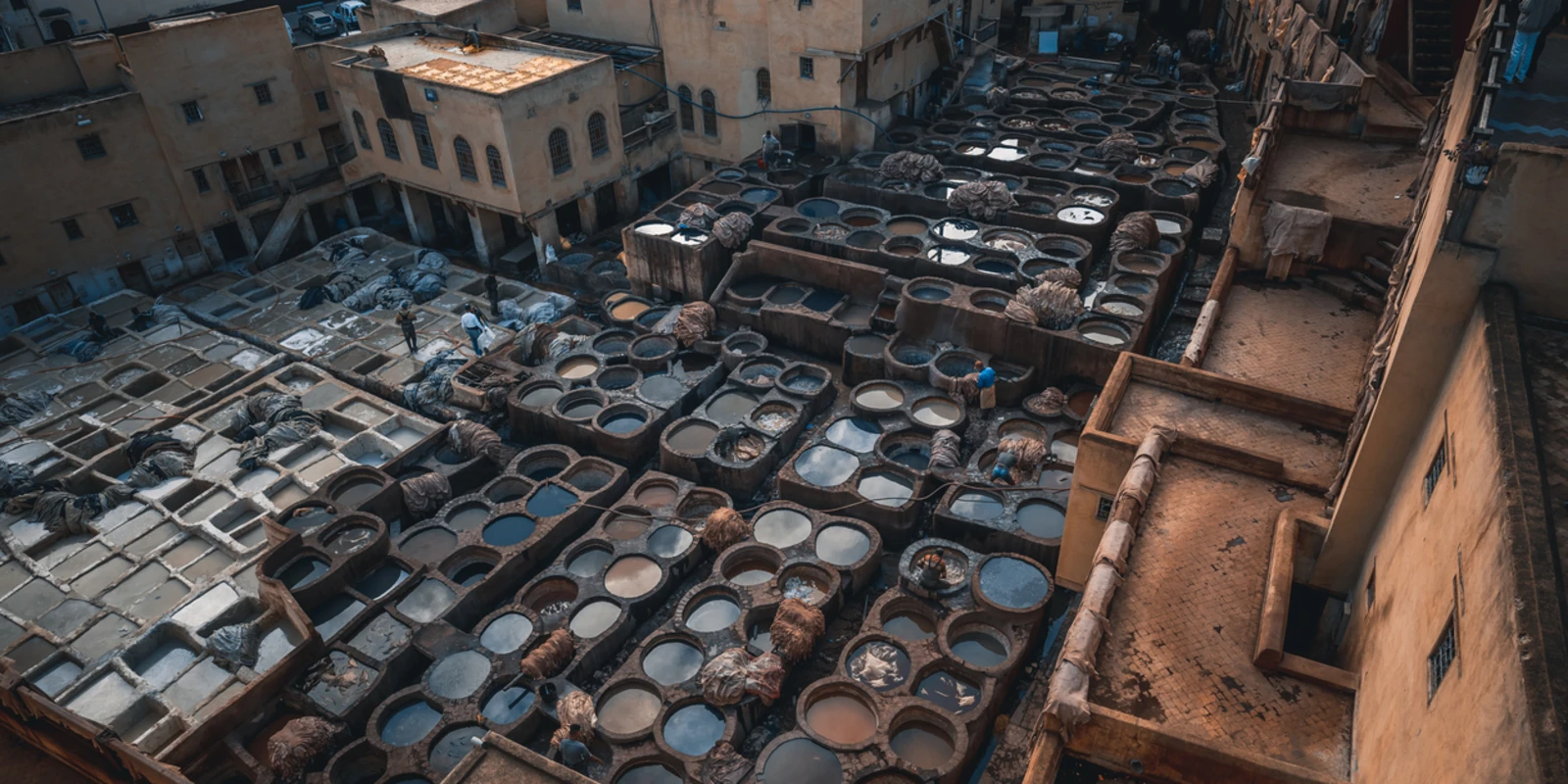
You smell the Fez tanneries before you ever see them.
By mid-morning, that first encounter is chaos: tour groups clogging the narrow alleys, shopkeepers calling out from every doorway, the heat pressing the pungent tang of the dye pits into everything. It's still worth it. But it isn't the version that stays with you.
The version that stays with you happens earlier , before the medina fully wakes, when the light is soft and the crowds haven't arrived. When the tanners step into the pits to start the day and, for a little while, the Chouara Tannery belongs to them alone. This is the Fez tanneries at their most honest, and it's the version most tourists never see.
Here's how to experience it right.
What Are the Fez Tanneries, and Why Are They Famous?
The Chouara Tannery in Fez is one of the oldest working tanneries on earth, and it's the most iconic image in all of Morocco. A few things make it unmissable:
-
It's ancient. Leather has been tanned on this spot for around a thousand years, dating back to the medieval founding of the Fez medina ,a UNESCO World Heritage site.
-
Nothing is mechanized. Every stage is done by hand, using techniques essentially unchanged for centuries.
-
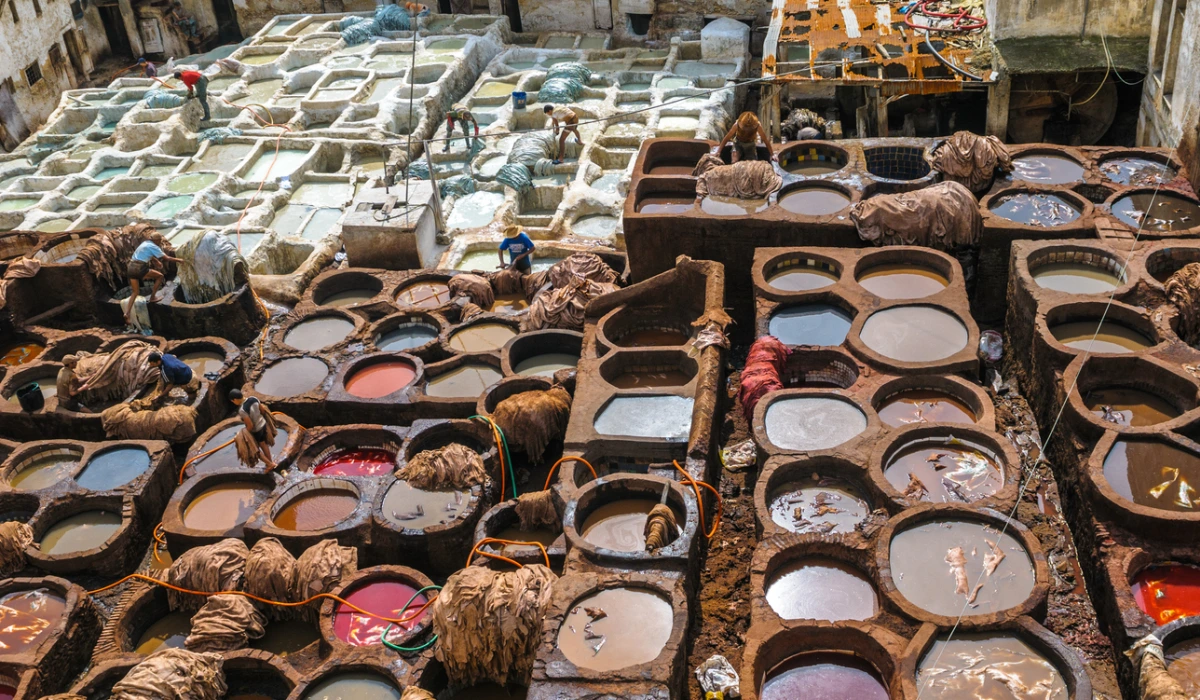
It's astonishing to look at. From above, the honeycomb of stone vats filled with white lime and rainbow dyes looks like an abstract painting.
-
It's a living craft, not a museum. The men in the pits aren't performing , this is their daily work, and it supports hundreds of local families.
Chouara is the largest of three tanneries in Fez (the quieter Sidi Moussa and Ain Azliten are the others), and it draws the vast majority of visitors ,which is exactly why timing matters so much.
Why Visit the Fez Tanneries Early in the Morning?
The tanneries transform depending on when you arrive. Come early and you get the best of everything:
-
The work is in full swing. Early morning is when the tanners are most active, stomping and turning hides in the vats , the scene everyone comes to witness.
-
The light is perfect. Soft morning light makes the coloured dyes glow and gives photographers the clearest, least-shadowed shots.
-
The smell is at its mildest. Heat amplifies the odour; before midday, especially in warm months, it's far more bearable.
-
The crowds haven't landed. Arrive early and you may share a terrace with only a handful of people instead of a scrum of tour groups.
If you want the postcard image of a Chouara Tannery worker moving between pools of dye, quiet and unhurried, the early hours are when you'll actually get it.
How Do You See the Tannery? (The Terrace System Explained)
Here's the part first-timers don't expect: you can't walk into the tannery itself. In principle, only workers enter the pits. Visitors view it from above. Here's how it works:
-
The courtyard is ringed by leather shops, each with a rooftop terrace overlooking the vats.
-
A shopkeeper walks you up to the terrace for the view , and will usually show you their leather goods afterward.
-
There's no obligation to buy. A warm, firm "no thank you" is always respected.
-
A small tip is customary if you don't purchase anything , roughly 10–20 dirhams per person for the use of the terrace.
This isn't a scam; it's simply how Morocco's commercial culture works. Going with a knowledgeable local guide is the easiest way to reach the best viewpoints, understand what you're seeing, and avoid ending up in the wrong shop.
Why Do They Hand You a Sprig of Mint?
Yes, the smell is real ,and the mint is the famous local remedy.
-
You'll be handed a sprig of fresh mint (sometimes basil) as you arrive.
-
Press it under your nose while you take in the view. It genuinely takes the edge off.
-
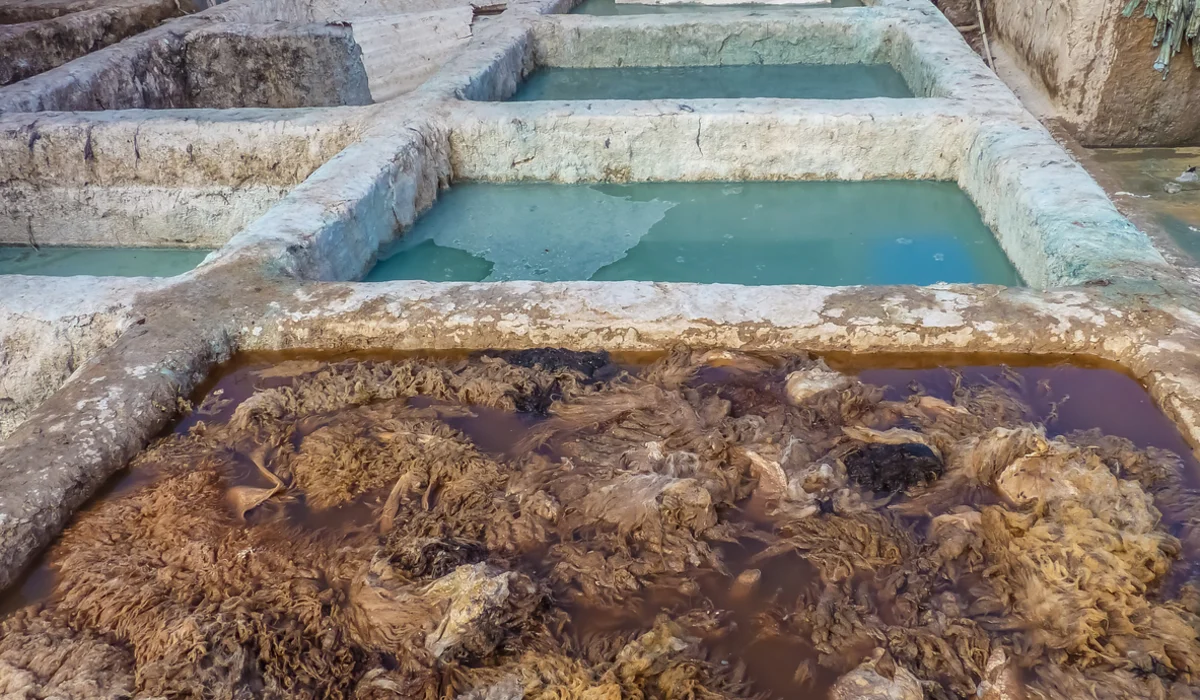
The odour comes from the process itself. The white vats soak hides in a natural mixture that historically includes lime, salt, and pigeon droppings, whose ammonia strips the hair and softens the skin so it can absorb dye.
It's strong, raw, and completely authentic , the same smell that has hung over this quarter for a thousand years. Arrive knowing about it, and it becomes part of the experience rather than a shock.
How Is the Leather Actually Made?
The magic of the Fez tanneries is watching a genuinely medieval process unfold in real time. It runs in stages:
-
Soaking (the white vats): Raw hides , cow, goat, sheep, camel , are cleaned and softened in the lime-and-ammonia mixture for up to three days.
-
Dyeing (the colourful vats): The hides move into pits of all-natural dyes , poppy and henna for red and orange, indigo for blue, saffron for yellow, mint for green.
-
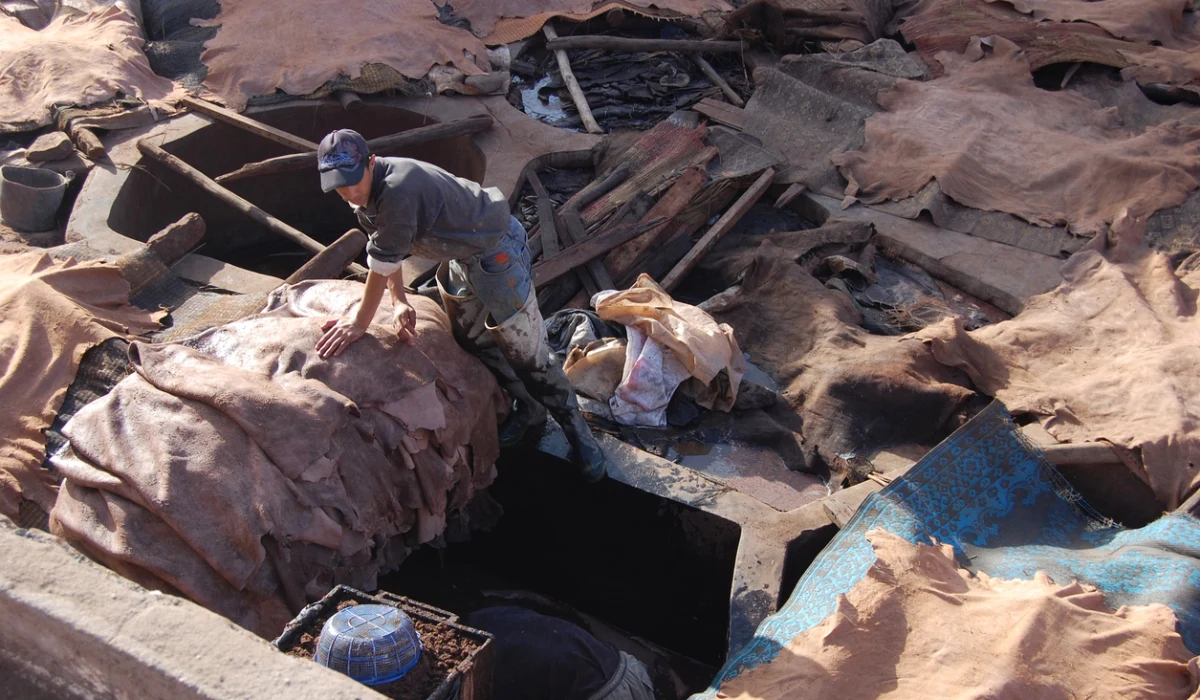
Working the dye: Tanners wade waist-deep and manipulate the heavy hides by hand and foot so the colour penetrates evenly.
-
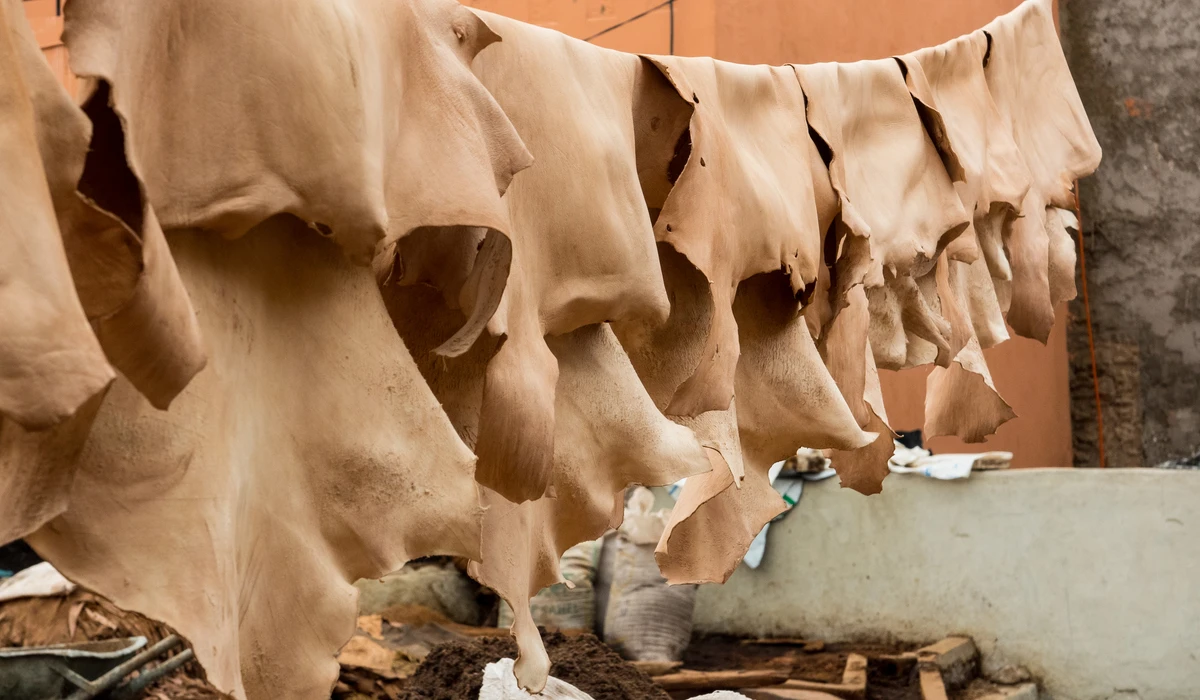
Drying: The finished leather is laid out under the sun before heading to the surrounding workshops, where it becomes bags, slippers, jackets, and poufs.
Every piece you see in the shops came out of those pits , which is why Chouara is also the best place in Morocco to buy leather.
Tips for Visiting the Fez Tanneries
Make it a great morning with a few simple moves:
-
Go early : soft light, active workers, milder smell, thinner crowds.
-
Wear closed, sturdy shoes : the medina alleys are narrow and can be wet or slippery.
-
Accept the mint : don't be too proud; you'll want it.
-
Visit in spring or autumn if you can; summer heat intensifies the odour.
-
Tip for the terrace even if you don't buy, and haggle politely if you do.
-
Respect the workers' privacy : they're doing hard physical labour, not posing.
-
Pair it with nearby gems : the Al-Attarine Madrasa and the Fez medina souks are minutes away.
Is the Chouara Tannery Worth Visiting?
Completely , as long as you come for the real thing, not a sanitized one.
That's the whole idea behind seeing the Fez tanneries before sunrise: anyone can shuffle through at midday with a tour group. Far fewer arrive early enough to watch a thousand-year-old craft wake up, in soft light, before the world crowds in.
FAQs
Q1 :Can you visit the Fez tanneries? Yes. You view the Chouara Tannery from the rooftop terraces of the leather shops surrounding the courtyard — you can't enter the pits themselves, which are reserved for workers. A shopkeeper walks you up, usually in exchange for browsing their goods or a small tip.
Q2 : Why do they give you mint at the Fez tanneries? The tanning process produces a strong, natural odour from the lime-and-ammonia soaking vats. Shopkeepers hand visitors a sprig of fresh mint to hold under the nose, a centuries-old local trick that makes the smell much easier to handle.
Q3: What is the best time to visit the Chouara Tannery? Early morning is ideal. The workers are most active, the light is best for photos, the smell is milder before the day heats up, and the crowds are thinnest. Spring and autumn are the most comfortable seasons overall.
Q4: How much does it cost to see the Fez tanneries? There's usually no formal entrance fee, but a tip of roughly 10–20 dirhams per person is customary for using a shop's terrace if you don't buy anything. Going with a guide typically streamlines access.
Q5: Does the Chouara Tannery really smell that bad? It has a strong, distinctive odour from the traditional materials used, and it's noticeable before you even arrive. Most visitors adjust within minutes, especially with the mint. Early-morning and cooler-season visits are far less intense.
Q6: How is Moroccan leather made in Fez? Hides are soaked in white lime vats to strip the hair, then moved into pits of natural dyes (poppy, indigo, saffron, henna, mint), worked by hand so the colour sets, and finally dried in the sun — all using techniques essentially unchanged for a thousand years.


Join the discussion