



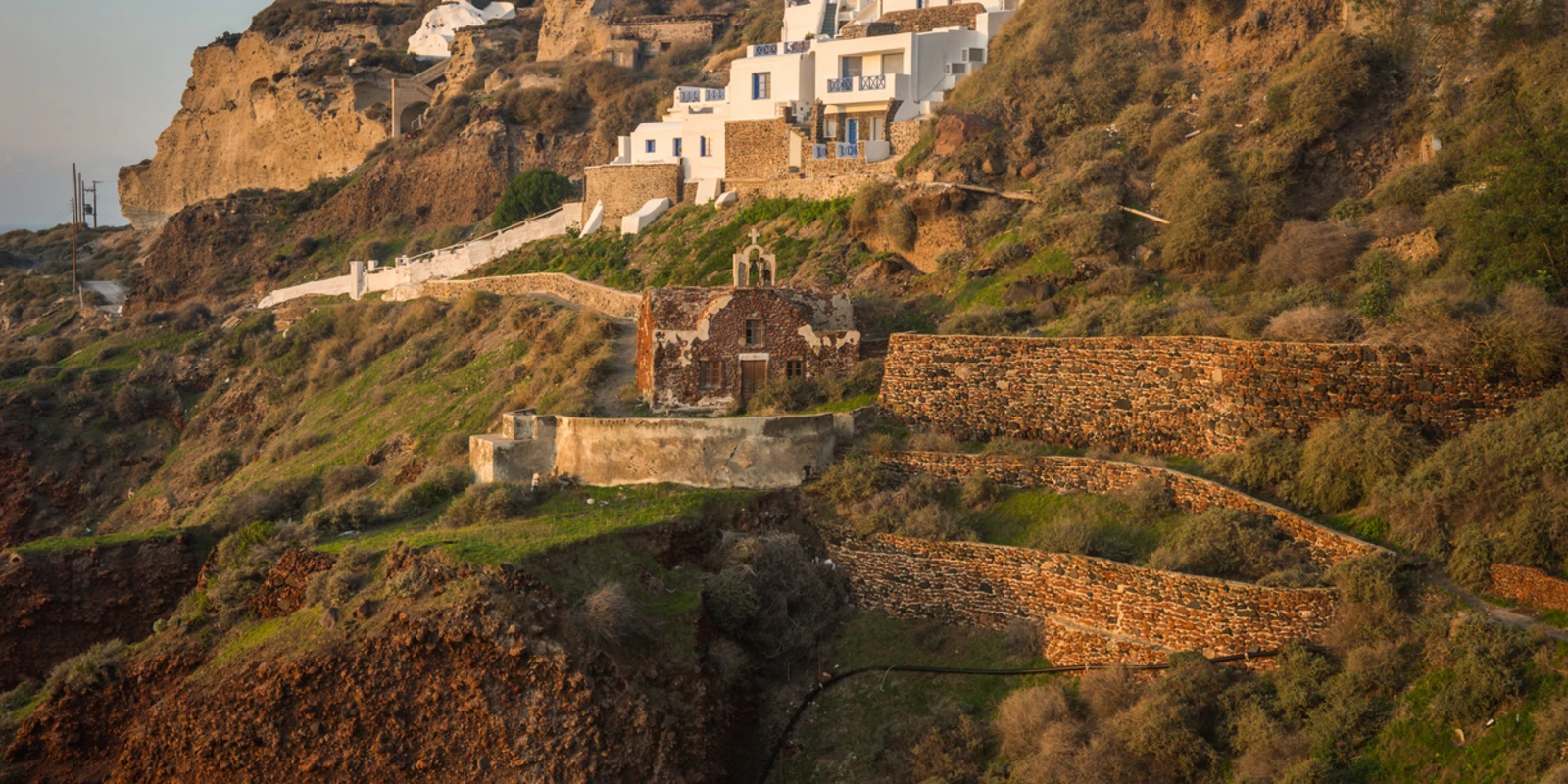
Santorini for the first time
Everyone comes to Santorini for the same photograph.
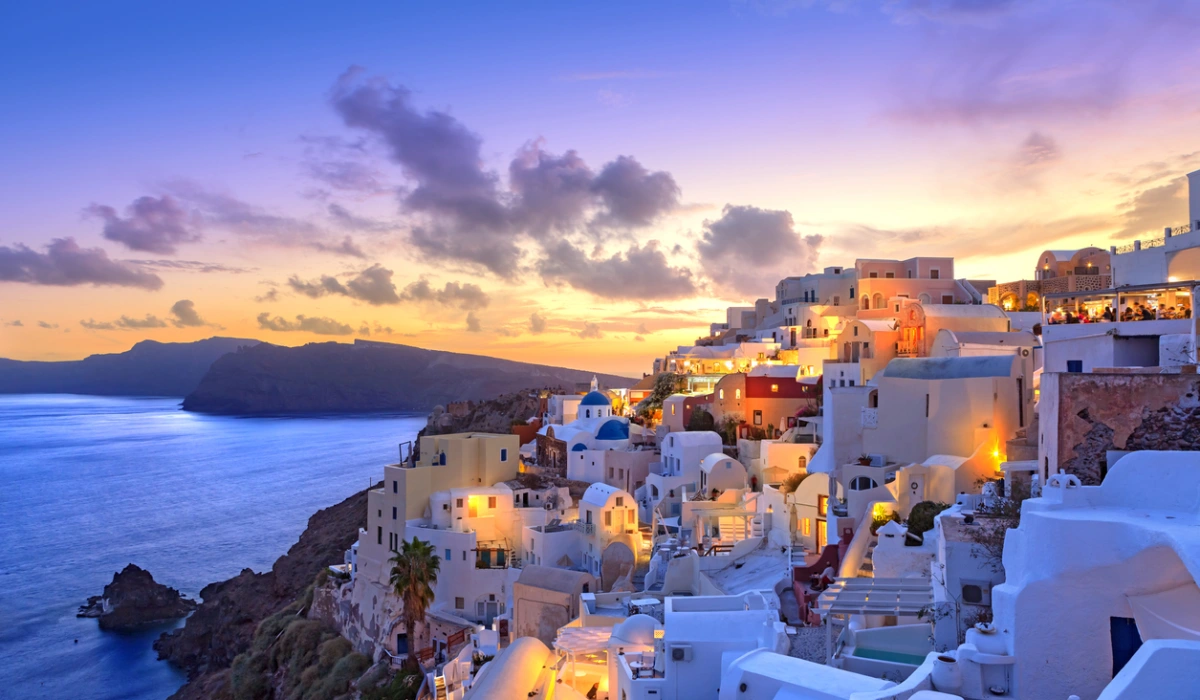
The white village of Oia, the blue domes, the sun going down over the caldera while a thousand phones rise to meet it. It is beautiful, and it is crowded, and it is very slightly exhausting.
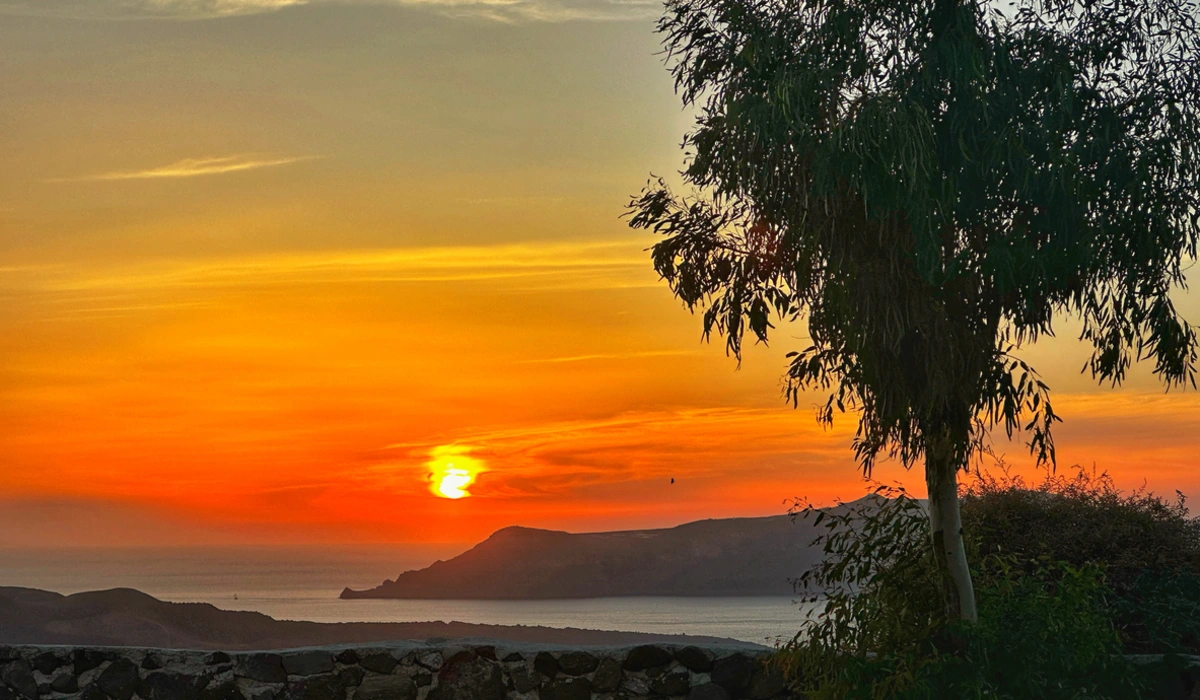
There is another sunset on the island, and almost no one is looking at it. It happens a little inland and a little south, over low black fields of ancient vines, with a glass in hand and no one else around.
This is the story of the Santorini vineyards at golden hour , and of the quieter, more composed luxury the island keeps for those who look past the viewpoint.
The island everyone photographs
To understand the quiet version, picture the loud one first:
-
Oia at sunset is a scene. The lanes fill hours early; people stake out walls and rooftops for a photograph they have already seen a hundred times.
-
The famous cliff terraces fill fast. Even the celebrated caldera wineries can feel like a queue with a view on a July evening.
-
The sun performs, and so does the crowd. There is pleasure in it, but little peace.
None of this is a criticism of the island. It is simply the version that gets seen , and the reason the other version stays so quiet.
What the volcano makes
The wine is the reason to go inland, and it is unlike anywhere else on earth:
-
Assyrtiko is the island's soul , a bone-dry white of remarkable acidity, citrus and green apple, with a faint salinity that seems to come straight from the volcanic ground.
-
Vinsanto is its patient counterpart , an amber dessert wine of sun-dried grapes, tasting of honey, dried fruit, and long afternoons.
-
The vines themselves are extraordinary — trained low into woven baskets called kouloura to survive the wind, and to drink the morning sea mist in a place that almost never rains.
-
The roots run deep and ancient , Santorini's vineyards escaped the blight that took much of Europe's, so some vines are well over a century old, on soil worked for some three and a half thousand years.
You do not taste this wine so much as taste the place that made it.
The vineyards, not the viewpoint
Quiet luxury on Santorini lives in the south, away from the sunset scrum, at estates that reward an unhurried afternoon:
-
The wineries cluster inland , around Pyrgos, Megalochori, and Episkopi Gonias, a comfortable drive from the northern crowds.
-
The refined choice over the famous one , the grand cooperative terraces draw the buses; smaller estates offer the same caldera light with a fraction of the noise and a better table.
-
The tasting becomes the occasion , a handful of pours, local cheese and rusks, a host who knows the winemaker by name and mentions it only if you ask.
-
Morning has its own reward , the oldest estates are calmest earlier in the day, the light clean, the terrace nearly your own.
The distinction is simple. The viewpoint gives you a photograph. The vineyard gives you an afternoon.
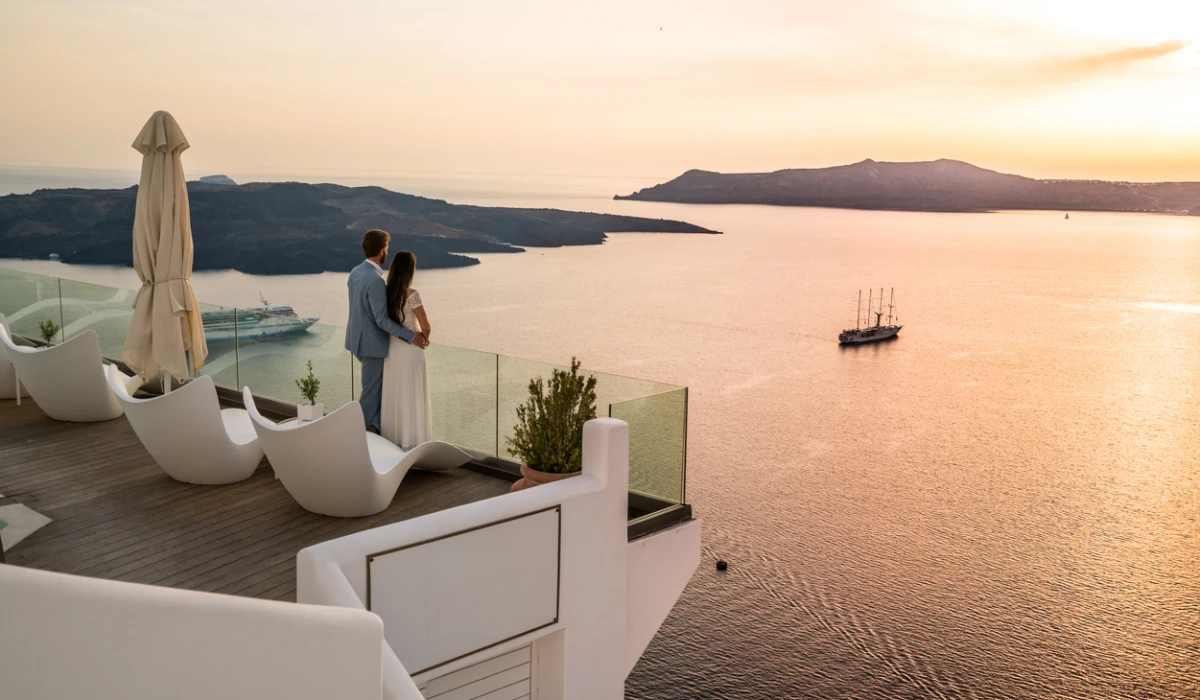
The quiet version of the golden hour
As the light turns, the experience arranges itself without effort:
-
The heat softens and the black volcanic earth goes warm gold, the low vines throwing long shadows across the terraces.
-
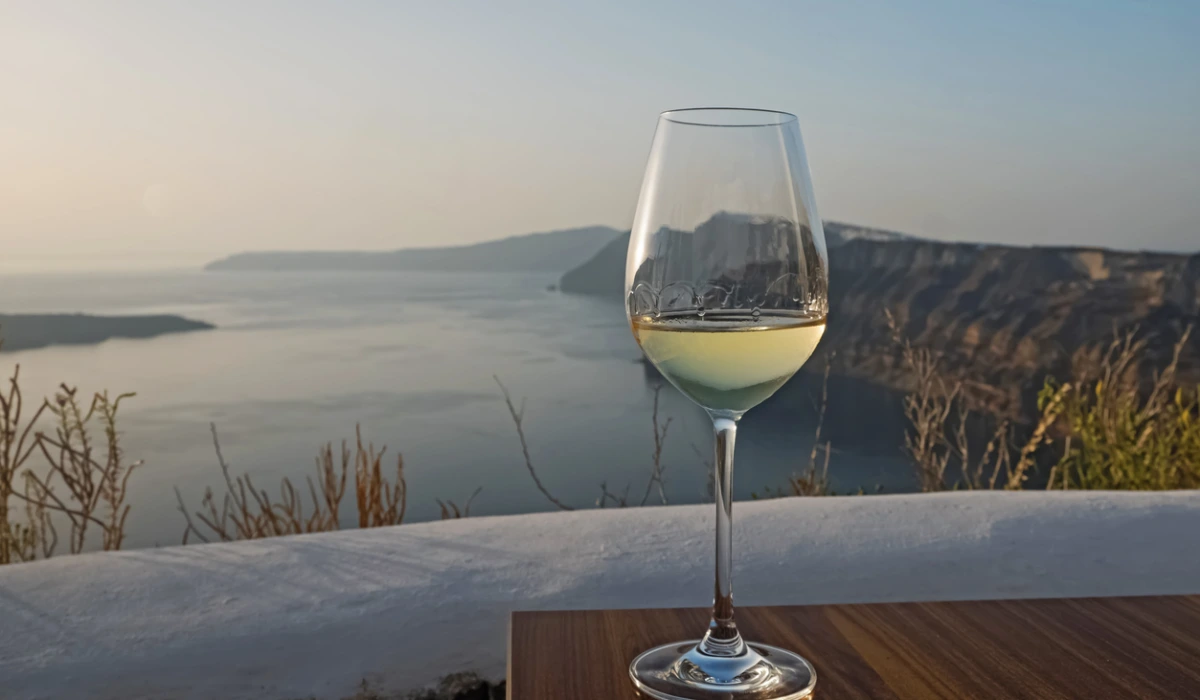
The glass in your hand changes , the same Assyrtiko you tasted at noon reads differently as the sun drops, rounder, quieter.
-
The caldera does its work in the distance ,the same sunset the crowds are chasing in Oia, seen here across the vines, with room to breathe.
-
Bring a layer , when the sun finally goes, the island cools quickly, and the best evenings end with a wrap around the shoulders and one last pour.
No one is photographing you. That, it turns out, is the luxury.
A glass, and nothing to prove
By the time you leave, you understand what you actually came for:
-
You saw the sunset , without standing in a crowd to do it.
-
You tasted the island , not just its view, but its soil, its wind, its centuries.
-
You did nothing that needed recording , and felt no poorer for it.
That is the whole idea behind sunset in the Santorini vineyards. The island will always offer you the famous view, and it is worth seeing once. But the finer version is inland and unhurried, a glass of volcanic white in the last of the light, somewhere the sunset belongs to you alone.
FAQs
By the time you leave, you understand what you actually came for:
-
You saw the sunset , without standing in a crowd to do it.
-
You tasted the island , not just its view, but its soil, its wind, its centuries.
-
You did nothing that needed recording , and felt no poorer for it.
That is the whole idea behind sunset in the Santorini vineyards. The island will always offer you the famous view, and it is worth seeing once. But the finer version is inland and unhurried, a glass of volcanic white in the last of the light, somewhere the sunset belongs to you alone.
(FAQs)
Q1: What wine is Santorini known for? Santorini is famous for Assyrtiko, a bone-dry white grape with crisp acidity, citrus notes, and a distinctive mineral, slightly saline character from the volcanic soil. The island is also known for Vinsanto, a sweet amber dessert wine made from sun-dried grapes, and barrel-aged Nykteri.
Q2 : Can you watch the sunset from a Santorini winery? Yes. Several wineries, especially those built into the caldera near Pyrgos and Megalochori, offer sunset views over the volcano. They are a calmer, more refined alternative to the crowds in Oia, though the most famous terraces still fill up, so booking ahead is wise.
Q3: Why are Santorini's vineyards so unusual? The vines are trained low into basket shapes called kouloura to shield the grapes from fierce winds and to trap moisture, since the island has almost no rainfall. Santorini's vines also escaped the phylloxera blight, so many roots are ancient and ungrafted, in soil farmed for over 3,000 years.
Q4: Which Santorini wineries are best for a quiet, refined visit? Estates in the south around Pyrgos, Megalochori, and Episkopi Gonias offer caldera views and calm tastings, often with fewer crowds than the largest cooperative terraces. Smaller and historic estates tend to feel more intimate; a private tour can tailor the selection to your taste.
Q5: What is the best time to visit the Santorini vineyards? Spring and autumn offer mild weather and lush vines, while the harvest from late August into October is the liveliest season. For quieter tastings, mornings are calmest; late afternoon is best if you want to stay for the golden light and sunset.
Q6: Should I book a private Santorini wine tour? For a relaxed, unhurried experience, yes. A private or small-group tour handles transport between the inland estates, secures sunset reservations, and pairs each wine with local bites , letting you enjoy the vineyards without navigating the island's roads or crowds yourself.
Join the discussion