


I hadn't climbed anything in a year. Not a mountain , anything.
Grief does that, if you let it. It flattens the world into something you move across horizontally, one survivable day laid end to end after another, and the idea of going up , of reaching for anything, of effort aimed at joy , starts to feel like a language you used to speak and have since forgotten. When someone you love dies, people tell you time will help. What they don't tell you is that time, for a while, just accumulates. It doesn't move you anywhere. You wait for it to, and it doesn't.
So when a friend suggested I climb Mount Sinai at night , in the dark, for the sunrise, in the middle of the Egyptian desert , every part of me that had gone quiet that year said no. This is the story of why I said yes anyway, and what was waiting at the top.
The year I stopped reaching for things
I want to be honest about how small my life had become, because the mountain only makes sense against it.
I had stopped saying yes. To dinners, to weekends, to the window seat, to anything that asked me to be fully present in a life that felt like it was missing a person. I told myself I was resting. Really I was hiding, and grief is a very patient landlord , it will let you stay in the smallest room in the house for as long as you're willing to call it safety. A whole year went by like that. And somewhere in it, the anniversary started coming toward me like weather, and I understood, dimly, that I could not let that day happen to me in the small room. I needed to be somewhere that was bigger than my sadness. It turns out there aren't many places like that. A sacred mountain in the dark is one of them.
Why I chose a mountain in the dark
There's a particular logic to climbing Moses Mountain at night, and it wasn't lost on me even before I went.
You start the ascent around midnight and you climb in the dark for hours, so that you reach the summit just as the sun comes up over the Sinai Peninsula. The whole thing is built, quite literally, as a passage from darkness into light , pilgrims have walked it that way for centuries, in three faiths, on the mountain where Moses is said to have received the Ten Commandments. I am not a especially religious person. But I was a person who had been living in the dark for a year, and the idea of walking through it on purpose, with my own two feet, toward a sunrise I couldn't yet see , that reached me somewhere words hadn't been able to. I didn't book it because I believed. I booked it because I needed the metaphor to be real, under my shoes.
The ascent, and the strangers' lanterns
We left St Catherine near midnight, a small line of us behind a Bedouin guide from the Jabaliya tribe, and started up the Camel Path in a cold I was not prepared for despite every warning that I would not be prepared for it.
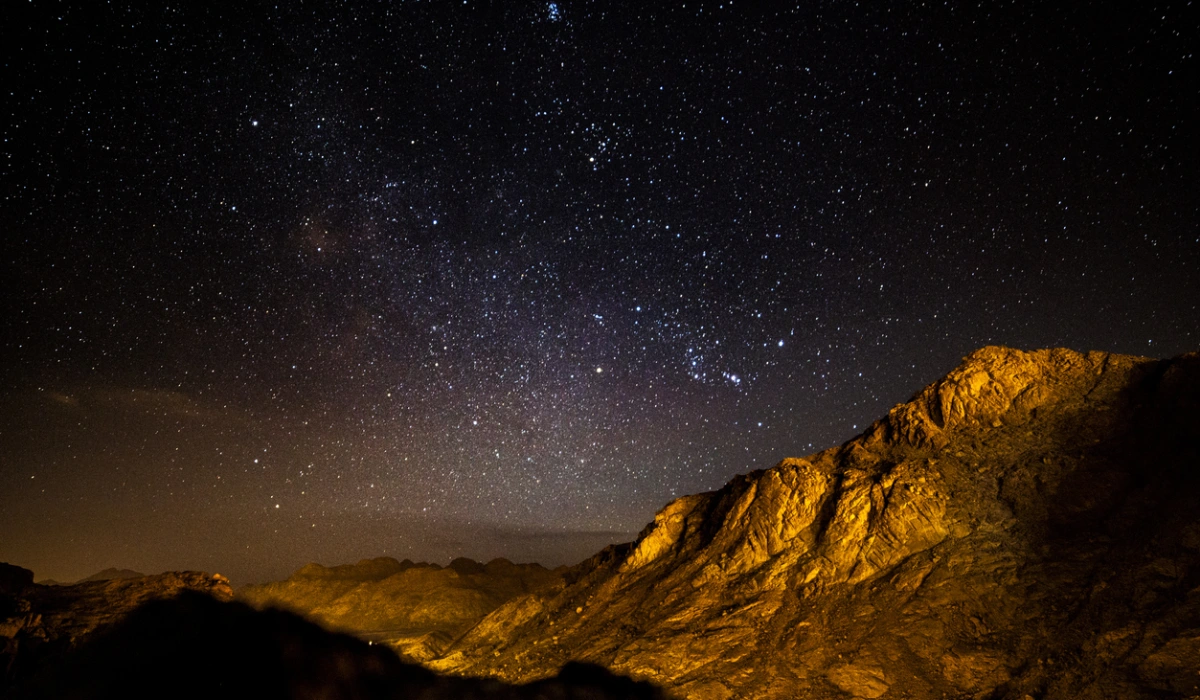
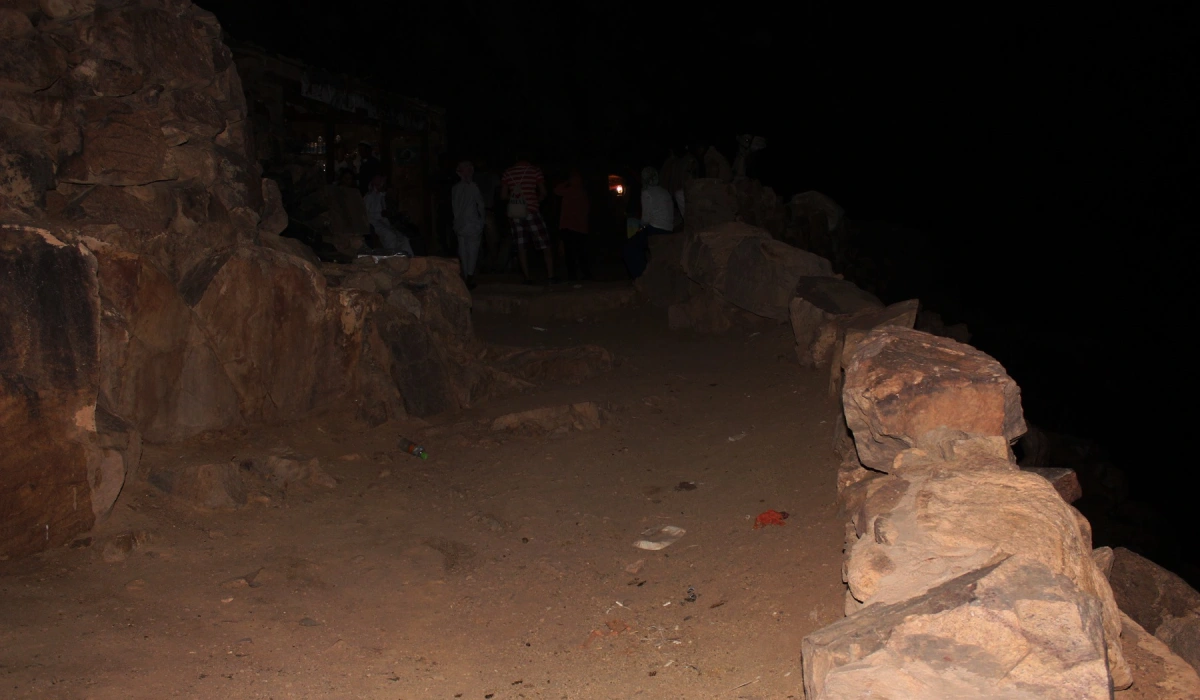
I had thought the dark would frighten me. Instead it did something I hadn't expected: it made me anonymous, and in that anonymity, oddly free. You can't see the summit, so you can't be daunted by it. You can only see the small pool of your own headlamp and the backs of the strangers ahead, their lights bobbing up the switchbacks like a slow constellation strung up the mountainside. Now and then a camel would loom out of the black beside us. Now and then a Bedouin hut glowed with a lantern and the smell of hot tea, and we'd stop, and I'd wrap my hands around a glass and not talk to anyone, and it was the least lonely I'd felt in months. Nobody up there knew what I was carrying. Everyone up there was carrying something; that's why people climb mountains at night. We were all just walking through our own dark toward the same sunrise, and for once I didn't have to explain myself to be understood.
Somewhere on that path , I couldn't tell you where , I stopped counting the switchbacks and started, for the first time in a year, simply moving upward without arguing with it.
Cold, and then the light
The last stretch is 750 rough stone steps, and I did them badly, breathless, near tears, my legs shaking, and I did not care.
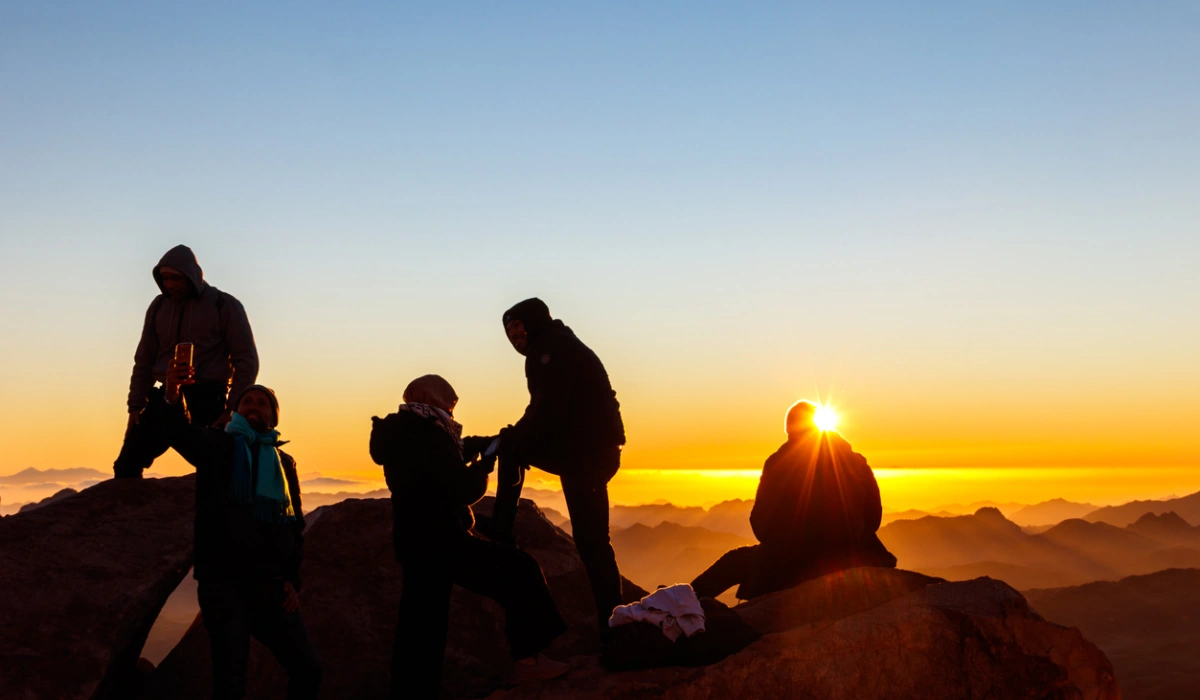
At the top it was near freezing and pitch black and crowded with quiet, huddled people wrapped in rented blankets, all of us facing the same empty east. I found a rock. I sat. And I waited in the cold the way I had been waiting all year, except this time I knew exactly what I was waiting for, and I knew it was coming.
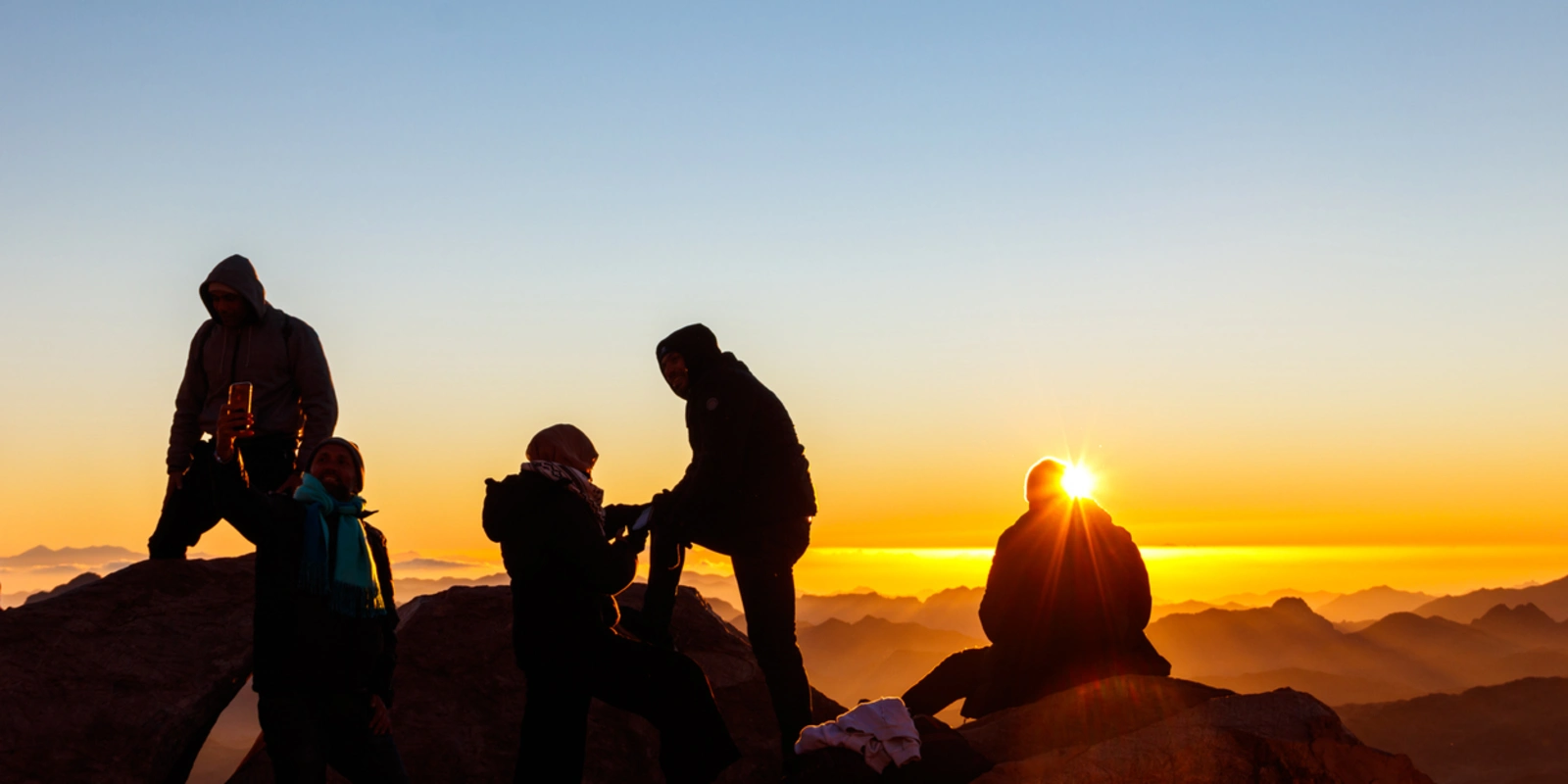
And then it came. The sky over the Sinai mountains went from black to bruised to grey to a thin line of gold, and then the sun broke over the jagged granite peaks and poured light down the whole range at once, turning the rock pink and the frost to steam and the huddled strangers into a hundred faces I could suddenly see. And I cried , properly, finally, the way I hadn't managed at the funeral or in the year of small rooms since. Not because it was beautiful, though it was almost unbearably beautiful. But because I had climbed through the entire night to get there, and the sun had come up anyway, exactly as promised, whether or not I believed it would. The light didn't care that I'd stopped reaching for things. It arrived for me regardless. That, it turned out, was the thing I'd come up the mountain to be told.
What I carried down
The descent was long and bright and easy on everything but my knees, and I remember almost none of it, because something had shifted and I was busy feeling it.
I didn't come down from Mount Sinai healed. Grief isn't a summit you reach and then you're done; it comes home with you, the way it came up the mountain with me. But I came down having proved something to the small-room version of myself: that I could still climb. That yes was still a word I could say. That the dark was a thing you could walk through, on purpose, toward a light you had to trust before you could see it.
That's the whole idea behind the trip I almost didn't take. I went up that mountain to survive an anniversary, and I came down having remembered how to reach for the world again , in the dark, one switchback at a time, toward a sunrise that was always, it turns out, going to come.
FAQs
Q1: Why do people climb Mount Sinai at night? The night climb is timed so you reach the summit for sunrise, which is both spectacular and symbolic — a passage from darkness into light on the mountain where Moses is said to have received the Ten Commandments. Climbing at night also avoids the intense daytime desert heat.
Q2: How long does it take to climb Mount Sinai? The ascent takes roughly 2.5 to 3 hours via the gentler Camel Path, plus time at the summit for sunrise and about 2 hours to descend. Including transport, most Mount Sinai sunrise tours run around 14–16 hours door to door, usually departing late at night.
Q3: How hard is the Mount Sinai hike? It's considered moderate. No technical climbing is needed, but you walk continuously for hours in the dark and cold, and the final 750 stone steps are steep. Most reasonably fit people aged 8 to 80 complete it; camels can carry you along the lower Camel Path, though not the final steps.
Q4: What should I wear to climb Mount Sinai at night? Layers are essential — the summit is often near freezing at sunrise even in summer, while the base is warm. Bring a warm jacket, sturdy hiking shoes, a headlamp, water, snacks, and cash for tips and tea. Blankets can usually be rented at the top.
Q5: Do I need a guide to climb Mount Sinai? Yes. A licensed Bedouin guide is mandatory, and travel permits for the area are typically arranged by your tour operator. Going with an organized tour handles the permits, transport, and guide, and is the simplest and safest way to do the climb.
Q6: When is the best time to climb Mount Sinai? Spring and autumn , especially October, November, and April , offer the most comfortable temperatures and clear skies. Winter climbs are possible but bitterly cold at the summit, and summer daytime heat is why the climb is done overnight year-round.
Join the discussion