



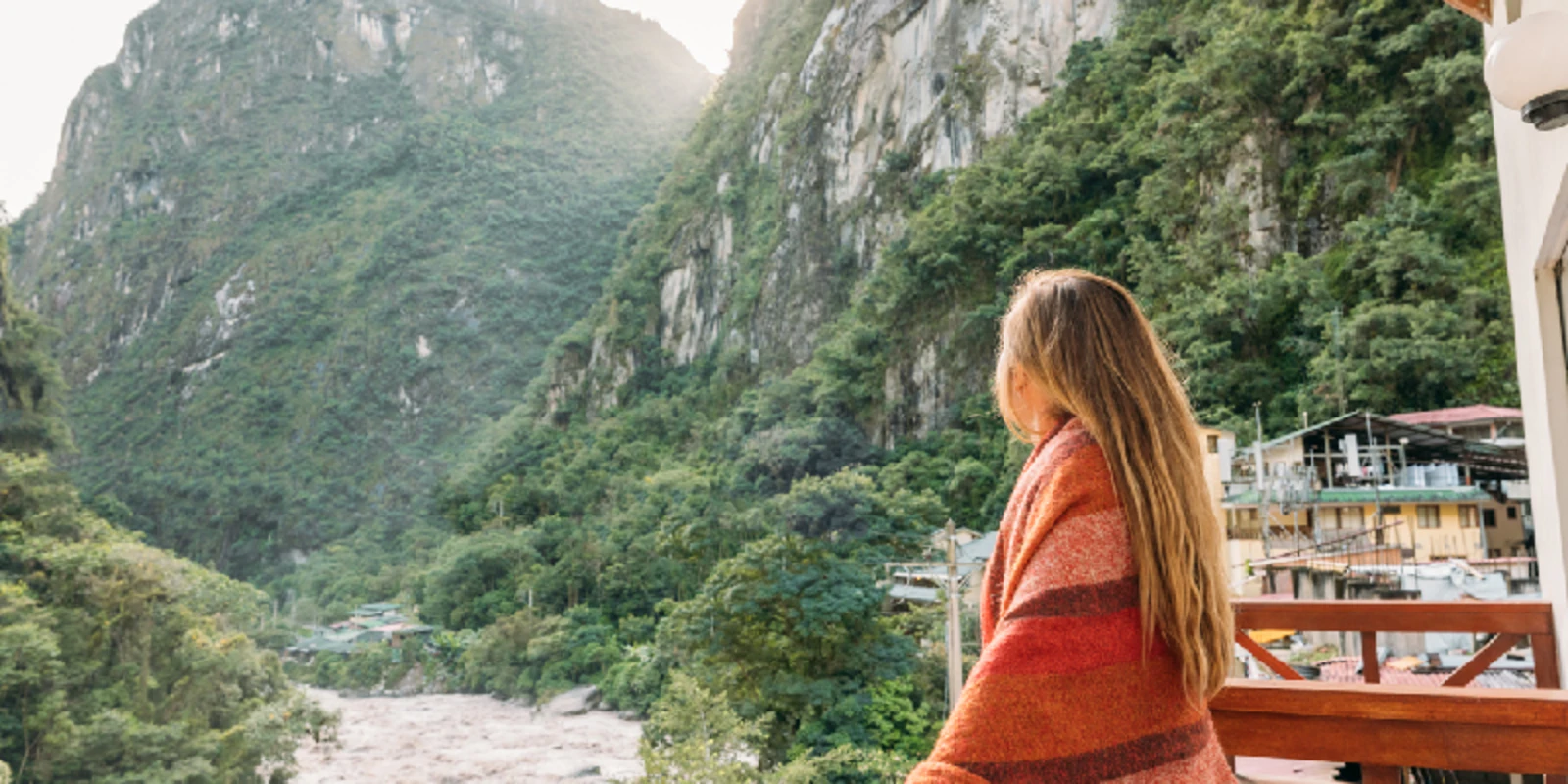
Six countries. Six experiences every "serious traveler" told me to skip. Here's why they were all wrong.
There is a certain kind of travel advice that gets passed around like gospel.
Skip the Eiffel Tower — too crowded. Don't bother with the Trevi Fountain — it's just a fountain. Machu Picchu is overrated. The Burj Khalifa is just an elevator ride. Dress up in a kimono and you'll look like every other tourist on the internet.
I heard all of it. I ignored all of it.
And standing in front of every single one of those famous, crowded, supposedly over-photographed places, I felt the same thing every time: genuine, uncomplicated awe.
Here is what happened when I stopped pretending to be too cool for the classics.
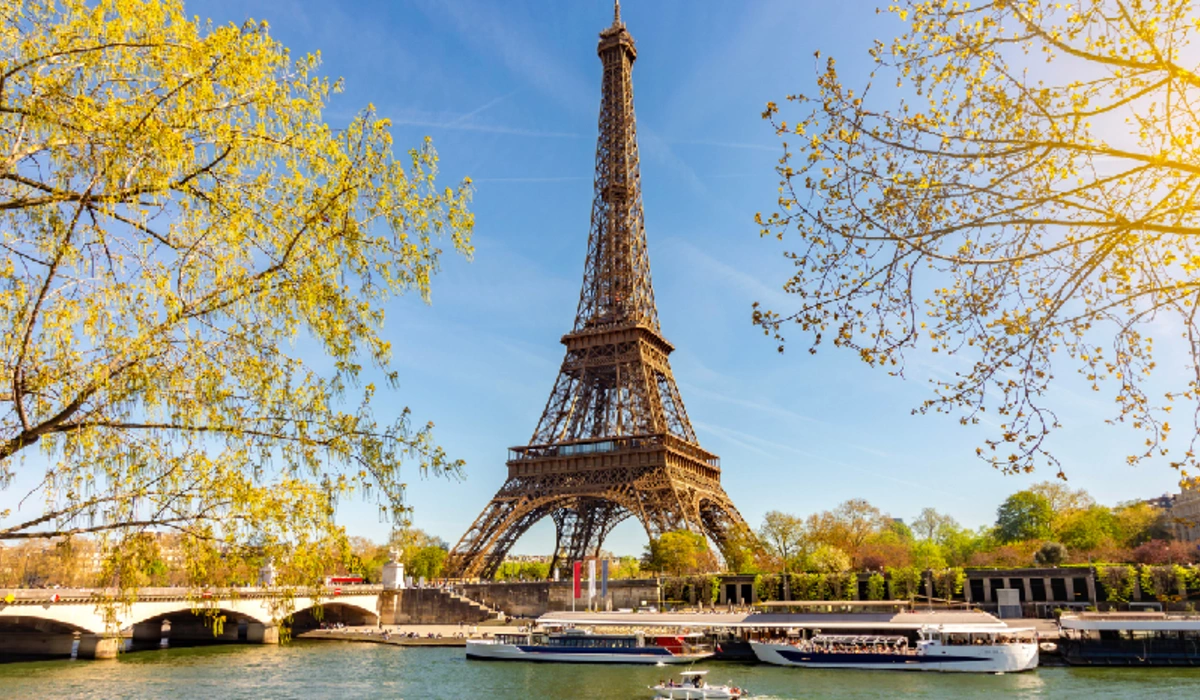
France: Yes, I Queued for the Eiffel Tower
Everyone told me not to bother. "You can see it from anywhere in the city," they said. "The view from the top is just Paris, and Paris looks better from the ground." A well-traveled friend actually sent me a list of alternative viewpoints — Montparnasse Tower, the Trocadéro gardens, a rooftop bar in the 11th arrondissement.
I visited all of those too. And then I queued for the Eiffel Tower anyway.
It took about 45 minutes. I stood in line next to a family from Brazil, a honeymooning couple from South Korea, and a group of French teenagers who seemed equally unbothered by the wait. Nobody was miserable. Everyone was quietly excited.
When the lift opened onto the second floor and Paris spread out below me in every direction — the Seine curving through the city, Sacré-Cœur white on the hill, the Louvre's glass pyramid catching the light — I understood immediately why millions of people make this same journey every year.
The Eiffel Tower is not overrated. It is exactly as good as advertised. The reason everyone goes is the same reason you should go: because it is genuinely, breathtakingly magnificent.
I bought a small metal replica from a vendor outside on the way out. It sits on my desk. I don't regret that either.
Tip: Book your timed entry ticket online weeks in advance. Arrive right at your slot. The queues for walk-ins are considerably longer and the experience is exactly the same at the top.
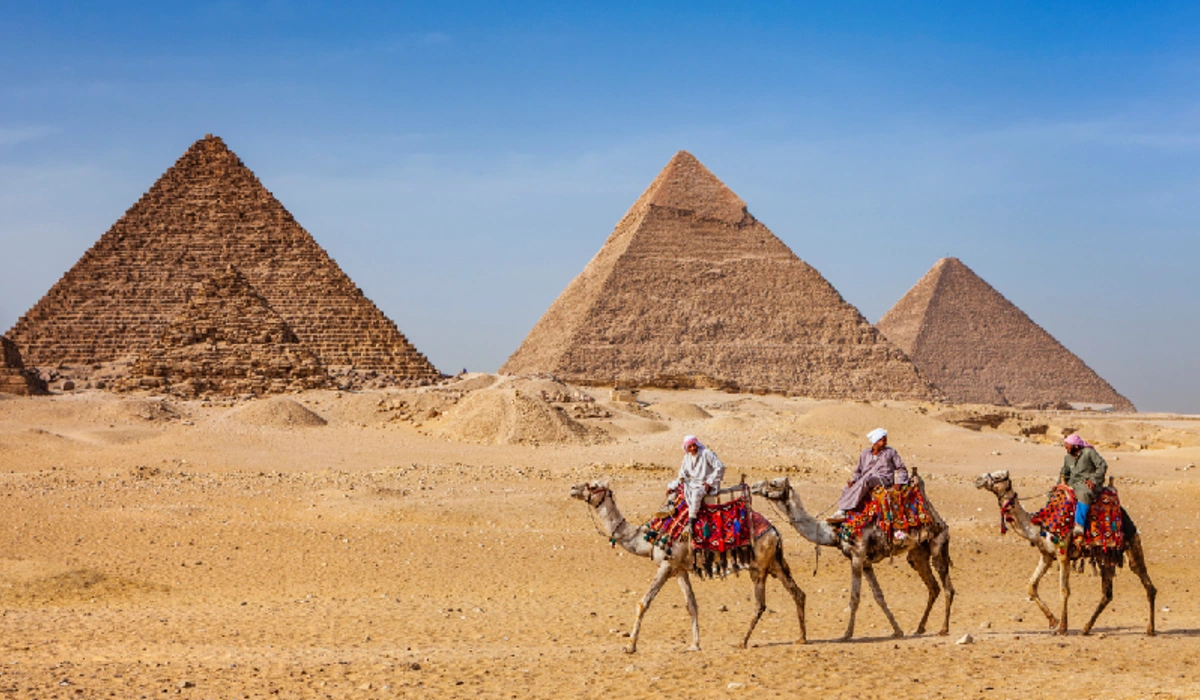
Egypt: The Camel in Front of the Pyramids
I knew it was coming. Every travel photographer on the internet has an opinion about the camel photo at the Pyramids of Giza. "It's a trap," they say. "The handlers are pushy, the camels smell, and the photo looks like every other photo ever taken in Egypt."
All of that is partially true. And I did it anyway.
My camel was named Obama. His handler told me this within thirty seconds of meeting us both, with an enormous grin, as if this was the funniest and most important piece of information I would receive in Egypt. It might have been.
We walked slowly along the ridge above the plateau as the morning sun hit the Great Pyramid of Khufu — the oldest of the Seven Wonders of the Ancient World and the only one still standing. From up there, on the back of a slightly grumpy camel named after an American president, I looked at a structure built 4,500 years ago by a civilization that had no wheels, no cranes, and no blueprint we have ever fully understood.
No amount of crowds or pushy vendors or overpriced camel rides can diminish that.
The Pyramids of Giza are one of the most astonishing things human beings have ever made. Being there, physically present, is not the same as seeing a photograph. The scale defeats the camera every time.
Go. Get on the camel. Take the photo. You will not regret it.
Tip: Hire a licensed guide through your hotel or a reputable agency before you arrive. It makes the whole experience calmer, cheaper, and far more informative.
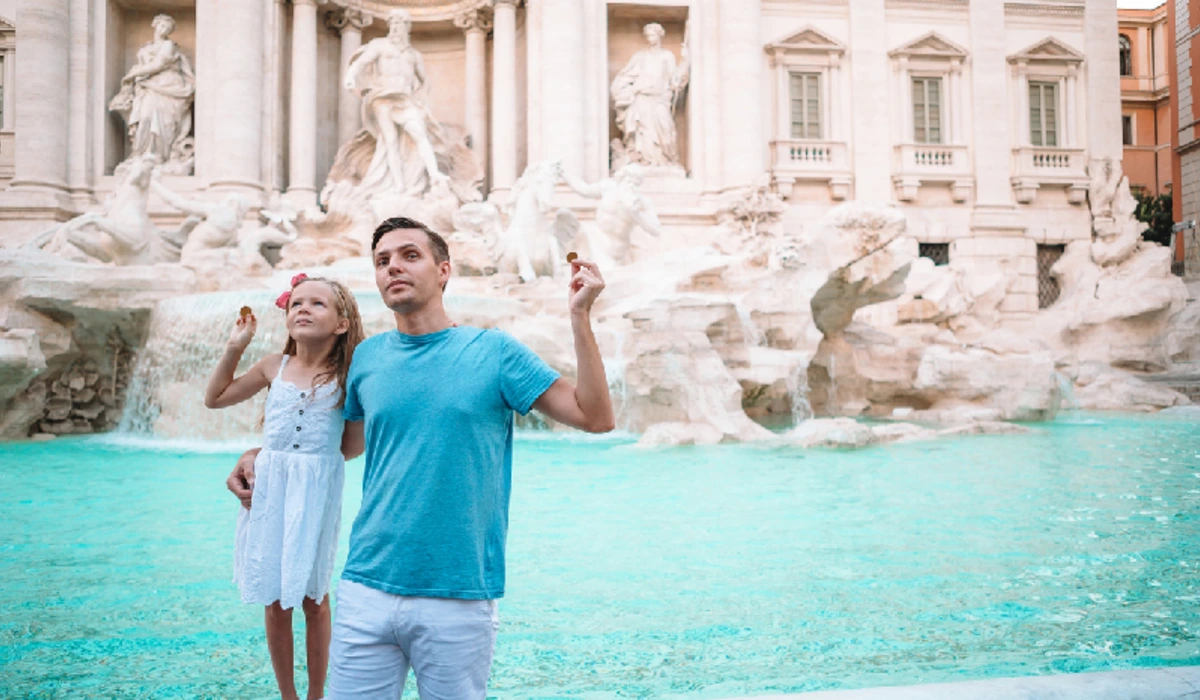
Italy: The Coin in the Trevi Fountain
The Trevi Fountain in Rome is always crowded. There is no time of day when it is not crowded. At 6am it is crowded. In February it is crowded. During a rainstorm it is crowded.
I arrived at 7:30am on a Tuesday in shoulder season and there were already three hundred people there.
And it was still completely wonderful.
The fountain itself is enormous — far bigger than any photograph suggests. It bursts out of the back of a palace like something that escaped from a dream. Neptune stands in the center surrounded by sea horses and Tritons, water crashing around him with a sound that somehow cuts through all the noise of the crowd.
I pushed my way to the edge, turned my back to the fountain the way the tradition demands, held a coin in my right hand, threw it over my left shoulder, and made a wish.
The coin — according to Roman legend — guarantees your return to Rome. An estimated €1.5 million worth of coins are thrown into the fountain every year. The money is collected regularly and donated to a charity that funds food programs for people in need across the city.
Your coin, thrown into the world's most famous fountain, actually does something useful. I found that deeply satisfying.
The wish, as far as I can tell, is also working out fine.
Tip: Go as early as possible — the light is better for photos and the crowd is thinner. The fountain is also beautifully lit at night if you prefer a more atmospheric visit.
Japan: The Rented Kimono in Kyoto
I was slightly embarrassed about this one, I'll admit.
Dressing up in a rented kimono as a foreign tourist in Kyoto felt, before I did it, like exactly the kind of thing that belongs on a list of cultural faux pas. I worried it was disrespectful, performative, a costume rather than an appreciation.
I mentioned this concern to the woman running the kimono rental shop near Gion. She looked at me as if I had said something very strange.
"We want you to wear it," she said simply. "That is why we offer it."
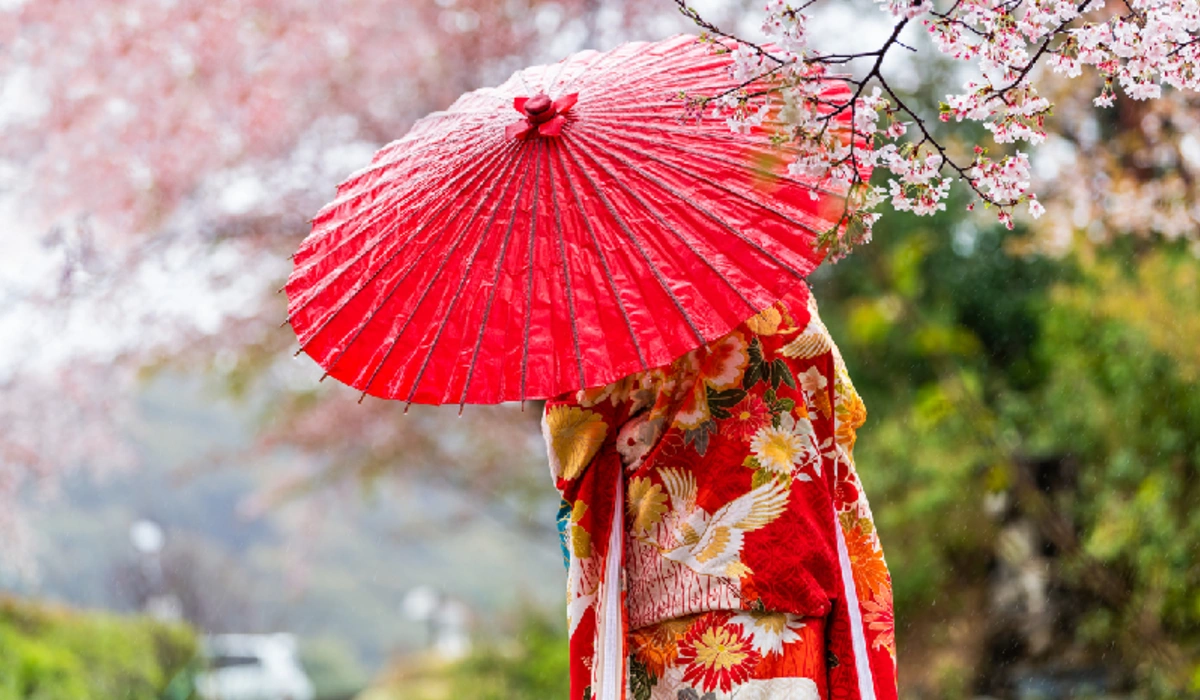
She spent twenty minutes dressing me — the underrobe, the kimono itself, the obi belt tied in a precise bow at the back — explaining each layer as she went. What the colors traditionally signified. How the pattern I'd chosen was associated with autumn. How the obi knot style she was using was considered elegant rather than casual.
By the time I walked out onto the stone-paved streets of Higashiyama, I felt less like a tourist in a costume and more like someone who had been briefly let into something real.
I walked to Kiyomizudera temple. I watched the city from the wooden stage that juts out over the hillside. Other visitors in kimonos — Japanese and foreign alike — wandered the same pathways. Nobody looked ridiculous. Everyone looked like they were exactly where they were supposed to be.
The kimono photos are some of my favorite images from any trip I've ever taken. Not because of how I look in them. Because of how Kyoto looks around me.
Tip: Book your kimono rental the moment you know your Kyoto dates — the most popular shops fill up fast, especially during cherry blossom and autumn foliage seasons.
Peru: Machu Picchu at Dawn
The alarm went off at 4:00 am.
I had been warned about the crowds at Machu Picchu so many times that I'd built up a kind of dread about it. Thousands of visitors a day. Tour groups arriving in waves. The famous
Sun Gate photograph was ruined by a queue of hikers stretching back down the mountain.
None of that prepared me for what it actually looked like.
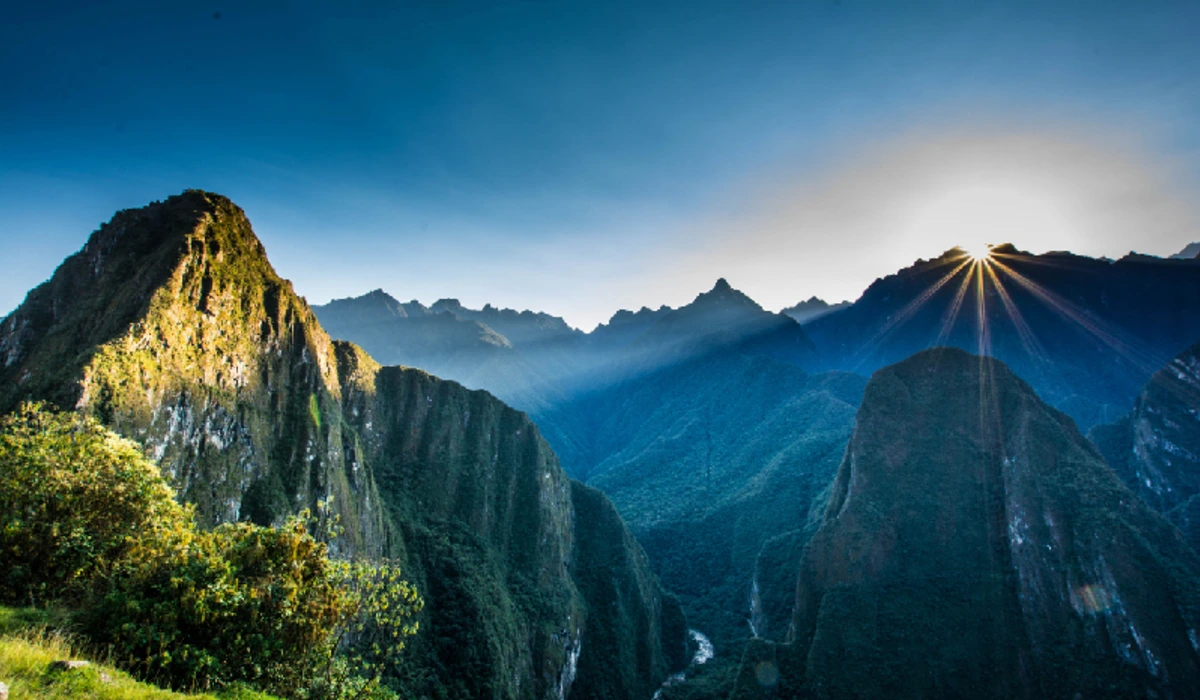
We arrived just as the mist was beginning to lift off the valley below. The citadel emerged slowly — terraces first, then walls, then the peaks above — like something being revealed rather than discovered. The clouds moved quickly at that altitude, and the light changed every few minutes, turning the stone from grey to gold to almost white.
Machu Picchu was built by the Inca civilization in the 15th century, almost certainly as a royal estate for the Inca emperor Pachacuti. It sat undiscovered by the outside world until 1911. Standing in the middle of it, looking out over the Urubamba River thousands of feet below, the question that kept returning to me was not "how did they build this?" but "why here?"
The answer, standing there in the early morning light with the Andes stretching in every direction, felt obvious. Because it is the most beautiful place on earth.
Yes, it gets crowded by 10 am. Go at dawn. The early entrance is worth every minute of the 4:00 am alarm.
Tip: Book your entrance ticket and time slot months in advance — daily visitor numbers are capped, and the dawn slots sell out fastest. Stay in Aguas Calientes the night before to avoid the brutal early morning travel.
UAE: The Top of the Burj Khalifa
People like to be dismissive about the Burj Khalifa observation deck. "It's just a very fast lift and a view," they say. "Dubai from above just looks like more Dubai."
They are not entirely wrong. And they are missing the point entirely.
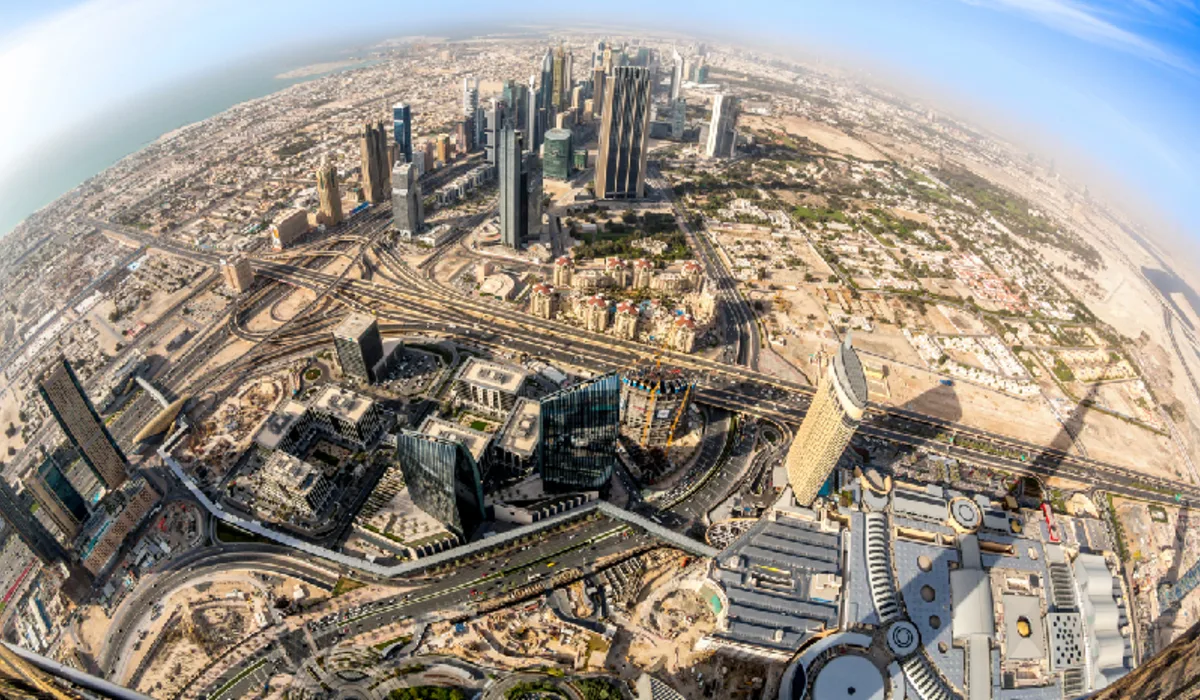
The Burj Khalifa is the tallest building in the world — 828 meters of glass and steel rising out of the desert like a dare. Taking the lift to the observation deck on the 124th floor takes less than a minute. Your ears pop. The doors open. And then the Arabian Gulf is laid out in front of you, the city below you in every direction, the desert stretching to the horizon beyond.
I went at sunset. The sky turned from blue to orange to deep pink while I stood there. The city lights began appearing one by one below me, spreading outward like something alive.
The Palm Jumeirah glowed in the fading light. Dhows moved silently across the Creek far below.
What struck me most was not the height. It was the improbability of the whole thing. Sixty years ago, this was desert. The city below me, with its islands built into the sea and its towers taller than clouds, was assembled in a single human lifetime.
That is genuinely extraordinary. Standing at the top of the world's tallest building and thinking about that felt like exactly the right thing to do in Dubai.
I also bought the overpriced coffee at the café on the 122nd floor. Worth it.
Tip: Book the "At the Top" ticket for the 124th floor rather than the premium "At the Top SKY" on the 148th floor — the view is nearly identical, and the price difference is significant. Sunset and after-dark slots book up weeks in advance.
The Honest Truth About Tourist Traps
Here is what nobody tells you about the most visited places in the world: they earned it.
Not through marketing. Not through luck. Through being genuinely, undeniably, sometimes inexplicably magnificent — the kind of magnificent that makes a person stand very still and feel very small and very grateful to be alive at the same time.
The crowd at the Trevi Fountain is not evidence that the Trevi Fountain is overrated. It is evidence that beauty is universal. That wonder does not require exclusivity. That a coin thrown into a fountain in Rome means the same thing whether you are the first person to throw one or the ten-millionth.
Do the touristy thing. Buy the replica. Take the photo. Get on the camel.
No regrets. I promise.
FAQs
1. Are famous tourist attractions actually worth visiting?
In almost every case, yes. The reason certain places become world-famous is precisely that they are genuinely remarkable. The crowds exist because the experience is worth having — not despite that. The key is managing your visit smartly: booking in advance, going early, and arriving with realistic expectations rather than hoping to have an ancient wonder entirely to yourself.
2. How do you enjoy a crowded tourist site without the stress?
Timing is everything. Most major attractions are significantly less crowded in the first hour after opening and in the last hour before closing. Shoulder seasons — spring and autumn for most of Europe and Asia — offer dramatically better experiences than peak summer. Booking timed entry tickets online eliminates the longest queues. And accepting that some crowds are simply part of the experience makes everything easier.
3. What is the most overrated famous tourist attraction?
Honest answer: the Mona Lisa at the Louvre. Not because it isn't a masterpiece — it is — but because the experience of seeing it is genuinely poor. It hangs across an enormous room behind bulletproof glass, smaller than most people expect, visible only from a distance, surrounded by hundreds of other visitors taking photos of their phones taking photos of a painting. The Louvre itself is extraordinary. The Mona Lisa experience, specifically, does not match the hype.
4. What is the most underrated famous landmark?
Petra in Jordan is consistently underrated despite being one of the most astonishing places on earth. Most visitors see the Treasury — the iconic facade carved into the rose-red cliff — and turn back. But Petra is enormous. Walk further into the site, and you will find monasteries, royal tombs, Roman colonnades, and entire hillsides of carved architecture with almost nobody else around. Give it two days, not two hours.
5. Is it okay to enjoy touristy things as a traveler?
Completely and without question. The idea that "real" travel means avoiding anything popular is a form of snobbery that robs people of genuinely wonderful experiences. The Eiffel Tower, the Pyramids, Machu Picchu — these things are famous because human beings made something extraordinary, and other human beings recognized it. Joining that recognition is not shallow. It is, in fact, exactly what travel is for.
Join the discussion