



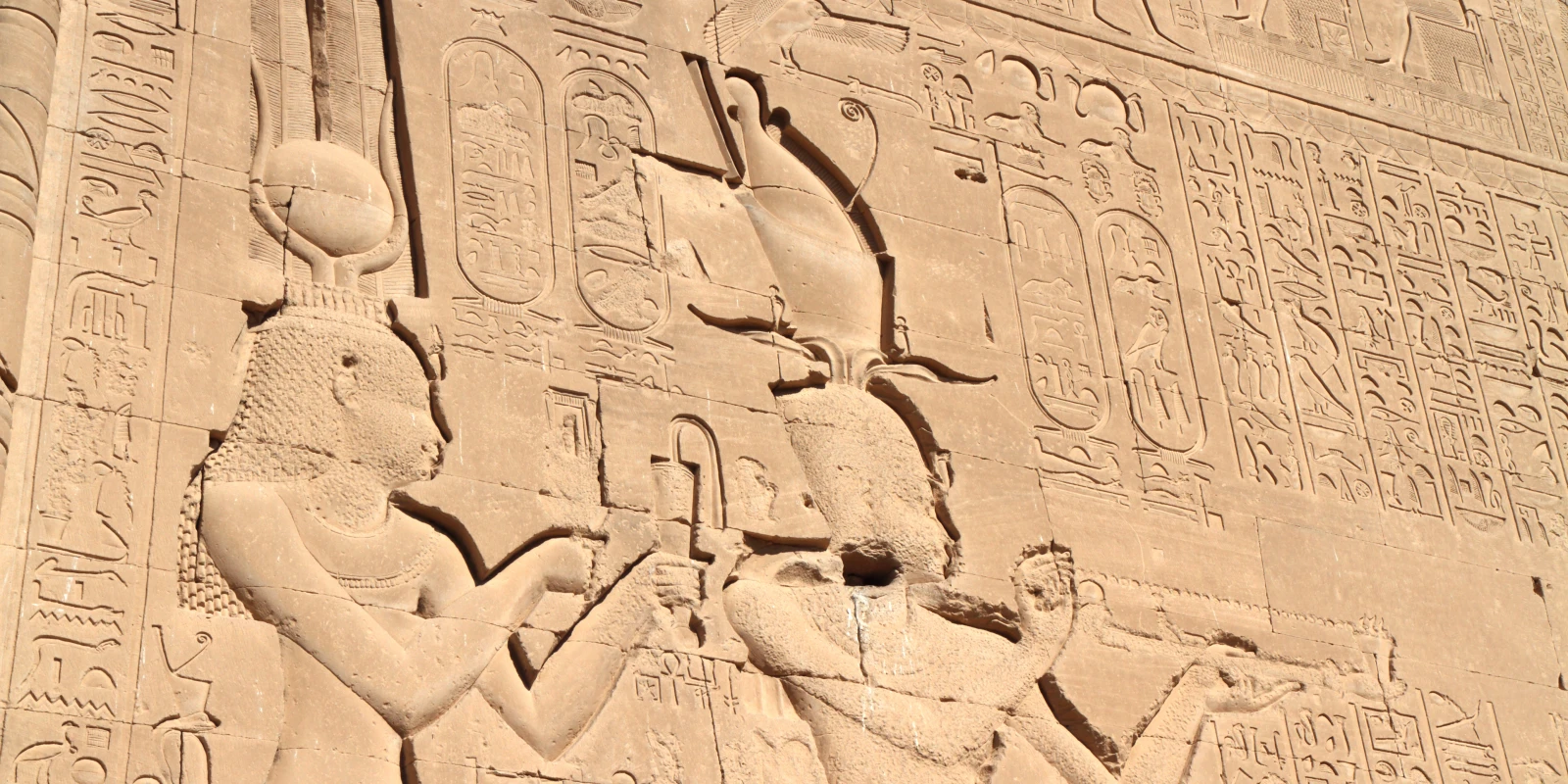
facts that no one would tell you about!!
Start with the fact that breaks everyone's brain a little.
Cleopatra lived closer in time to you than to the building of the Great Pyramid. The pyramid was raised around 2560 BCE. Cleopatra died in 30 BCE. That is a gap of about 2,530 years. The gap between Cleopatra and today is roughly 2,050 years. She is closer to the smartphone than to the pyramid.
We file "ancient" away as one distant blob — pharaohs, togas, temples, all vaguely long ago. But inside that word are gulfs of time so vast that the ancients had their own ancient history.
Let's decode what "ancient" really means, across the great sites, on one honest timeline.
Why does "ancient" feel like one big blob?
Because our brains are terrible at scaling time we can't live through. Think of it like looking at a distant mountain range:
-
Everything far away looks flat. From a distance, two peaks 50 miles apart seem to sit side by side. Deep time does the same thing.
-
We have no personal yardstick past a lifetime. We feel the difference between 5 and 50 years. We cannot feel the difference between 2,000 and 4,000 years, so we round it all to "ages ago."
-
School taught us in blocks. "Ancient Egypt," "Ancient Greece," "Ancient Rome" — neat chapters that hide how far apart they actually were.
Once you put real numbers on it, the flat picture springs into 3D — and it changes how it feels to stand at any of these places.

The timeline that breaks your brain
Here is the honest order, with dates, across destinations:
-
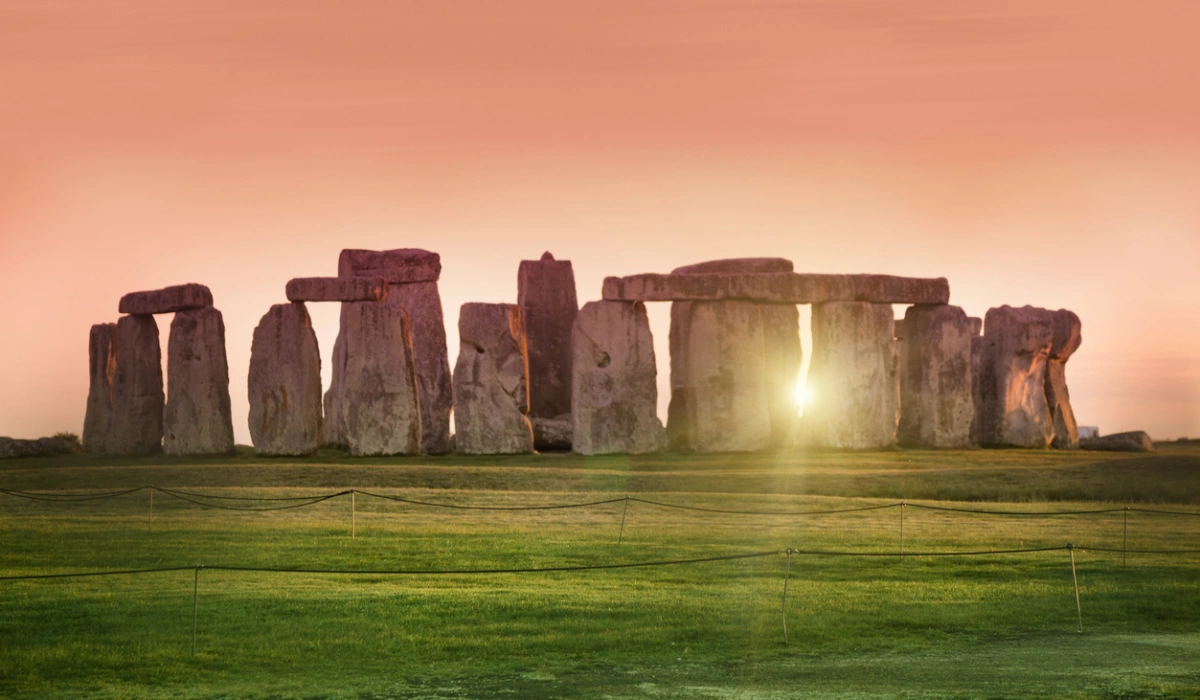
c. 3000–2000 BCE — Stonehenge (England) is built and rebuilt over centuries.
-
c. 2560 BCE — The Great Pyramid of Giza (Egypt) rises. It will be the tallest structure on earth for nearly 4,000 years.
-
c. 2500 BCE — The Great Sphinx (Egypt) is carved.
-
447–432 BCE — The Parthenon (Greece) is built — already some 2,000 years after the pyramids.
-
c. 300 BCE–100 CE — Petra (Jordan) flourishes as the Nabataean capital.
-
69–30 BCE — Cleopatra (Egypt) rules, at the hinge between the Roman Republic and Empire.
-
70–80 CE — The Colosseum (Rome) opens.
-
2026 CE — You, reading this.
Notice the shape: the pyramids sit closer to the start of that list than to the Parthenon. The distance from the Great Pyramid to the Parthenon is bigger than the distance from the Parthenon to us.
Closer to us than you'd ever guess
The best way to feel deep time is through these "closer than" facts:
|
The thing |
The reality |
|
Cleopatra |
Lived closer to the Moon landing than to the building of the Great Pyramid |
|
The Great Pyramid |
Was more distant from Imperial Rome than Rome is from us today |
|
Woolly mammoths |
Were still alive on Earth for centuries after the Great Pyramid was finished |
|
Stonehenge |
Was still being worked on around the same time the pyramids went up |
That third one deserves a second read. The last mammoths, on a remote Arctic island, died out around 1650 BCE — roughly 900 years after the Great Pyramid was already standing. Pharaohs and mammoths overlapped.
Were the pyramids "ancient" to the ancients?
Yes , and this is the part that reframes everything:
-
To Cleopatra, the pyramids were already 2,500 years old — as distant from her as the fall of Rome is from us.
-
To Roman tourists, Egypt was a bucket-list "ancient wonders" destination. They visited the pyramids as sightseers and even scratched graffiti into the monuments, exactly like modern tourists.
-
To the earliest Greek historians, Egypt was the old, mysterious civilization they travelled to in awe.
So when you stand at the pyramids, you are not just looking at something ancient. You are looking at something that was already ancient to people we consider ancient. It is history stacked on history.
Myth: The great ancient civilizations — Egypt, Greece, Rome — all existed around roughly the same "long ago."
Fact: They are separated by enormous spans. More time passed between the building of the Great Pyramid and the reign of Cleopatra than has passed between Cleopatra and today. "Ancient" contains multitudes.
Why does this matter when you travel?
Because scale is the thing photographs can't capture, and it transforms the experience:
-
It makes the pyramids hit harder. You are touching something that outlived empires that themselves feel impossibly old.
-
It connects your trip across borders. Egypt, Greece, Jordan, and Italy stop being separate "ancient" stops and become chapters in one long, staggered story.
-
It turns sightseeing into time travel. Standing where a Roman tourist once stood, looking up at a pyramid that was ancient to them, is a genuinely dizzying feeling — in the best way.
That is the whole idea behind decoding what "ancient" really means. The word flattens time into a single distant haze. The truth is a vast, layered landscape — and once you can see it, every great site you visit becomes far more astonishing than the guidebook lets on.
FAQs
Q1:Did Cleopatra really live closer to us than to the pyramids? Yes. The Great Pyramid was built around 2560 BCE and Cleopatra died in 30 BCE — a gap of about 2,530 years. Only around 2,050 years separate Cleopatra from today. So she lived closer in time to the modern era than to the construction of the pyramids.
Q2:How old are the pyramids of Giza? The Great Pyramid of Giza was built around 2560 BCE, making it roughly 4,500 years old. It was the tallest human-made structure in the world for nearly 4,000 years, until the early 14th century CE.
Q3:Were the pyramids ancient to the Romans? Very much so. By Roman times, the pyramids were already more than 2,500 years old. Romans visited Egypt as tourists to see the "ancient wonders," and some even left graffiti on the monuments, much like visitors do today.
Q4:Which is older, Stonehenge or the pyramids? They overlap. Stonehenge was built and modified in stages between roughly 3000 and 2000 BCE, while the Great Pyramid dates to around 2560 BCE. So parts of Stonehenge predate the pyramids, and parts were still being worked on while the pyramids stood.
Q5:Why do all ancient civilizations feel like they existed at the same time? Because human brains struggle to sense time spans longer than a lifetime, and school often teaches history in separate "blocks." In reality, Egypt, Greece, and Rome were separated by thousands of years — more time separates the pyramids from Cleopatra than separates Cleopatra from us.
Q6:What is the best way to understand ancient timelines when traveling? Anchor each site to a date and compare it to something familiar. Seeing that the pyramids were already ancient to the Romans, or that the Parthenon came 2,000 years after the pyramids, turns a list of old monuments into one connected story — and makes visiting them far more powerful.


Join the discussion