




-
Turkey: The Undisputed Champion of Breakfast Culture
-
Egypt: Where Breakfast Has Fed Civilizations
-
Morocco: Spicy Starts in the Maghreb
-
Tunisia: The Chickpea Soup That Defines Morning
-
Jordan: Levantine Breakfast Excellence
-
Dubai & Saudi Arabia: Modern Gulf Breakfast with Traditional Roots
-
Oman: The Arabian Peninsula's Best-Kept Breakfast Secret
-
India: Breakfast as Regional Identity
-
Sri Lanka: The Curry-for-Breakfast Champion
-
Greece: Mediterranean Morning Simplicity
-
Southeast Asia: Morning Markets and Street Cart Magic
-
Peru: High-Altitude Morning Fuel
-
African Safari: Bush Breakfast Magic
-
Practical Breakfast Travel Tips
-
FAQs
Breakfast, in the right hands, is far more than fuel. Across much of the globe, it's a ritual, a cultural statement, and a test of hospitality rolled into one glorious spread. While many Western travelers grab coffee and sprint out the door, millions of people begin their mornings with elaborate feasts that put the typical continental breakfast to shame.
These aren't trendy brunch spots or Instagram-bait avocado toast joints. These are destinations where breakfast has mattered for centuries, where recipes have barely changed since your great-great-grandmother's time, and where skipping the morning meal borders on sacrilege. Here are fourteen destinations where breakfast is genuinely an art form.
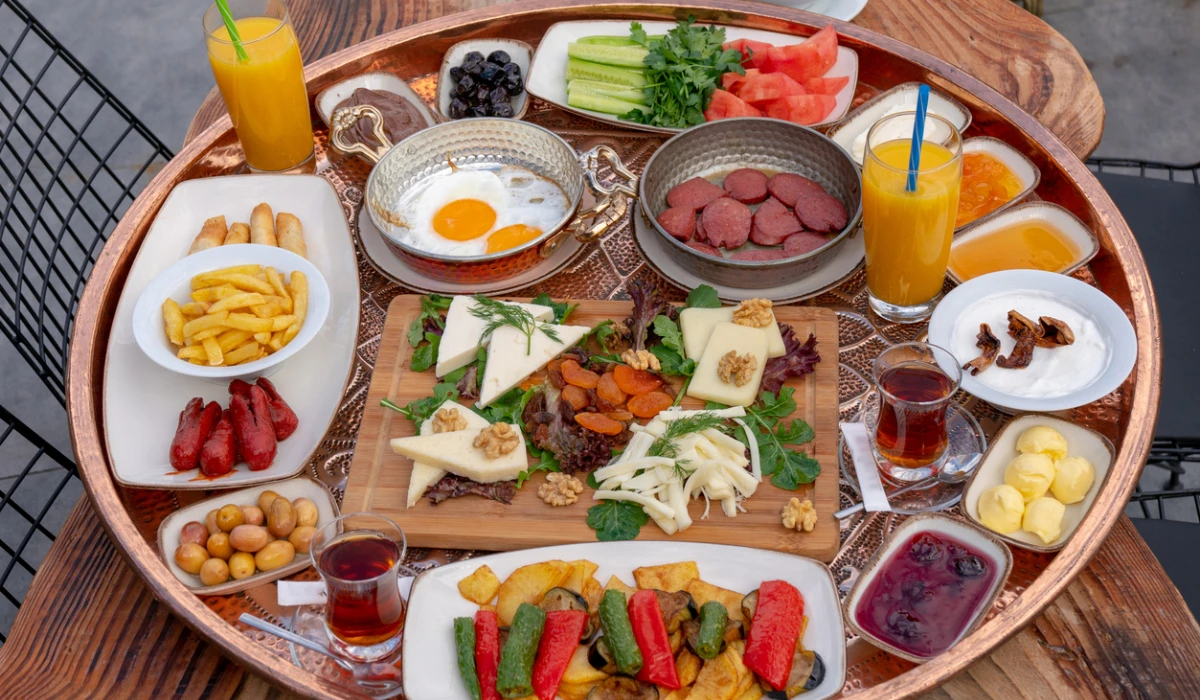
Turkey: The Undisputed Champion of Breakfast Culture
Turkey's breakfast, called kahvaltı, literally translates to "before coffee," which tells you everything. Turkish breakfast isn't a meal; it's a negotiation table of flavors: white and yellow cheese, black and green olives, sliced tomatoes and cucumbers, fig jam, honey, clotted cream (kaymak), sesame-crusted simit, fresh bread, butter, spiced sausage (sucuk), eggs prepared multiple ways, menemen (eggs scrambled with peppers and tomatoes), and endless tulip glasses of black tea.
What makes it special is the pace. Turkish families routinely spend two to three hours at the breakfast table on weekends. Business deals and even marriage proposals happen over these marathon morning sessions.
- Where to experience it: Istanbul's breakfast scene is legendary, but Van in eastern Turkey offers the mythical "Van breakfast" — 20-plus items including herbed otlu peynir cheese found nowhere else.
- Traveler tip: Don't schedule anything before noon on your first Turkish breakfast experience.
Egypt: Where Breakfast Has Fed Civilizations
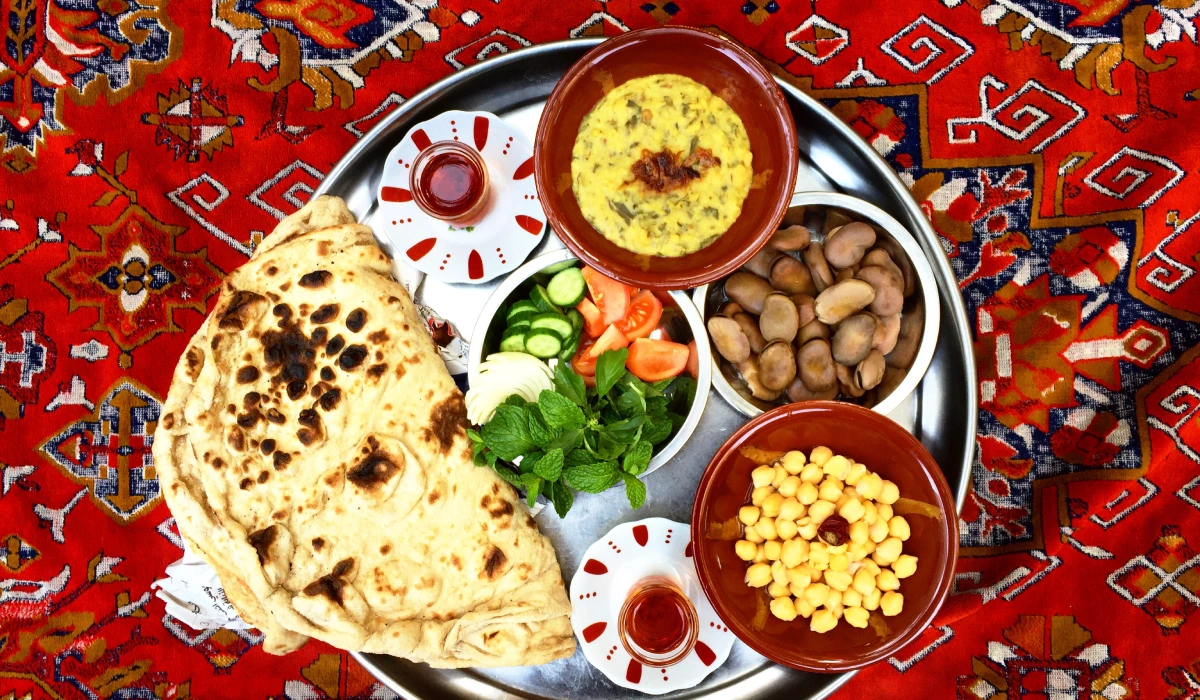
Egyptian breakfast is practically ancient. Ful medames — slow-cooked fava beans mashed with garlic, lemon, cumin, and olive oil, eaten with warm baladi bread — has sustained this civilization for millennia. Add ta'meya (Egyptian fava-bean falafel), white cheese, olives, yogurt, pickles, and eggs, and you have a complete morning spread.
What sets Egypt apart is its democratic spirit. The same ful wealthy Cairenes eat in upscale cafés is identical to what construction workers scoop from street carts at 5 AM — an equalizer unchanged across social classes and centuries.
- Where to experience it: Find a small ful cart in any neighborhood at dawn. Watch the vendor ladle beans from copper pots that have been simmering overnight.

Morocco: Spicy Starts in the Maghreb
Morocco's breakfast bridges continents. Bissara (fava bean soup), msemen (square folded pancakes), baghrir (thousand-hole pancakes), fresh bread with olive oil and honey, amlou (almond-argan butter), and mint tea in iconic small glasses form the foundation. Then comes harissa — spicy chili paste that Moroccans consider entirely breakfast-appropriate — alongside French colonial additions like croissants and baguettes.
- Where to experience it: Fez Medina's street stalls at dawn offer the most authentic experience. Follow working-class locals; they always know where the good stuff is.

Tunisia: The Chickpea Soup That Defines Morning
Tunisia deserves its own spotlight. Lablabi — hot chickpea soup poured over torn bread, topped with a poached egg, drizzled with olive oil, seasoned with cumin and harissa, garnished with capers — costs less than a dollar and is absolutely perfect on a cool morning. Add fricassé (fried sandwiches stuffed with tuna, harissa, and olives), brik (fried pastry with egg), and strong coffee for the full Tunisian morning.
- Where to experience it: Tunis's medina lablabi vendors have been perfecting their recipe for generations. Go where construction workers line up before dawn.

Jordan: Levantine Breakfast Excellence
Jordan understands hospitality through breakfast. Hummus, ful, falafel, labneh, za'atar with olive oil, makdous (stuffed eggplant), olives, fresh vegetables, manakeesh, eggs, white cheese, and sweet tea — all shared communally from central plates. On special occasions, mansaf (the national lamb dish) even appears at the breakfast table. Jordanians don't mess around.
- Where to experience it: Amman's Rainbow Street has excellent spots, but Bedouin breakfast in Wadi Rum — bread baked in desert sand, strong tea, dates, and olives — is something else entirely.
Dubai & Saudi Arabia: Modern Gulf Breakfast with Traditional Roots
Gulf breakfast is uniquely sweet and aromatic. Balaleet (sweet cardamom vermicelli topped with a savory omelet), chebab (cardamom pancakes with date syrup), khameer (yeast bread), dates, and qahwa (Arabic coffee) reflect Bedouin traditions elevated by oil-wealth abundance.
- Where to experience it: Dubai's Al Fanar restaurant serves traditional Emirati breakfast in a heritage setting.
Oman: The Arabian Peninsula's Best-Kept Breakfast Secret
Oman's breakfast balances sweetness and savory more successfully than anywhere else in the Gulf. Halwa (dense sweet made from sugar, rosewater, and nuts) paired with bitter qahwa seems counterintuitive until it absolutely isn't. Add karak spiced tea, thin khubz rakhal bread, and dates to complete the spread.
- Where to experience it: Muscat's traditional cafés near Mutrah Souk, preferably with a seaside view.
- Traveler tip: Halwa is intensely sweet. Treat it as a condiment alongside bitter coffee, not as pudding.
India: Breakfast as Regional Identity
India doesn't have one breakfast culture — it has dozens. South India brings idli, dosa, vada, and filter coffee that could wake the dead. North India counters with stuffed paratha, chole, and spiced chai. West India offers dhokla, fafda, and sweet jalebi. East India serves luchi with cholar dal — and sometimes dessert for breakfast.
The sheer diversity is unmatched. You could eat breakfast in India for a year without repeating a single dish.
- Where to experience it: South Indian breakfast in Bangalore or Chennai is the most accessible entry point; Mumbai's street breakfast culture is legendary but intense.

Sri Lanka: The Curry-for-Breakfast Champion
Sri Lanka takes breakfast where others won't: straight to curry. Hoppers (bowl-shaped pancakes), string hoppers, pol sambol (spicy coconut relish), dhal curry, fish curry, and coconut milk gravy — all before 9 AM. There's no "breakfast food only" rule here. If it's delicious, it belongs at any meal.
- Where to experience it: Colombo's local "hotels" (small restaurants, not accommodation) serve authentic Sri Lankan breakfast.
- Traveler tip: The heat is very real. Have yogurt nearby.
Greece: Mediterranean Morning Simplicity
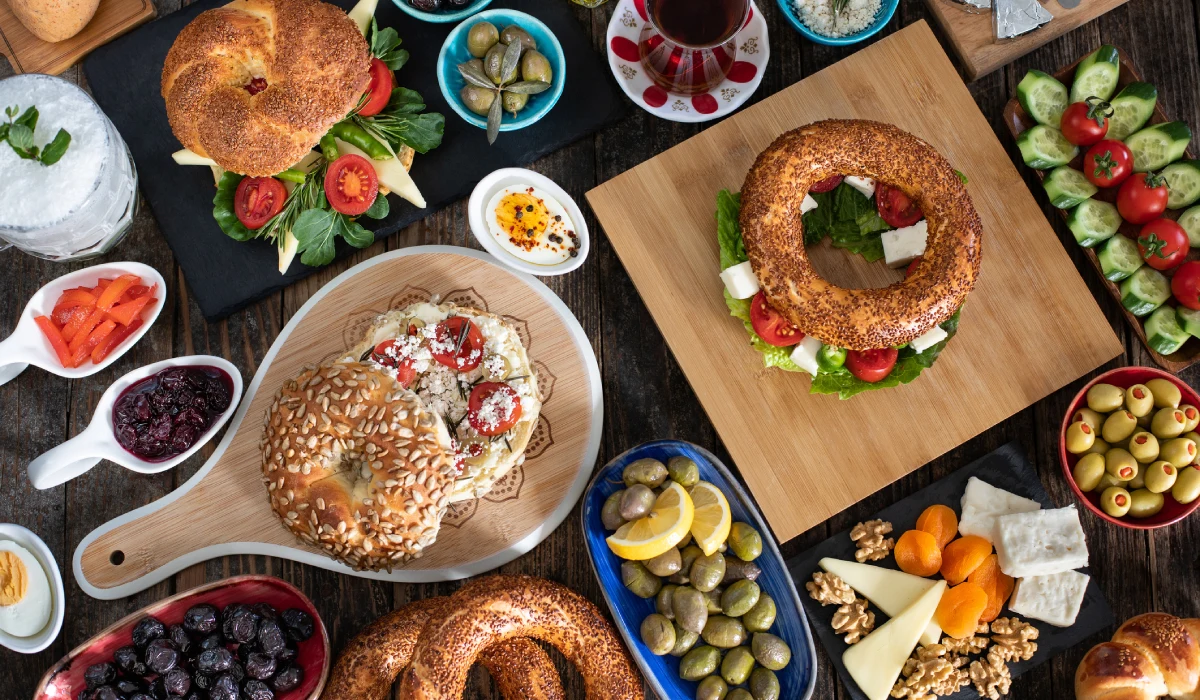
Greece approaches breakfast with elegant restraint: koulouri (sesame rings), cheese pies, Greek yogurt with honey and walnuts, olives, feta, tomatoes, and strong Greek coffee. Crete adds paximadi (barley rusks softened with fresh tomato). It's the breakfast your doctor would actually approve of — Mediterranean diet principles applied beautifully to the morning table.
- Where to experience it: Athens's central market cafés, or Crete's village tavernas for the most rustic, honest version.
Southeast Asia: Morning Markets and Street Cart Magic
Vietnam's phở, Thailand's jok (rice porridge) and fried dough, Malaysia's nasi lemak (coconut rice with anchovies, peanuts, and egg) — Southeast Asia treats breakfast as seriously as anywhere, but on its own terms. Noodle soup for breakfast? Yesterday's curry? Entirely acceptable. The line between breakfast, lunch, and dinner simply doesn't exist.
- Where to experience it: Hanoi has the world's best breakfast street food scene; Penang, Malaysia, is breakfast heaven.
Peru: High-Altitude Morning Fuel
Peruvian breakfast is built for the Andes: tamales, pan con chicharrón (pork sandwich), quinoa porridge, emoliente herbal drinks, and coca tea in the highlands — warming, substantial, and perfectly calibrated for altitude. For the bold, anticuchos (grilled meat skewers) appear at morning markets.
- Where to experience it: Cusco's morning markets provide the full Andean experience.
- Traveler tip: Coca tea genuinely helps with altitude sickness. It's legal, traditional, and effective.
African Safari: Bush Breakfast Magic
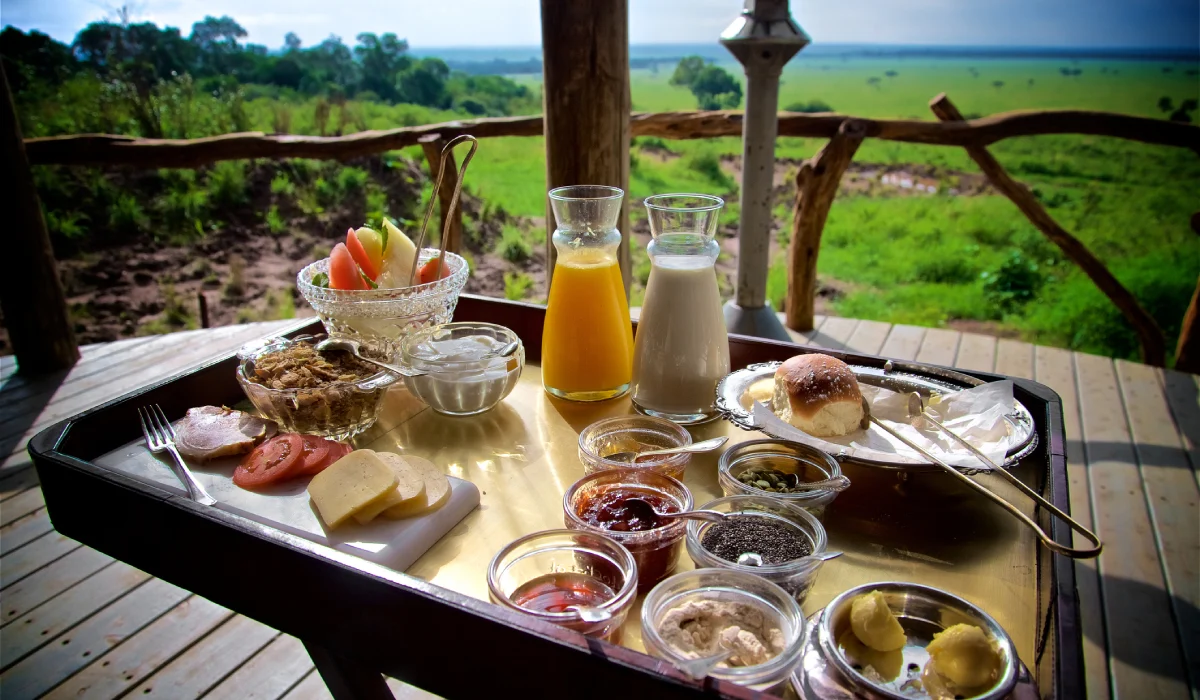
Nowhere else on earth offers breakfast with elephants potentially photobombing your table. Safari bush breakfast — white tablecloths, silver service, fresh pastries, eggs over a campfire, coffee brewed on-site, in the middle of the wilderness — is five-star hospitality delivered in absolute nowhere. Add traditional ugali porridge or South African boerewors and roosterkoek for cultural grounding.
- Where to experience it: Botswana's Okavango Delta camps excel at bush breakfasts; Kenya's Maasai Mara has spectacular settings.
Practical Breakfast Travel Tips
Wake up early. The best experiences happen before 8 AM — vendors are fresh, tourist crowds haven't arrived, and locals are actually there.
Eat where workers eat. Construction workers and taxi drivers know where the good, affordable, authentic breakfast is. Follow them without hesitation.
- Budget accordingly:
$1–3: Egypt, Tunisia, India, Southeast Asia
$3–5: Morocco, Jordan, Peru
$5–10: Greece, Oman
$10–20: Turkey
$20–50+: Dubai, Safari
- Manage your spice expectations: Turkey, Greece, and Egypt are mild; Morocco and Jordan are medium; Tunisia, India, and Sri Lanka will genuinely test your heat tolerance.
FAQs
Turkey wins on variety, with 15–25+ items per spread. But "best" is personal: Egypt wins for tradition and affordability, India for diversity, Jordan for hospitality, Sri Lanka for bold flavors.
2- What do people eat for breakfast in the Middle East?
Hummus, ful, falafel, labneh, olives, fresh vegetables, flatbread, white cheese, za'atar with olive oil, eggs, and strong tea or coffee. Savory, protein-rich, and genuinely delicious.
3- Is breakfast really important in these cultures, or is it tourist marketing?
Completely genuine. Turkish families spend 2–3 hours at weekend breakfast. Egyptians have eaten ful for millennia. This is daily life, not tourism.
4- Which breakfast destination is best for vegetarians?
India is easiest, followed by Turkey and Greece. Middle Eastern breakfast is manageable. Sri Lanka is challenging due to fish and meat in most dishes.
5- Do I need to wake up early for authentic breakfast experiences?
Yes. Egyptian ful carts peak at 5–6 AM. Turkish breakfast spots fill by 8 AM. Authentic experiences happen early, when working-class locals grab breakfast before work.
6- What's the weirdest breakfast on this list?
Dubai's balaleet (sweet pasta with savory omelet) confuses most visitors. Sri Lankan curry breakfast shocks those expecting mild morning food. Both are delicious — trust the culture.
7- How do I know if a breakfast spot is authentic or touristy?
Authentic: locals outnumber tourists, prices in local currency only, minimal English, busy before 8 AM. Tourist trap: central location, English menus, fancy décor, empty during peak breakfast hours.

Join the discussion