




-
Harira at Ramadan: Morocco's Most Sacred Bowl
-
Tteokguk at Seollal: Korea's New Year Bowl of Time
-
Panettone in Milan: Why December Changes Everything
-
Onam Sadya: Kerala's Feast That Belongs to No Restaurant
-
Mochi at Japanese New Year: The Ritual That Takes All Day
-
Why Can't Restaurants Just... Copy This?
-
Frequently Asked Questions
I once queued for forty-five minutes for a bowl of soup.
Not at a famous restaurant. Not for a celebrity chef's tasting menu. For a bowl of harira — the thick, spiced Moroccan soup made with lamb, chickpeas, tomatoes, and lemon — ladled out of an enormous pot by a woman who had been cooking it since four in the morning, at a street stall during Ramadan in Marrakech.
It was, without question, one of the best things I have ever eaten. And I have never found anything like it in a restaurant. Not even close.
Because that harira wasn't just a recipe. It was a moment — tied to a specific time of year, a specific ritual, a specific crowd of people all breaking their fast together as the sun went down. Take it out of that context and something essential disappears.
This is the food that never makes it onto restaurant menus. Not because it's too complicated or too expensive — but because it belongs somewhere. To a festival, a season, a ritual that a permanent kitchen simply cannot replicate.
Here are the ones worth travelling for.
Harira at Ramadan: Morocco's Most Sacred Bowl
Harira exists year-round in Morocco. You can find it in restaurants, in homes, on street corners. But the harira of Ramadan is something entirely different.
During the holy month, the entire country anticipates iftar — the meal that breaks the daily fast at sunset. And the first thing most Moroccan families reach for is harira. Rich, warming, and deeply fortifying, it's the soup that catches you after a long day of fasting and eases you gently back into eating.
The Ramadan version is cooked longer, spiced more carefully, and served with a specific intensity of purpose that you feel the moment the bowl arrives. It comes with chebakia — honey-soaked sesame pastries fried until crisp — and dates, because sweetness is how you begin.
Every family has their version. Every neighbourhood has the stall they trust. Every bowl carries the weight of a month of waiting.
Can a restaurant replicate that? Not really. The harira in a Marrakech restaurant is fine. The harira eaten at sunset during Ramadan, surrounded by a city exhaling together, is something else entirely.

Tteokguk at Seollal: Korea's New Year Bowl of Time
In South Korea, there's a belief that eating tteokguk on New Year's Day adds a year to your age. Not takes a year away — adds one. Growing older in Korean culture is a mark of wisdom, not loss. And tteokguk is the food that marks that passage.
Tteokguk is a clear, delicate beef broth filled with thin-sliced rice cake ovals — the oval shape representing coins, symbolising prosperity for the year ahead. It's garnished with egg ribbons, seaweed, and spring onion, and eaten on the morning of Seollal, the Lunar New Year, before the family bowing ceremonies begin.
A Korean friend of mine, Jiyeon, who grew up in Seoul and now lives in London, describes the smell of tteokguk as the most powerful sensory trigger she knows. 'I smell that broth and I'm eight years old again, in my grandmother's kitchen,' she told me. 'No restaurant version has ever come close. Because the restaurant doesn't have my grandmother in it.'
You can order tteokguk in Korean restaurants any day of the year. But eaten on New Year's morning, in Korea, surrounded by three generations of family in hanbok — traditional dress — it becomes something that no menu can contain.
Have you ever eaten something that only tasted right in one specific place and time? That's what festival food does.

Panettone in Milan: Why December Changes Everything
Yes, you can buy panettone in a supermarket in July. And yes, it will taste fine. But you will be missing the point so completely that it almost doesn't count.
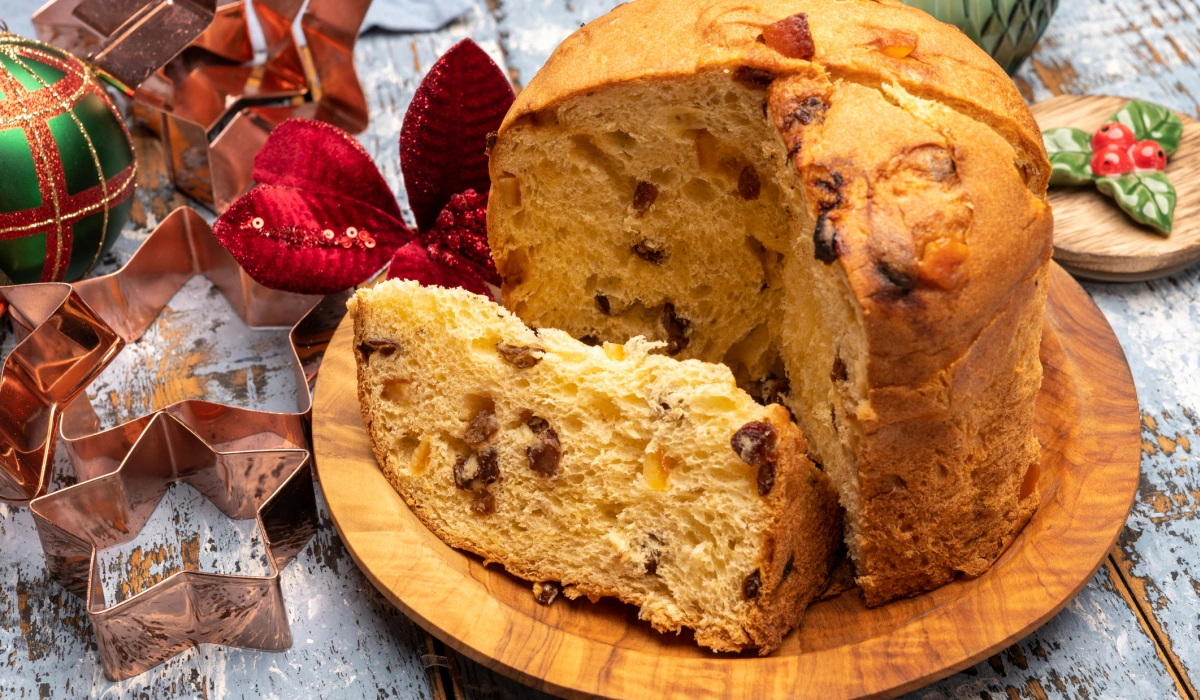
Panettone — the tall, domed Milanese sweet bread stuffed with candied citrus peel and raisins — is one of the most misunderstood foods in the world. The supermarket version, wrapped in cellophane, is to real panettone what instant coffee is to a hand-poured espresso. Technically the same category. Completely different experience.
The real version is made by a small number of artisan bakers in Milan and the surrounding Lombardy region. The dough is fermented for up to three days using a natural sourdough starter. The resulting bread is impossibly light — almost weightless — with a complex, slightly tangy sweetness that the industrial version never achieves.
And it only makes sense in December. Eaten on Christmas morning in Milan, torn apart by hand rather than sliced, with a glass of sparkling Moscato d'Asti alongside, it is a completely different food from the box you pick up in Tesco in November.
The best places to find the real thing: Pasticceria Marchesi in Milan, which has been making panettone since 1824. Or Pasticceria Cova on Via Montenapoleone — one of the most beautiful pastry shops in Europe, and worth visiting for the room alone.
Onam Sadya: Kerala's Feast That Belongs to No Restaurant
The Onam Sadya is, by any reasonable measure, one of the greatest meals on earth.
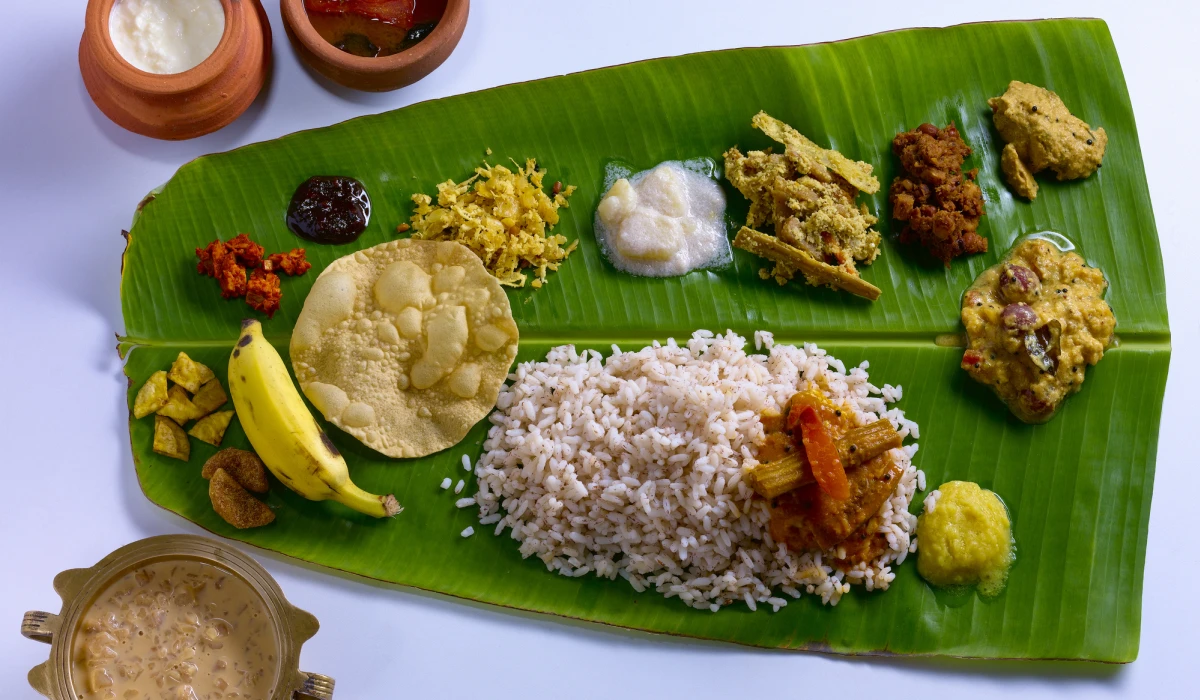
Served during Onam — Kerala's harvest festival, celebrated in August or September — the Sadya is a vegetarian feast served on a fresh banana leaf. Not a plate. A leaf, cut that morning, laid flat on the floor or a low table, and covered with up to twenty-six individual dishes arranged in a specific order that has its own cultural meaning.
The dishes arrive in sequence: pickles and banana chips first, then rice, then an escalating series of curries — avial, olan, kaalan, erissery — each with a different flavour profile, each made to be eaten in a specific combination with the others. You eat with your right hand, mixing and tasting as you go. The meal takes an hour minimum. Often much longer.
I was lucky enough to attend an Onam Sadya at a family home in Thrissur several years ago. The cooking had started at six in the morning. By the time we sat down, the banana leaf in front of me held more food than I had eaten in the previous two days combined.
'Can you get this in a Kerala restaurant?' I asked my host, Prabhakaran, afterward. He thought about it for a moment. 'You can get the food,' he said. 'But not the Sadya. The Sadya is the whole thing — the leaf, the season, the people, the order. Without those, it's just curry.'
He was absolutely right.
Everyone has had churros. Or thinks they have.
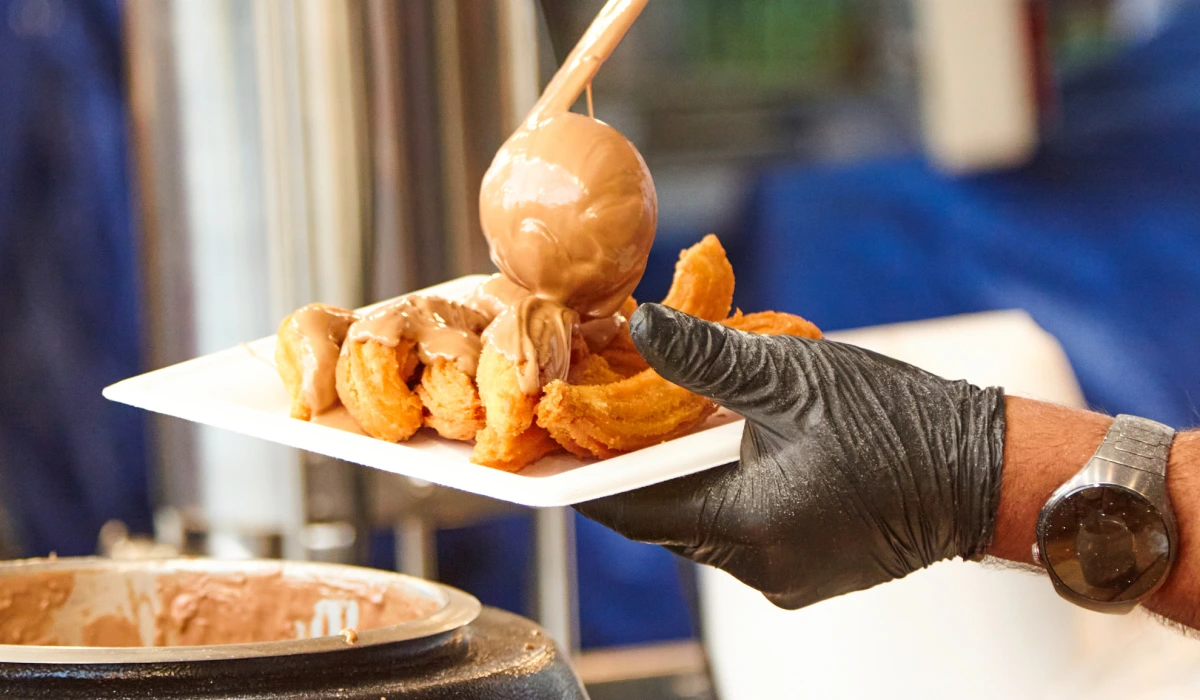
The churros served at Spanish ferias — the week-long street festivals that take over Andalusian cities like Seville, Jerez, and Granada every spring and summer — are not the same thing as the churros in the café down the road. They are thicker, greasier, more aggressively fried, and served with hot chocolate so dense you could stand a spoon in it.
They're eaten at two in the morning, after hours of dancing sevillanas, by people in flamenco dress who haven't sat down since ten. The combination of cold night air, exhaustion, loud music, and that particular thick chocolate makes the churros taste completely different from any version served in daylight.
Is it the recipe that's different? Partly. But mostly it's the context. The feria churros taste the way they do because of everything surrounding them — the lights, the noise, the hour, the specific particular madness of a Spanish feria at its peak.
Seville's Feria de Abril is the most famous — a six-day festival of horses, flamenco, and food that takes over an entire neighbourhood. If you go, eat the churros at midnight. Don't wait for the morning version. The morning version is just breakfast.
Mochi at Japanese New Year: The Ritual That Takes All Day
In Japan, the making of mochi — the soft, chewy rice cake that appears in every form imaginable throughout the year — takes on an entirely different character at New Year.
The mochitsuki ceremony involves pounding steamed glutinous rice in a large wooden mortar with a heavy mallet. It's a community event — one person pounds, another turns and folds the hot rice between strikes, in a rhythm that requires absolute trust and timing. Do it wrong and someone loses a hand.
The resulting mochi is eaten fresh, warm, and dusted with sweet red bean paste or soybean flour. Freshly pounded mochi has a texture and flavour that packaged mochi — even the good kind — simply cannot reproduce. It's silkier, stretchier, warmer in every sense of the word.
Many urban Japanese families no longer make mochi at home, but mochitsuki ceremonies still take place at temples, community centres, and rural neighbourhoods throughout late December. Tourists who find one and join in — which is usually welcomed — consistently describe it as one of the most memorable food experiences of their lives.
Because the food and the making of it are inseparable. Eating mochi you've pounded yourself, in a circle of people who trusted each other enough to keep their hands near a falling mallet — that mochi tastes different. It just does.

Why Can't Restaurants Just... Copy This?
It's a fair question. Restaurants are extraordinarily capable. They can recreate almost any dish from almost any culture with technical precision. So why can't they bottle the magic of festival food?
The short answer is that festival food isn't really about the recipe. It's about the conditions surrounding the recipe — the season, the ritual, the community, the specific emotional state of everyone eating it. A restaurant can serve you tteokguk on a random Wednesday, but it cannot give you New Year's morning in Seoul with your grandmother.
There's also a scarcity element that restaurants can't replicate. Part of what makes festival food taste extraordinary is that you've been waiting for it. You only get harira like this once a year. You only get the Onam Sadya in August. The anticipation is an ingredient that no professional kitchen can source.
This is actually one of the strongest arguments for travel. Not to see monuments or tick off bucket lists — but to show up at the right place at the right time of year and eat the thing that only exists there, then.
That meal will stay with you in a way that no restaurant meal, however brilliant, quite manages. Because you earned it.
Plan the Trip Around the Food
Most people plan a trip and then look up what to eat when they get there.
I'd like to suggest reversing that. Find the food first — the meal that only exists in one place, at one time of year — and build the trip around it.
Go to Morocco during Ramadan and wait for sunset. Go to Kerala in August and sit down on a banana leaf. Go to Milan in December and tear apart a panettone that took three days to make. Go to an Andalusian feria and eat churros at midnight in a flamenco dress, covered in chocolate, absolutely exhausted.
These aren't tourist experiences. They're the real thing. The food that the people who live there — who really live there, generation after generation — return to every year because it means something that no other meal quite replaces.
You will queue. You will wait. You will probably be confused at some point about what you're eating or how to eat it.
It will be completely worth it.
Frequently Asked Questions
1. When exactly is the Onam festival in Kerala?
Onam falls in the Malayalam month of Chingam, which typically corresponds to August or September in the Gregorian calendar. The exact date shifts each year based on the lunar calendar. The main feast day — Thiruvonam — is the tenth and most important day of the ten-day festival. Plan well ahead as accommodation in Kerala fills up quickly during this period.
2. Can non-Muslims attend iftar during Ramadan in Morocco?
Yes, and visitors are generally welcomed warmly. Morocco is an open and hospitable country during Ramadan, and many locals are pleased to share the iftar experience with curious travellers. The main thing to be mindful of is respectful behaviour during the fasting hours — eating, drinking, and smoking in public during daylight hours is considered disrespectful and should be avoided.
3. Where is the best place to find artisan panettone outside Italy?
A small number of specialist Italian delicatessens and high-end food shops import genuine artisan panettone from Lombardy each December. In London, Fortnum & Mason and some independent Italian delis stock the real thing. In New York, Eataly carries a good selection. The key is to look for panettone sold in a box rather than a bag, from a named artisan bakery — mass-produced versions are almost always disappointing.
4. Is it safe to join a mochitsuki ceremony in Japan as a tourist?
Perfectly safe, as long as you follow the instructions of the person leading the ceremony — and pay close attention to the rhythm. The mallet strikes are coordinated with the person turning the mochi between blows, and the timing is important. That said, organisers at public ceremonies are experienced at guiding first-timers, and tourist participation is welcomed at most community events.
5. When is Seville's Feria de Abril?
The Feria de Abril takes place two weeks after Easter, usually in late April or early May — the exact dates shift each year. It runs for six days and nights, officially opening with the alumbrado, the lighting of the fairground, on the Monday evening. The best atmosphere is from Tuesday to Saturday, with Thursday traditionally considered the most festive day. Book accommodation months in advance — the city fills up entirely.
Join the discussion