



The Journey: How I Spent 2 Weeks in Tanzania
There’s something fascinating about how we experience a place for the first time, and how we remember it when we leave.
When I landed in Tanzania, I thought I knew exactly what to expect. Wildlife. Safaris. Endless golden landscapes. And I wasn’t wrong, at least not at first.
But by the time I left, Tanzania wasn’t just about what I saw. It was about what I felt. This is the story of my first and last impressions of Tanzania, and how everything changed in between.
The Journey: How I Spent 2 Weeks in Tanzania
This is how my trip across Tanzania unfolded, day by day:
Days 1–2: Arriving in Arusha
I landed at Kilimanjaro International Airport and headed straight to my hotel in Arusha.
The first couple of days were mostly about settling in—resting after the flight and getting used to a new environment. I spent some time walking around, visiting a local market, and exploring a nearby coffee plantation.
Days 3–5: Into the Serengeti
From Arusha, I traveled to the Serengeti.
Most of my time here was spent on daily game drives. Each day followed a rhythm, early morning starts, long drives across the plains, and breaks in between.
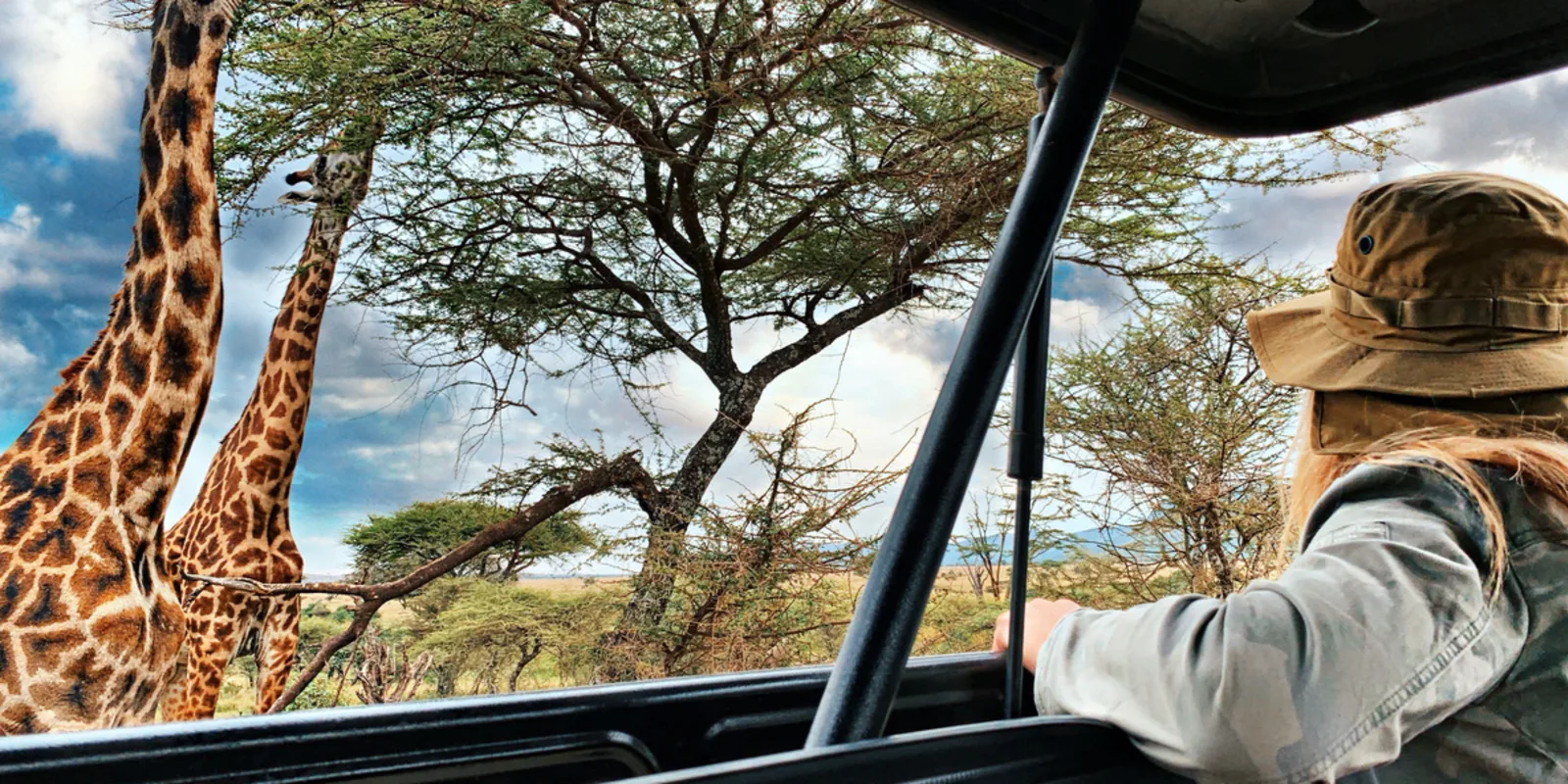
I saw a wide range of wildlife, including lions, elephants, giraffes, zebras, and more. Some drives focused on different parts of the park, while others followed animal movements.
I stayed in a safari lodge, close to nature, with early nights and early mornings.
After the Serengeti, I made my way toward the Ngorongoro Conservation Area, with a stop at Lake Manyara along the way.
I spent some time exploring the park, known for its lush landscapes, diverse birdlife, and tree-climbing lions. The scenery here felt completely different, from dense forests to the lake’s open shores.
Then, I continued to the Ngorongoro Conservation Area. I spent a full day exploring the crater, driving down early in the morning and staying for several hours. Wildlife was easy to spot due to the compact area, and I moved between different spots inside the crater.
Days 8–9: Tarangire National Park
Next, I continued to Tarangire National Park.
Here, I went on more game drives, focusing on different parts of the park. I spent time around areas known for large elephant herds and passed by the well-known baobab trees.
The schedule was similar, morning and afternoon drives, with time at the lodge in between.
After the safari portion, I flew to Zanzibar.
I checked into a beach resort and spent these days at a slower pace. I visited Stone Town, walking through its narrow streets and shops, and explored some historical sites.
The rest of the time was spent by the beach, with optional activities like snorkeling and boat trips.
Day 14: Wrapping Up the Trip
On the final day, I had some free time to revisit places, do a bit of shopping, and prepare for departure.
After that, I headed to the airport for my flight back home.
First Impressions of Tanzania
1. Arrival: My First Minutes in Tanzania
I landed at Kilimanjaro International Airport at six in the morning. The terminal was small and unhurried, and the air outside, hot, dusty, carrying some mix of red earth and dry grass and diesel, hit me the second I stepped through the doors. My first feeling wasn't excitement. It was a kind of electric anxiety. I was here. Fourteen days stretched ahead. Now what?
The drive from the airport into Arusha was my actual introduction to Tanzania. Vendors lined the road selling fruit, phone credit, and somehow mattresses. Tuk-tuks weaved between trucks. A woman balanced an enormous bundle on her head without touching it with her hands. Everything moved at a pace that felt both chaotic and completely intentional, like a rhythm I hadn’t learned yet.
2. Expectations vs. reality
From Arusha, I continued into the Serengeti, the part of the journey I had imagined most. I expected Tanzania to feel cinematic: golden plains, dramatic light, animals appearing on cue like a perfectly produced nature film. And at first, it did.
But it also felt completely, disarmingly real. The Serengeti wasn’t a backdrop, it was a living, breathing ecosystem that had been running for millions of years before I arrived, on a schedule entirely its own.
On my first game drive, my guide and I sat for nearly an hour watching a pride of lions sleep under a thorn tree. Nothing happened and nobody moved. My guide was completely unbothered.
I, on the other hand, was quietly impatient, until it slowly clicked that the watching itself was the experience.
3. First Days on Safari: What Stood Out
The Great Migration was mid-flow during my visit, hundreds of thousands of wildebeest moving across the plains, creating a low, constant rumble you could feel before you could hear.
Dawn game drives brought a kind of light I had never seen before, amber, almost liquid, turning the grass to gold and the animals into silhouettes from another time.
On day five, I saw my first leopard, draped over an acacia branch like a living coat, still, effortless, and completely indifferent to everything below.
At night, the sounds from my tent felt almost unreal, hyenas calling, lions coughing somewhere in the distance, the sharp, unfamiliar bark of zebras. It wasn’t silence, but something fuller. A living darkness, nothing like a city night.
And above it all, the sky, far from any light pollution, was so dense with stars it felt almost exaggerated, like something painted rather than real.
- The smells: red dust, rain on hot earth, roasting maize from roadside stalls, the sharp animal scent of the bush at dawn
- The sounds: birdsong I couldn’t name, a hippo’s low grunt at dusk, Swahili radio drifting softly from the safari vehicle
- The light: warm, amber tones in the late afternoon that make everything look painted, I understood immediately why photographers come here
- The people: warm and unhurried, with no performance or pressure, just a quiet, genuine welcome
5. My Mindset: Enthusiastic, Naïve, and Wonderfully Wrong
In those first days, I moved through Tanzania like a checklist.
Big Five:
Lion — check
Elephant — check
Leopard — check
I photographed everything. I used my three words of Swahili at every opportunity.And somewhere along the way, I convinced myself that a few days in the bush meant I understood the country. I didn’t.
My last impression of Tanzania
By the time I reached the second half of the trip, I started to notice something changing, not in Tanzania, but in the way I was experiencing it.
When I first arrived, everything felt external. I was observing, documenting, trying to understand the place through what I could see. By now, that had shifted into something quieter, less urgent. I wasn’t trying to “capture” Tanzania anymore, I was starting to sit within it.
1.Ngorongoro Crater: a world within a world
I descended into the Ngorongoro Crater on day seven, and it was the first moment in the trip where I put my camera down for more than ten minutes, not because there was nothing to photograph, but because I genuinely forgot about it.
The crater is unlike anything else in Tanzania. It's a collapsed volcanic caldera roughly 260 square kilometres wide, and inside it, 25,000 animals live in a self-contained ecosystem, lions, elephants, black rhino, vast herds of wildebeest, flamingos turning the soda lake pink at the edges. The walls rise steeply around you, and within them the world feels sealed and ancient and somehow miniaturised, like nature's own terrarium running at full scale.
We drove to the lake at dawn and watched the flamingos feed in the shallows. Nobody in the vehicle spoke for nearly twenty minutes.
2. Maasai country: what the second week reveals about people
On day nine, near Lake Manyara, we visited a Maasai boma.
I’ll be honest — I had low expectations. Cultural village visits can feel staged, and my first encounter earlier in the trip had felt exactly like that. Looking back, I realised that I came from the same mindset I started the journey with, moving quickly, observing from the outside, assuming I understood what I was seeing.
This was different.
We were invited in by a family, not a tour setup. We sat inside their low mud-and-dung house, sharing tea with an elder, while his wife showed me how she creates the intricate beaded jewellery, each colour and pattern carrying meaning.
She laughed at my attempt to replicate it, kindly and without hesitation, and that small, genuine moment stayed with me longer than any structured experience.
I arrived in Zanzibar expecting paradise, the same way I had arrived in Tanzania expecting a cinematic safari. Again, the reality was different. Better, but more complex.
Stone Town, the old quarter of Zanzibar City, is a UNESCO World Heritage Site and one of the most layered places I’ve ever walked through. At the beginning of the trip, I would have rushed through a place like this, trying to see everything. Now, I move slower.
Its narrow streets, sometimes so tight you can brush both walls, were shaped by centuries of trade, when Zanzibar stood at the crossroads of Arab, Indian, African, and European worlds.
That history is everywhere: in the carved wooden doors, in the call to prayer echoing across rooftops, and in the food, Zanzibari biryani rich with spices, saffron, and slow-cooked depth.
But what stayed with me were the quieter moments:
- The Forodhani Gardens night market, with vendors grilling seafood under string lights as dhows drifted in the background
- A spice farm where I learned cloves grow as flower buds and nutmeg comes wrapped in bright red lace
- Matemwe beach at sunrise, no noise, just fishermen pulling boats through still water under a pink-gold sky
- A conversation with an old man in a Stone Town alley who had lived through the 1964 Zanzibar Revolution, speaking calmly and pressing a carved clove into my hand
- The west coast sunsets, some of the best I’ve ever seen
At the beginning of the trip, I was looking for highlights. By now, the highlights were the pauses.
First Impressions vs. Last Impressions
Week One vs. Week Two
1. Tanzania
First impression, Week One: Tanzania is wildlife. The animals consume everything. The Serengeti is the story, the Migration is the headline, and every hour is measured by what you spotted on the last game drive.
Last impression, Week Two: Tanzania is the people. The wildlife is extraordinary, but the country’s true character, its patience, warmth, and quiet pride, lives in its people and their deep, centuries-old relationship with the land.
2. Arusha
First impression: Arusha is chaotic and overwhelming. Traffic, noise, vendors, dala-dalas moving in every direction, it felt like a system I didn’t understand, something to navigate rather than enjoy.
Last impression: Arusha has a rhythm you learn. Returning on day fourteen, I could finally read it, the flow of traffic, the logic of the markets, the ease between people. Same city, completely different experience.
3. Zanzibar
First impression: Zanzibar is a beautiful beach destination. Turquoise water, white sand, perfect sunsets, I thought I understood it before even stepping into Stone Town.
Last impression: Zanzibar is a civilisation in miniature. Centuries of Arab, Indian, African, and European influence live side by side, in its architecture, food, language, and people. The beach, in the end, felt like the least interesting part.
What actually changes My perception
-
Time matters: Two weeks is the sweet spot. One week feels like a highlight reel, but around day seven, the experience shifts, from novelty to familiarity, and into something closer to real understanding.
-
Choose immersion over comfort: Upscale lodges can make Tanzania feel like a staged experience. But local guesthouses, eating where locals eat, and unplanned moments offer a more genuine connection. The contrast between both is part of the journey.
-
Understand the season: Tanzania changes completely with the seasons. The dry season brings golden, dramatic landscapes, while the rainy season transforms it into something green, lush, and less predictable.
-
Let go of control: The best moments come when you stop following the plan too closely. Tanzania rewards patience, and the slower you move, the more it reveals.
Tips for anyone going
-
Don’t judge Tanzania too quickly: The first 48 hours can feel overwhelming. Give yourself a few days to adjust, by day four, the country starts to make more sense.
-
Keep a daily notebook: Write honest reflections, not captions. Looking back at earlier entries later in the trip gives you a clearer sense of how your perspective has changed.
-
Leave room for unplanned days: Build in at least two days with no fixed schedule. Wander, get lost in Stone Town, or sit somewhere with no agenda, these often become the most memorable moments.
-
Choose the right guide: A guide who truly loves Tanzania can completely shape your experience. The right person adds far more value than any luxury upgrade.
-
Go beyond the guidebook: Visit places that aren’t heavily recommended, like Matemwe Beach. The best discoveries often happen when you follow your curiosity.
-
Put your camera down: At least once a day, especially in the second week. Some moments are better experienced fully, they stay with you longer than any photo.
FAQs
Q1. What are first vs last impressions in travel?
First impressions are your instant reactions when you arrive somewhere, shaped by expectations, emotions, and culture shock. Last impressions are what you feel at the end of your journey, when experience replaces surprise and deeper understanding sets in.
Q2. Why do travel first impressions change over time?
Because your brain adapts. At first, everything feels new or unfamiliar. But as you spend more time in a place, confusion turns into comfort, and observation turns into understanding.
Q3. What changes between first and last impressions?
What you notice shifts completely, from visuals and “wow moments” to people, emotions, and atmosphere. You stop looking at a place and start feeling it.
Q4. Why are last impressions more meaningful than first impressions?
Because they’re shaped by experience, not assumption. They carry context, connection, and emotional depth, not just reaction.
Q5. Can travel change the way you think about places?
Yes, especially longer trips. Travel often shifts your focus from sightseeing to understanding people, pace, and everyday life.
Q6. Is 2 weeks enough for Tanzania?
Yes, 2 weeks is often considered the ideal balance. It gives you enough time for safaris, national parks, and Zanzibar without feeling rushed, while still allowing moments of rest and exploration.
Q7. What animals can I see on a Tanzania safari?
You can see the Big Five, lions, elephants, leopards, buffalo, and rhinos, along with giraffes, zebras, wildebeest, hippos, crocodiles, and hundreds of bird species.
Q8. What is Arusha like for travelers?
Arusha is busy, energetic, and chaotic at first. But once you adjust, you start to see its rhythm — local markets, street life, and the real starting point of most safaris.
Q9- Is Zanzibar only a beach destination?
Not at all. While it has stunning beaches, Zanzibar is also rich in history, culture, and architecture — especially in Stone Town and its spice farms.
Q10. How should I prepare for a Tanzania trip?
Be ready for long travel days, early mornings on safari, changing climates, and a mix of luxury and simplicity depending on your itinerary.

Join the discussion