



The Destination: What Turkey Actually Is
I have been to Turkey three times. The first time, I was twenty-four, counting coins, sleeping in a Sultanahmet hostel. The second time, I had a proper job and booked a boutique hotel in Galata with a rooftop view and a Turkish breakfast that took up half the table. The third time, I was invited on a trip that put me in a suite overlooking the Bosphorus, with a private guide, a sunset yacht, and a cave room in Cappadocia that had its own plunge pool.
Same country. Same week in spring. Completely different versions of the same place. So I decided to write it all down, honestly, side by side, across three cities that together represent what Turkey actually is:
- Istanbul: the ancient, chaotic, beautiful capital of two empires
- Cappadocia: the volcanic landscape of fairy chimneys and hot air balloons
- Pamukkale: the white thermal terraces that look like a landscape from a dream
One destination. Three budget levels. One question: is Turkey's magic available to everyone, or does it live behind a price wall? The honest answer surprised me. And it will probably surprise you too.
The Destination: What Turkey Actually Is
Before we get into budgets, you need to understand what you are walking into. Because Turkey is not a destination you can summarise quickly.
1. Istanbul
Istanbul is a city that has been the capital of two of history's greatest empires, the Byzantine and the Ottoman, and it carries that weight visibly. You feel it in the stone, in the skyline, in the way a single neighbourhood can contain a 6th-century basilica, a 17th-century mosque, and a third-wave coffee shop on the same block.
I visited the same four landmarks at all three budget levels.
-
Hagia Sophia: Built in 537 AD. Originally a cathedral, then a mosque, then a museum, now a mosque again. You walk through the same doors whether you arrived by hostel shuttle or private car. The dome is 55 metres above your head and it does not care what you paid for your bed last night.
-
The Blue Mosque (Sultan Ahmed Mosque): Directly across from Hagia Sophia, built between 1609 and 1616, the only mosque in Istanbul with six minarets. Free to enter. The budget traveler and the luxury guest stand in the same courtyard.
-
The Grand Bazaar: Over 4,000 shops, 61 covered streets, built in the 1450s. Free to walk. The air smells of leather and spice and something else I have never been able to name. No ticket required.
-
The Bosphorus: The strait dividing Europe from Asia. A public ferry crosses it for $1.20. A private yacht at sunset costs $1,000+. Both are extraordinary. I have done both. I will explain which one I preferred.
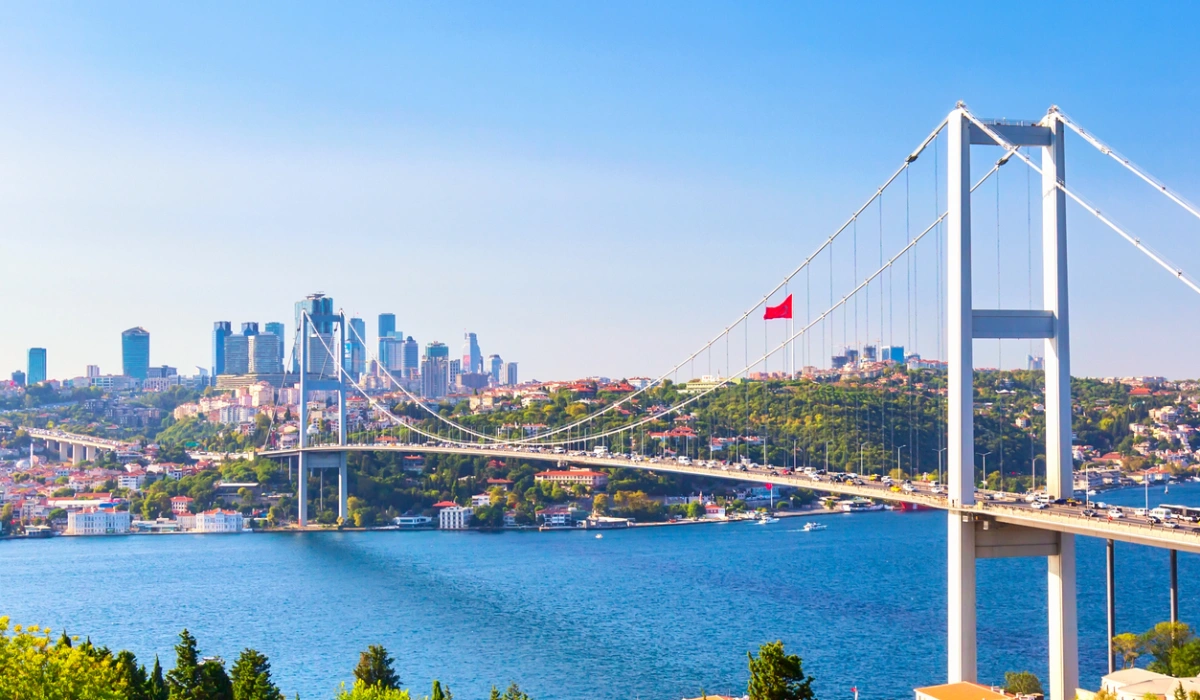
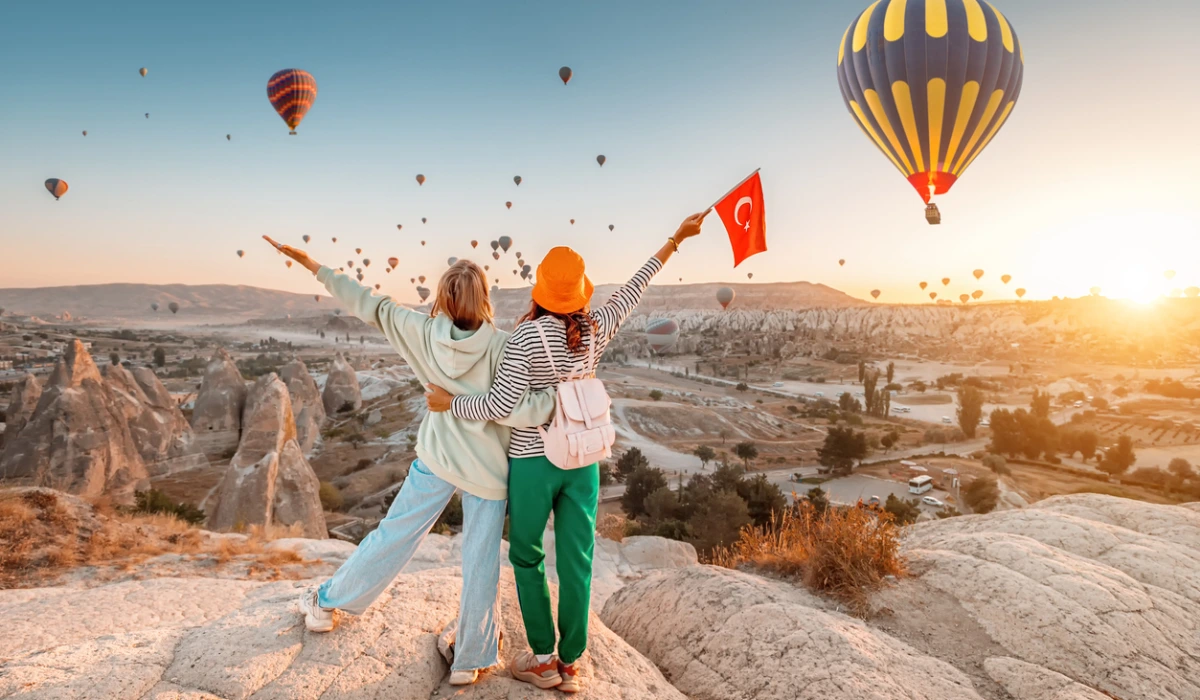
I did not believe Cappadocia was real until I stood in it. Millions of years of volcanic eruptions and wind erosion created a landscape of soft tuff rock formations, fairy chimneys, cave churches, underground cities, that no amount of Instagram preparation actually prepares you for. The town of Göreme is the base. Every morning, dozens of hot air balloons rise over the valleys at sunrise. At every budget, you can be part of that.
3. Pamukkale
In southwestern Turkey, geothermal springs have been depositing calcium carbonate down a hillside for thousands of years, creating blinding white terraced pools, Pamukkale, Turkish for 'cotton castle.' You walk barefoot on them. The water is warm. Adjacent to the terraces are the ruins of the ancient Greco-Roman city of Hierapolis. The whole site costs around $34 to enter. It is one of the most surreal places I have ever walked through, and the price of entry is the same for everyone.

The Budget Experience: $40–$70 a Day
I ate a simit on the Galata Bridge at 7am, watching fishing lines drop into the Golden Horn below me. It cost thirty cents. It was one of the best breakfasts I have ever had.
Where I Slept
In Istanbul, I stayed in a hostel in Sultanahmet, $20–$25 a night for a dorm bed, a ten minutes' walk from Hagia Sophia.
In Cappadocia, the hostel in Göreme was a different story. My bed was carved into actual tufa rock. The walls were stone. The common area had a terrace with a direct view of the valley. For $25-$30 a night, it was the most atmospheric room I stayed in across all three budget levels.
In Pamukkale, I found a family-run guesthouse in the village for $28-$35 a night. The owner's mother brought tea to the rooftop at 6pm without being asked. We watched the terraces turn gold in the sunset. No luxury hotel I stayed in matched that moment.
What I Ate
- Turkish street food is not budget food in the pejorative sense. It is the food Turkey actually runs on.
- Simit: sesame bread ring from street carts: $0.30. I ate one every single morning.
- Doner kebab wrap from a stand: $2.50–$4. Lamb shaved from a rotating spit, tucked into bread with tomato, onion, and yoghurt sauce. I ate this for lunch more times than I can count.
- Lahmacun: paper-thin flatbread with spiced minced meat: $1.50–$2. Roll it up, add parsley, squeeze lemon. Perfect.
- Lokanta plate: the Turkish workers' canteen. Soup, main course, bread, tea: $5–$8. Sit at a communal table. Nobody looks at you strangely. Eat what the locals eat.
- Çay everywhere: $0.30–$0.60. Turkey runs on tea. So did I.
How I Moved
The Istanbul Kart is one of the best pieces of urban infrastructure I have encountered anywhere. A single card covers the tram, metro, funicular, and ferry. Each ride costs $0.80–$1. A full day of city movement, across the Galata Bridge, up to Taksim, back along the waterfront, cost me under $5.
The Bosphorus public ferry from Eminönü to Üsküdar takes twenty minutes and costs $1.20. You stand on the deck as the skyline opens on both sides of you, minarets and modern towers and the green hills of Asia. The overnight bus from Istanbul to Cappadocia was ten hours and cost $25–$30. I arrived at dawn, groggy and stiff, to find the balloon fleet already rising over the valleys. Worth every uncomfortable hour.
Free Viewpoints and What You Discover by Walking
- Pierre Loti Hill: free funicular, panoramic view of the Golden Horn and the old city rooftops.
- Galata Tower area: no need to pay entry; the streets around it are the attraction.
- Pamukkale terraces at opening time (8am): before the tour groups arrive, the white pools reflect the sky and it is just you and the silence.

The Mid-Range Experience: $100–$180 a Day
The boutique hotel in Galata had a roof terrace. I sat up there with a glass of Turkish red wine at 9pm, watching the lights of the Bosphorus bridge in the distance. It cost me $110 for the night. I felt rich.
Mid-range in Turkey is where the country really starts to open up. Not because you need money to see Turkey. But because at this level, Turkey starts doing things for you instead of making you work for them.
Where I Slept
The boutique hotel in Galata was everything the Sultanahmet hostel was not: quiet, stylish, a real bed with actual pillows, exposed stone walls that made it feel historic without feeling old, and a breakfast spread that could have been a meal in itself. Olives, white cheese, fresh tomatoes, boiled eggs, honey, clotted cream, warm bread, tea. That is a Turkish breakfast. It was included in the room rate.
The cave hotel in Cappadocia was the revelation of the entire trip. My room was carved into tuff rock. The ceiling arched above me in pale stone. There was a small terrace outside my door with a direct view of the valley. I paid $130 a night and would have paid more without hesitation. There is no equivalent experience in European boutique travel at that price point.
In Pamukkale, the mid-range thermal hotel had a rooftop pool fed by the actual geothermal springs that created the terraces. I sat in 36-degree mineral water at 10pm, looking down at the white cascades lit by moonlight. That cost $85 a night.
How I Ate
A meyhane dinner in Istanbul is an experience that belongs to no particular budget — but the mid-range version is the one I would recommend to anyone visiting for the first time. You sit down, and the meze arrives before you have decided anything: hummus, ezme, white cheese, grilled aubergine, stuffed vine leaves, fried calamari. Then the main course. Then raki, the anise spirit that goes cloudy when you add water, that the Turks drink slowly and seriously. The dinner lasted three hours. It cost $35 per person. I did not want it to end.
In Cappadocia, I ordered the testi kebab, lamb slow-cooked inside a sealed clay pot, brought to the table and cracked open in front of you. The steam and the smell arrived before the food did. $20. One of the best things I have eaten anywhere.
Tours and What a Guide Actually Changes
I had visited Hagia Sophia twice before, once on a budget, once just wandering. The third time, I went with a licensed guide. It was a different building. She showed me the galleries where the Byzantine empress watched services from above. She pointed out the Ottoman medallions hanging beside the original Christian mosaics, two empires in the same room, neither erasing the other entirely. Context does not change the architecture. It changes whether you understand what you are looking at.
The Bosphorus evening ferry cruise, not the public ferry, but the dinner cruise, was $65 and included a meal, live classical Turkish music, and two hours on the water as the city lit up around us. I watched the silhouettes of the mosques from the water. It was the most purely beautiful evening I spent in Istanbul.
The Luxury Experience: $400–$1,000+ a Day
I woke up at 5:45am in a cave suite in Cappadocia with a plunge pool on the terrace, watched a private hot air balloon rise with two people in it over the valley, and thought: there are some experiences that have no budget equivalent. This is one of them.
I want to be honest about luxury in Turkey, because the easy version of this section would be to just describe the beautiful things and leave it at that. The more honest version includes where luxury earns its price, and where it does not.
Where I Slept
In Istanbul, I stayed at Çırağan Palace Kempinski, a restored 19th-century Ottoman palace sitting directly on the Bosphorus, fifteen minutes by private car from the city centre. The room was $750 a night. The bathroom was larger than my first apartment. The view from the bed was of the Asian shore across the water, lit in the early morning like a painting.
What the luxury tier in Istanbul cannot fully buy you is silence. The city is what it is. Traffic exists. The call to prayer comes through the walls at 5am regardless of your room rate.
In Cappadocia, I stayed at the Museum Hotel, and this is where I would argue the luxury tier is worth every single lira. My suite was carved from ancient tuff. The terrace had a plunge pool. Below me, the entire valley spread out in the dark, and at 6am the balloon fleet rose into the pink sky above it. The hotel's private breakfast, delivered to the terrace, not to a dining room ,was served on ceramic dishes with local honey and fresh pastries. I sat there for two hours. I have never been less in a hurry in my life.
In Pamukkale, the Richmond Thermal Hotel had a full spa using the same mineral water that built the terraces outside. A private thermal treatment cost $180. I came out feeling like I had been rebuilt from the inside.
How I Ate
Dinner at Mikla in Istanbul is served on the rooftop of the Marmara Pera hotel, with a 360-degree view of the city. Chef Mehmet Gürs cooks modern Anatolian food, Turkish ingredients, contemporary technique, a tasting menu that reads like a map of the country.
The meal cost $130 per person. It was one of the ten best meals I have ever eaten, and I say that as someone who has eaten in a lot of expensive restaurants.
In Cappadocia, dinner at Seki Restaurant in the Museum Hotel was served on a stone terrace with the valley behind it. Five courses. Local wine. A lamb slow-cooked in clay for eight hours that came apart at the touch of a fork. $110 per person.
The Experiences That Only Open at This Level
Private Hagia Sophia tour:
- Access to upper galleries requiring special arrangement
- Visit specific spots where late-afternoon light hits the gold mosaics
- Two-hour discussion with a historian (20 years of study)
- Provides depth and understanding beyond comfort
Private sunset Bosphorus cruise ($1,200 for 4 people)
- Departure from Beşiktaş at 6pm, returned at 10pm
- Four-hour experience compared to 20-minute public ferry
- Enjoyed bridges at golden hour, minarets at sunset
- Focus on indulgence and immersive experience rather than cost
What Stayed the Same at Every Budget
This is the most important thing I want to tell you about Turkey. Because the travel industry, including travel blogs, has a tendency to make expensive experiences sound like they are accessing something the budget traveler cannot reach. In Turkey, that is often simply not true.
1.The Historic Sites Belong to Everyone
Most of Turkey’s historical sites are surprisingly accessible on a budget, some are free, and others have low entry fees that are the same for every visitor, no matter where you stayed the night before. There’s no “premium version” of these experiences: whether you’re a budget traveler or staying in a luxury hotel, you enter the same doors, touch the same stone, and see the same views.
2. The Culture Is Not For Sale
Turkish hospitality is not a service standard calibrated to your room rate. It is a cultural instinct that operates independently of your budget. The shopkeeper in the Grand Bazaar who pressed a glass of tea into my hand was not calculating my net worth. The guesthouse owner in Pamukkale who invited me to her roof at sunset was not checking my booking confirmation. That is Turkey. At every price point.
3. The Food Scales, But Doesn't Disappear
The finest Turkish meal I ate across all three trips was probably the testi kebab in a mid-range Cappadocia restaurant at $20. The most memorable single food moment was the $0.30 simit on the Galata Bridge at 7am. The most technically impressive was the Mikla tasting menu at $130 per person.
All three were Turkish foods. All three were extraordinary. The ingredients change, the setting changes, the technique changes, but the tradition behind it, the generosity of the table, the instinct to feed people well: that does not change with your budget.
4. The Landscape Ignores Your Budget Completely
The fairy chimneys of Cappadocia look the same from a free hiking trail as they do from a private balloon. Pamukkale's terraces are equally white and equally surreal whether you arrive by $2 dolmuş or private transfer. The Bosphorus at sunset costs $1.20 on the public ferry and $1,200 on a private yacht, and both are genuinely, undeniably spectacular.
The Honest Truth: Turkey's magic lives in its geography, its history, and its people. None of those things are priced. Money buys comfort, speed, and access to certain exclusive experiences. It does not buy the thing that makes Turkey worth going to.
Turkey Travel Budget
Which Budget Gave the Best Value?
Mid-range. Without hesitation, without caveat. At $100–$180 per day, Turkey gives you more per dollar than almost any comparable destination in the world. The cave hotel in Cappadocia at $130 a night, the meyhane dinner at $35 per person, the Bosphorus cruise at $65, these are experiences that would cost two or three times as much in Western Europe and feel half as authentic. The currency differential amplifies mid-range spending into something that genuinely feels luxurious.
If you are visiting Turkey for the first time and you have a choice, spend at the mid-range level. You will come home feeling rich.
Is Luxury Worth It?
Luxury in Turkey is worth it if you are able and willing to see the country through a different lens. It doesn’t just buy comfort, it opens doors to unique experiences, private access, and moments that are impossible to replicate at lower budgets. From private guided tours and exclusive viewpoints to intimate accommodations and special culinary experiences, luxury allows you to experience Turkey in ways that are richer, deeper, and more personal. If your goal is not just to see Turkey, but to truly feel it differently, then luxury can be absolutely worth it.
Who Should Choose Each Level?
Choose budget if:
- You are travelling solo and the social energy of a hostel is part of the point
- You have two weeks or more and you need to manage costs across a bigger trip
- You want to feel Turkey at street level, in the markets, the lokantas, the ferry queues
- You are the kind of traveler who gets more pleasure from a $0.30 simit on a bridge than a $30 hotel breakfast
Choose mid-range if:
- You are visiting Turkey for the first time and you want comfort without stress
- You are travelling as a couple and want the cave hotel experience in Cappadocia, this is the must-do of mid-range Turkey
- You want guided context at the major sites without a fully choreographed itinerary
- You want the best value-to-experience ratio of any destination in Europe or the Middle East
Choose luxury if:
- You are on a honeymoon or significant anniversary and Cappadocia is on your list — this is the correct answer
- You are a repeat visitor who has done Turkey once or twice and wants to go deeper, not just cover more ground
- Your time is more limited than your budget and private transfers, skip-the-line access, and concierge planning are genuinely worth money to you
FAQs
Q1. Can you travel the same place on a budget and luxury?
Yes! You can visit the same destination at very different budget levels. The sights, landscapes, and cultural experiences remain the same, but your accommodations, dining, and access to private tours or exclusive experiences may vary.
Q2. Does budget travel ruin the experience of a destination?
Not at all. Budget travel can actually enhance your experience by forcing you to explore more authentically. You’ll walk through local streets, eat street food, and discover hidden spots that many luxury travelers might miss. While you might miss certain high-end perks, the essence of the destination remains fully accessible.
Q3. Can you have a luxury experience on a budget trip?
Absolutely. Even on a budget, you can enjoy unique moments that feel luxurious, like sunrise views, cultural events, or stunning landscapes. The key is choosing the right experiences and timing.
Q4. What do you miss out on when traveling on a tight budget?
With a tight budget, you may miss private tours, premium accommodations, fine dining, and exclusive access to certain experiences. However, you still get the core essence of a destination, the history, scenery, and culture.
Q5. Is it worth spending more money to travel in comfort?
It depends on your priorities. Spending more can bring convenience, privacy, and curated experiences, which may save time and stress. For some, this enhances the enjoyment of a destination; for others, the local, hands-on experience matters more. Luxury adds comfort, not necessarily a better connection to the place.
Q6. How to plan a trip to one destination at different budgets?
Start by listing what’s essential for your experience: attractions, accommodations, food, and transportation. Then research the range of options in each category, from hostels to boutique hotels to luxury resorts. Decide which experiences you want to splurge on and where you can save. Booking flexible tours or transport allows you to mix and match budgets.
Q7. How much money do I need per day in Turkey?
For a budget traveler: $40–$70/day covers hostels, street food, and public transport. Mid-range: $100–$180/day allows boutique hotels, restaurant meals, and guided tours. Luxury: $400–$1,000+/day includes private transfers, high-end accommodations, and exclusive experiences. Prices may vary depending on season and city.
Q8. Is Turkey worth visiting on any budget?
Yes! Turkey is one of those rare destinations that offers unforgettable experiences for every budget. Whether you’re traveling on a shoestring or indulging in luxury, you can enjoy stunning landscapes, rich history, vibrant markets, and authentic cuisine.
Q9. Is luxury travel in Turkey worth the extra cost?
Luxury travel can be worth it if you want exclusive access, privacy, and comfort. Private tours, high-end cave hotels, or Bosphorus yachts offer experiences that budget travel cannot replicate. However, the country’s beauty, history, and culture remain accessible to all, regardless of budget.
Q10. What is the best budget for a week in Turkey?
- Budget: $210–$420 for 7 days covers hostels, street food, public transport, and low-cost activities.
- Mid-range: $700–$1,260 for boutique hotels, guided tours, and restaurant meals.
- Luxury: $2,800–$7,000+ for 5-star stays, private tours, and fine dining.
Your choice depends on how much comfort, convenience, and exclusive experiences you want.

Join the discussion