



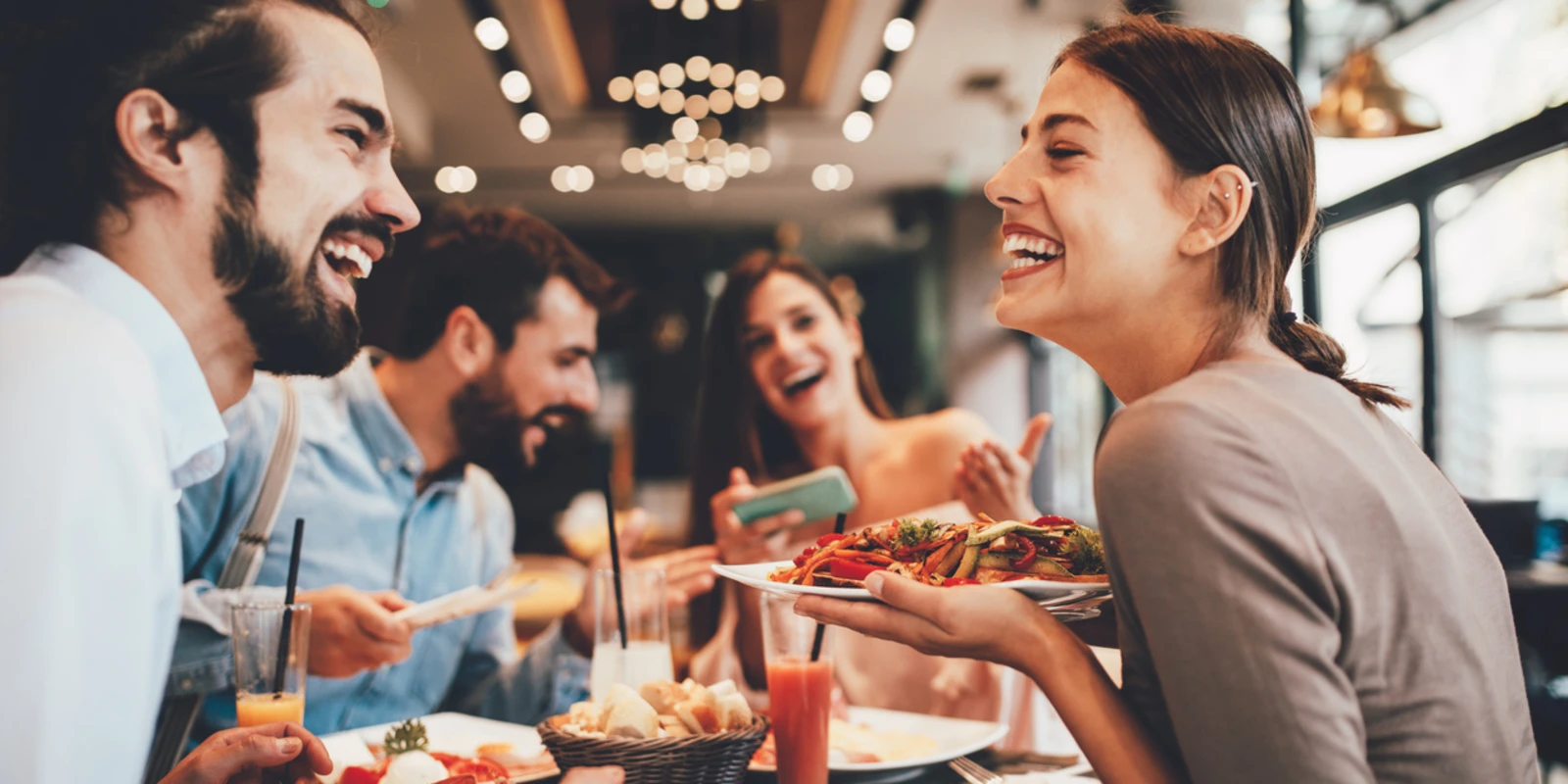
Food as Communication: The Language You Already Speak
You've just landed in a new city.
You could go to the museum. You could follow the guidebook to the famous monument. You could take the hop-on hop-off bus and see everything from a window.
Or you could find where the locals eat breakfast.
That second choice will teach you more about a place in one hour than a full day of sightseeing. Because food is not just fuel. It is a language — and every culture speaks it fluently, constantly, and without thinking.
Food as Communication: The Language You Already Speak
Every language has grammar, vocabulary, and meaning. Food has all three.
The grammar is technique, how a culture applies heat, which methods it trusts, how long it is willing to wait for something good. The vocabulary is ingredients, what grows there, what was traded for, what was stolen by colonizers, and what was proudly kept. And the meaning is everything else: who sits where, who serves whom, whether you eat with your hands or your cutlery, whether silence at the table is respect or rudeness.
When you eat local food the right way, in the right place, with the right people, you are not just eating. You are listening.
A dish is never just a dish. It is a record of a people's history. The spice trade is written into an Indian curry. The French colonization of Morocco is present in a tagine. The Japanese philosophy of patience and precision lives inside a bowl of ramen that took 18 hours to make.
Every meal is a sentence. Every shared table is a conversation.
The problem is that most travelers eat translations, tourist restaurants that have smoothed out the dialect, adjusted the heat, and simplified the grammar for foreign palates. It tastes fine. But it says almost nothing.
The real language is spoken somewhere else entirely.
Japan: The Art of Surrender
Japan: The Art of Surrender
Japan teaches you something the moment you sit down at the right kind of restaurant. You are not in charge here.
Omakase, the Japanese tradition of letting the chef decide what you eat, translates literally as "I leave it up to you." You sit at the counter. The chef works in silence. Small plates arrive one at a time, each one a complete thought. There is no menu to hide behind. No safe option to default to. You receive what you are given, and you respond with attention.
This is not just a dining format. It is a philosophy. Japan's food culture is built on the idea that mastery deserves trust. The chef has spent decades learning this. Your job is to receive that learning with respect. The food tells you this before you've even tasted it.
Watch how sushi is made in a traditional restaurant. The rice is seasoned with the precision of a musician tuning an instrument. The fish is cut at a specific angle for a specific reason. Nothing is arbitrary. Nothing is decorative. Every element serves the whole.
Japan taught me that food can be a form of meditation, for the person making it and the person eating it.

Morocco: The Table Has No Head
Morocco: The Table Has No Head
In Morocco, the table does not have a head.
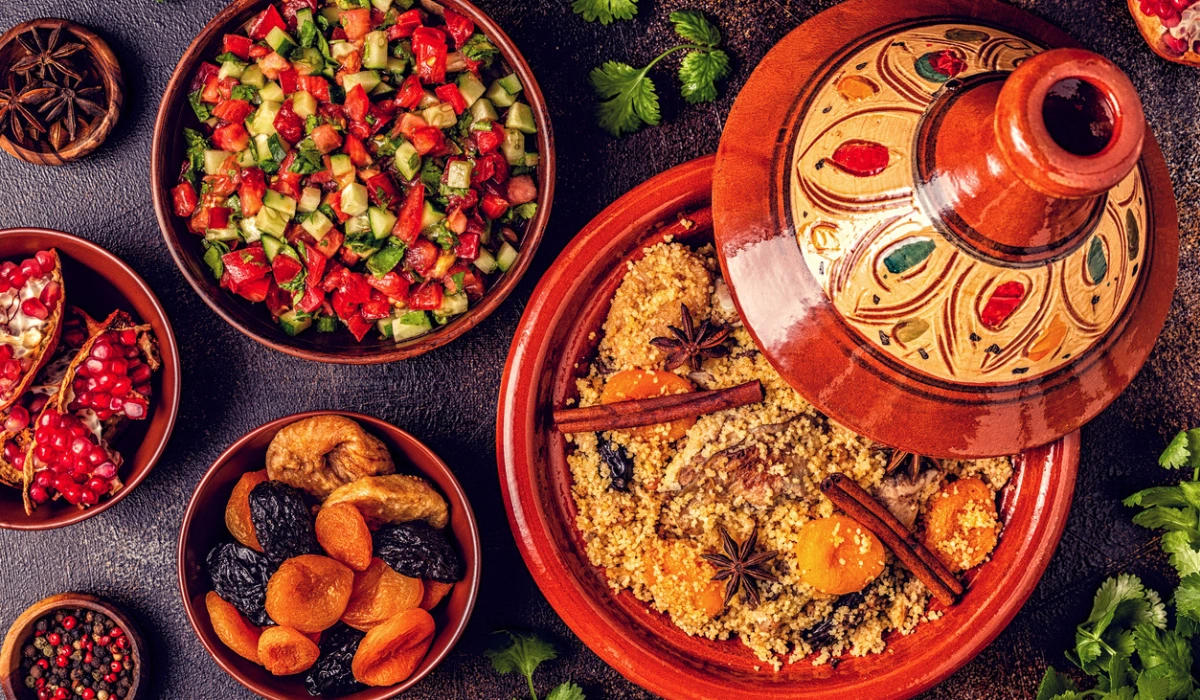
A traditional Moroccan meal is served in a tagine, a conical clay pot placed in the center of the table. Everyone reaches in. Everyone eats from the same vessel. There is no individual plate to protect. No portion that is yours and only yours. This is not accidental.
Moroccan food culture is built on the concept of communal generosity. The host does not eat until the guest has eaten. The best piece — the tenderest meat, the most aromatic corner of the dish — goes to the visitor. To refuse food in Morocco is to refuse the relationship being offered. Sit with a Moroccan family for a meal and you will understand the culture's values more clearly than any history book could explain them.
The food also speaks of geography and trade. Saffron from the Atlas Mountains. Preserved lemons that take weeks to prepare. Ras el hanout — a spice blend that can contain over 30 ingredients — is assembled differently in every household, a fingerprint of that family's taste and memory.
Every tagine is somebody's grandmother's sentence. It just takes a willing ear to hear it.
Turkey: Hospitality as Architecture
Turkey: Hospitality as Architecture
A Turkish breakfast is not a meal. It is an argument.
An argument that the morning deserves your full attention. That sitting down matters. That rushing is a form of disrespect, to your food, your company, and yourself.
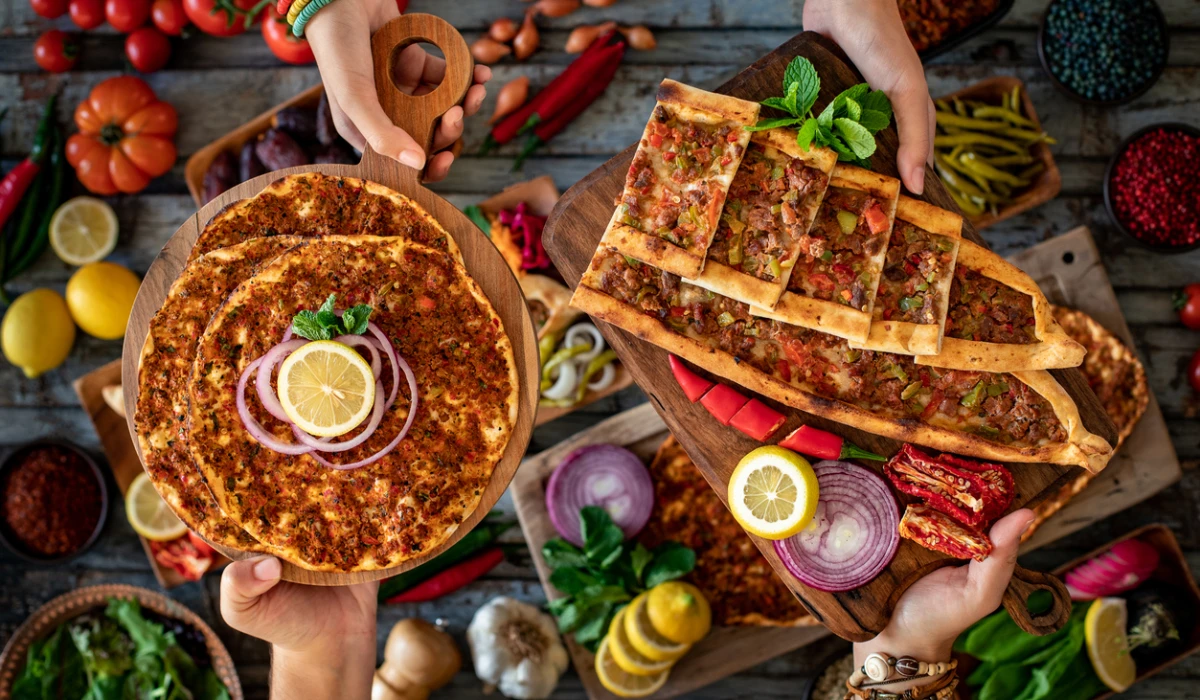
The spread arrives in stages. Cheeses of three or four varieties. Olives, green and black. Tomatoes, sliced simply. Cucumbers. Eggs cooked to order. Honeycomb. Three or four jams. Fresh bread, still warm. And tea — always tea — in small tulip-shaped glasses that are refilled without being asked. This is not a breakfast designed to be eaten quickly. It is designed to last two hours and produce conversation.
Turkish food culture encodes hospitality into its structure. You are not fed in Turkey, you are welcomed. The meal is the medium through which that welcome is expressed. Walk the streets of Istanbul's Eminönü neighborhood and the food speaks differently — louder, faster, on the move. Simit sellers with their sesame-crusted rings. Men grilling mackerel on boats moored under the Galata Bridge, folding the fish into bread and handing it across the water. Midye dolma vendors pressing mussels stuffed with spiced rice into your hand with a squeeze of lemon.
This is street food as democracy. Everyone eats the same thing, from the same hands, on the same bridge.
The food tells you: this city belongs to everyone.
India: Ritual at the Table
India: Ritual at the Table
India has no single food language. It has thirty.
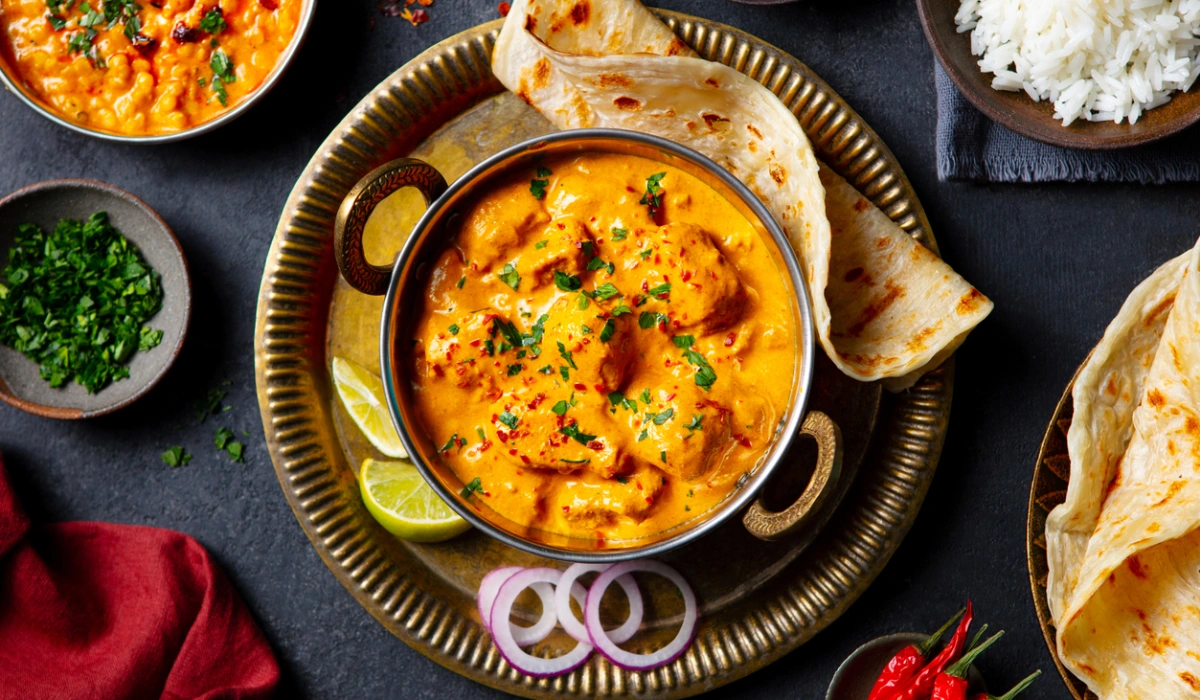
Every region of India speaks a completely different culinary dialect. The food of Kerala — light, coconut-forward, seasoned with curry leaf and mustard seed — bears almost no resemblance to the rich, ghee-heavy cooking of Rajasthan. The street food of Kolkata is a different universe from the thalis of Tamil Nadu. But some things cross all dialects.
Eating with your right hand is one of them. In much of India, food is meant to be felt before it is tasted. The pressure of your fingers tells you the temperature of the rice, the consistency of the dal, and whether the bread is ready to tear. Eating with your hands is not a lack of refinement. It is a deeper form of attention.
The thali — a round tray with small bowls arranged around a central portion of rice or bread — is another common grammar. Every element on the tray is there for a reason. The yogurt cools. The pickle sharpens. The dal grounds. The sweet arrives last, to close the meal properly. The thali is a complete sentence with a beginning, a middle, and an end.
And then there are the meals that are not meals at all — they are rituals. The prasad offered at a temple. The langar, the free community kitchen that operates in every Sikh gurdwara, is where people of every background sit together on the floor and eat the same simple food. The langar does not just feed people. It makes a statement about equality that no speech could improve on.
India's food says: we are many things, but we eat together.
Peru: Immigration Written in a Dish
Peru: Immigration Written in a Dish
Peru has one of the world's great undiscovered food stories.
In the late 19th and early 20th centuries, large numbers of Japanese and Chinese immigrants arrived in Peru, many brought to work in the mines and on the railways. They came with their own food traditions, Japanese precision, Chinese wok technique, and encountered Peru's extraordinary native ingredients. Potatoes in 3,000 varieties. Corn in colors that don't exist elsewhere. The intense sourness of lemons. The heat of Peruvian chilies. What emerged from that encounter was entirely new.
Nikkei cuisine, the Japanese-Peruvian fusion that developed over generations — is one of the most remarkable food stories in the world. Tiradito, Peru's answer to sashimi, uses Japanese raw-fish technique but dresses it in Peruvian leche de tigre — the citrus and chili marinade that also makes ceviche. It looks Japanese. It tastes Peruvian. It is something completely its own. This is what happens when two food languages meet, and neither one dominates. A new dialect is born.
Every plate of tiradito in Lima tells the story of immigration, adaptation, and the extraordinary creativity that happens when cultures eat together rather than separately.
Peru's food says: we are the sum of everyone who arrived here.

How to Actually Eat Local — A Practical Guide
How to Actually Eat Local — A Practical Guide
Reading about food languages is one thing. Accessing them on your next trip is another.
Here's how to get beyond the translation and into the real conversation.
- Eat breakfast where locals eat it. Breakfast is the meal most untouched by tourism. Find a neighborhood café or market stall before 9 am, and you will be the only visitor in the room. Order what everyone else is having.
- Follow the plastic chairs. In almost every country in the world, the best street food is served on plastic furniture. If the chairs are uncomfortable and the food smells extraordinary, you're in the right place.
- Ask who made this. In markets and small restaurants, asking about the food — where it comes from, how it's made, what's in it — opens conversations that guidebooks cannot. People respond to genuine curiosity about what they make.
- Eat in markets, not restaurants. A covered food market is where a city's food culture is preserved most honestly. The vendors are often third or fourth generation. The recipes haven't been adjusted for tourist palates. The prices are real.
- Learn one phrase in every country. "What do you recommend?" in the local language — however badly pronounced — signals respect. It says: I trust you. I am here to learn, not to consume. That signal changes how you are received.
- Resist the familiar. The moment you walk into a restaurant, because it looks like something from home, you have left the conversation. Stay in it. Order the thing you can't identify. Eat the dish that arrives looking nothing like what you expected. That is where the education is.
FAQs
Q1. What does "eating local" actually mean when traveling?
Eating local means choosing food that is made, sold, and consumed by the people who actually live in a place — not food that has been adapted for tourist expectations. It means street stalls over hotel restaurants, market lunches over guidebook recommendations, and following where the locals go rather than where the signs point. It doesn't require bravery — it requires curiosity.
Q2. Is it safe to eat street food when traveling?
In most destinations, street food is safe — and in many cases safer than restaurant food because it is cooked fresh to order in front of you. A useful rule: look for stalls with high turnover. If there is a queue of local people, the food is both good and safe. Avoid pre-cooked food that has been sitting out. Trust your senses — if it smells right and looks busy, it almost certainly is.
Q3. How do you find where locals actually eat?
Ask your hotel's housekeeper, not the concierge. Ask the taxi driver what he eats for lunch. Walk away from the main tourist street and look for handwritten menus, plastic chairs, and no English signage. Follow the office workers at noon — they know where the good, cheap food is. Local food apps and neighborhood Facebook groups are also increasingly useful for finding genuinely local spots.
Q4. Does food tourism mean something specific?
Food tourism — sometimes called culinary tourism or gastro-tourism — refers to travel motivated in whole or in part by food experiences. It ranges from visiting a destination specifically for its cuisine (Japan for ramen, Peru for ceviche, Italy for pasta) to incorporating food markets, cooking classes, and farm visits into a broader trip. It is one of the fastest-growing segments of the travel industry and is increasingly cited as one of the most meaningful ways to experience a culture.
Q5. Which countries have the strongest food cultures for travelers?
Japan, India, Morocco, Peru, Turkey, Mexico, Italy, Lebanon, and Georgia consistently rank among the world's most rewarding destinations for food-focused travel. What they share is regional diversity — no single dish defines them — and a culture where food is genuinely central to daily life rather than simply functional. The more important food is to a culture's identity, the more it rewards the traveler who pays attention.
Join the discussion