




-
The First Lesson: Food Is How People Say Things They Cannot Otherwise Say
-
The Second Lesson: How a Family Eats Tells You How a Society Is Organised
-
The Third Lesson: The Guest Is Sacre
-
The Fourth Lesson: Cooking Together Is the Conversation
-
The Fifth Lesson: The Table Is Where Time Slows Down
-
The Sixth Lesson: Eating Together Is a Political Act
-
What All of This Actually Means for How We Travel
-
Frequently Asked Questions
I have eaten in some extraordinary restaurants.
Candlelit tables in Florence. A rooftop in Beirut as the sun went down over the city. A tiny ramen counter in Tokyo where the chef hadn't changed his recipe in forty years and wasn't planning to start.
But the meals I remember most — the ones that actually changed how I understand the world — didn't happen in any of those places.
They happened at kitchen tables. On floor mats. Around clay pots passed between too many hands in rooms too small for the number of people in them. In homes where nobody spoke my language and I didn't speak theirs, and we fed each other anyway.
Eating with a family — a real family, in their home, with their food, at their pace — is one of the most quietly transformative experiences travel can offer. And it is almost impossible to replicate in a restaurant, however good that restaurant might be.
Here is what I have learned, one kitchen table at a time.
The First Lesson: Food Is How People Say Things They Cannot Otherwise Say
I was invited to dinner by a family in a small town outside Fes, Morocco, by a woman named Fatima whose son I had helped find directions for that afternoon. My Arabic was non-existent. Her English was three words. Her French was better than mine but not by much.
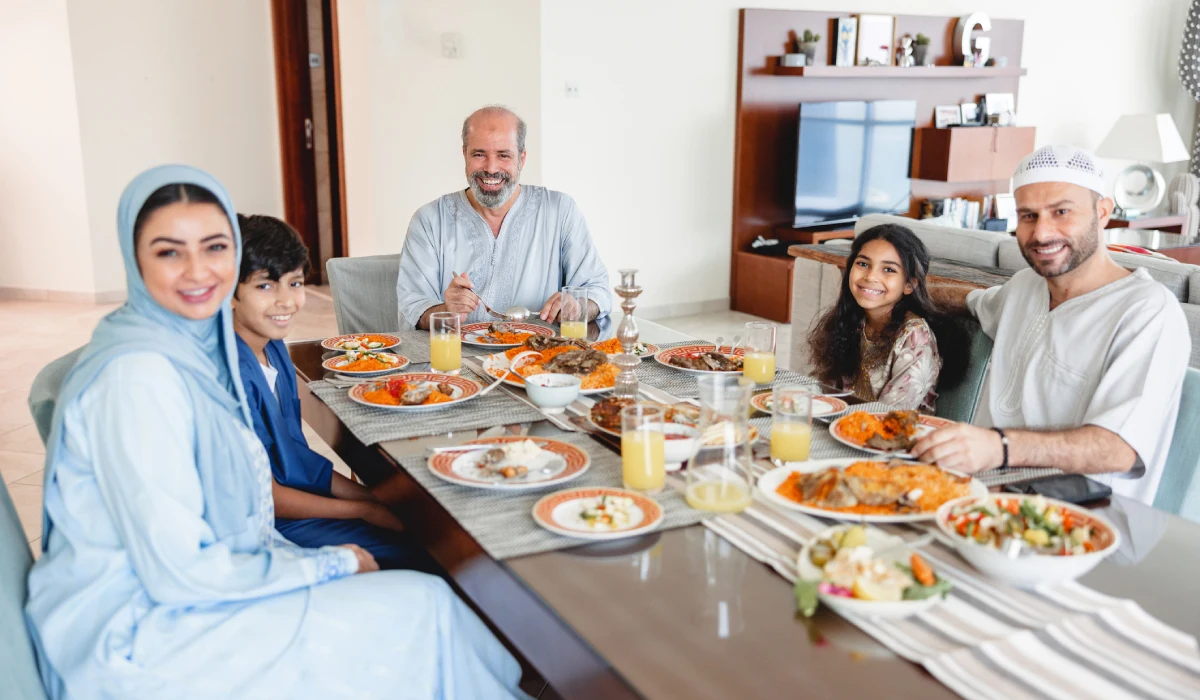
We sat on low cushions around a circular table. A tagine arrived — lamb, preserved lemon, olives, something herbed and deeply savoury that I still think about. Bread came in a basket. You ate from the communal dish, with your right hand or with the bread, and Fatima kept pushing the best pieces toward my side of the pot without saying a word. That pushing. That quiet, insistent generosity. That is something a restaurant cannot give you.
In a restaurant, the food arrives divided and portioned. It is already yours — a transaction has taken place. But at Fatima's table, the food belonged to everyone and was offered to me specifically. That is a fundamentally different thing. It is the physical expression of welcome.
I learned more about Moroccan hospitality in that two-hour meal than I had in three days of reading about it.
The Second Lesson: How a Family Eats Tells You How a Society Is Organised
A friend arranged for me to spend a weekend with a family in Kyoto. The father, Kenji, was an engineer. The mother, Yuki, taught primary school. They had two teenage daughters who were simultaneously fascinated and mortified by my presence at their table.
Breakfast was the revelation.
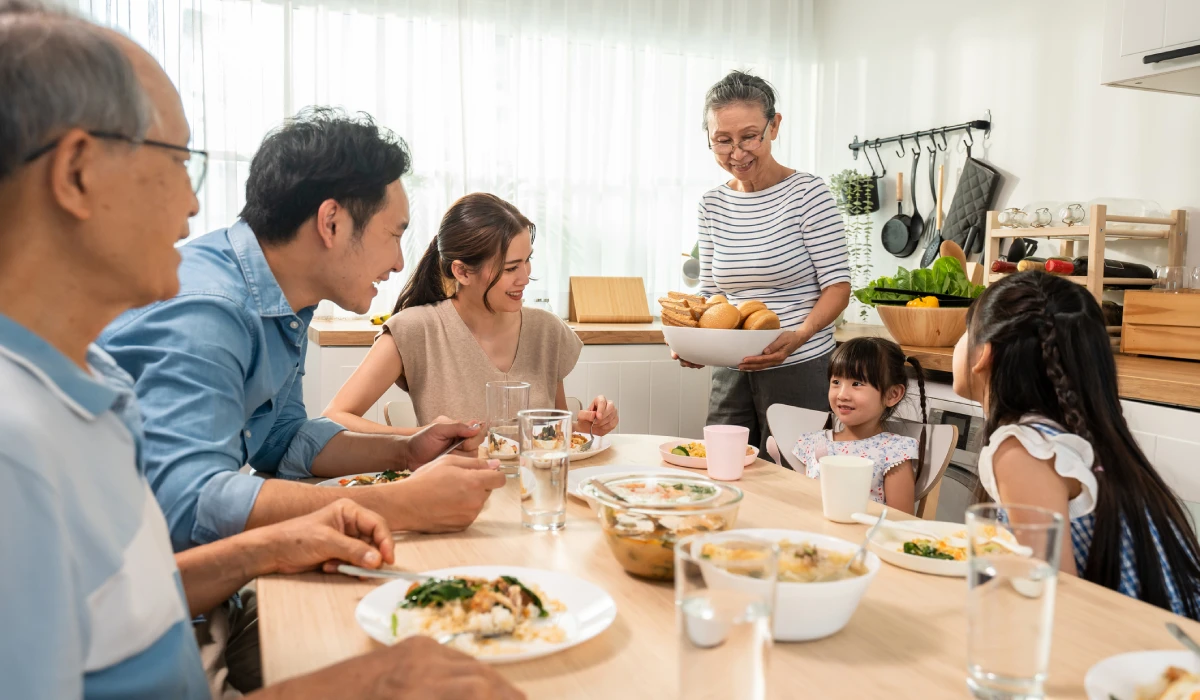
It was prepared by Yuki before 6:30am — miso soup, grilled fish, rice, pickled vegetables, a soft-boiled egg. Each dish was in its own small bowl, arranged with a care that felt almost ceremonial. Everyone sat at the same time.
Nobody touched their food until everyone was seated. The youngest daughter said something quietly before eating — a brief acknowledgment, an expression of gratitude for the food.
What I was watching was not just a meal. It was a society's values in miniature — the importance of preparation, of timing, of collective acknowledgment before individual consumption. The idea that starting matters properly. That gratitude is expressed before pleasure, not after.
You can eat Japanese food in a restaurant anywhere in the world. But you cannot eat it the way Yuki's family ate it, around that particular table, at that particular hour of the morning, with those particular rituals intact. That version only exists in homes.
Have you ever sat at a table that taught you something without a single word being spoken? That was Kyoto.
The Third Lesson: The Guest Is Sacre
In India, there is a concept called Atithi Devo Bhava — the guest is God. I had read the phrase. I did not truly understand it until I ate with a family in Rajasthan.
My host, Ramesh, was a farmer whose home was small and whose resources, I realised quickly, were carefully managed. And yet the meal he produced for me was extraordinary — dal baati churma, the traditional Rajasthani dish of baked wheat balls served with lentil curry and a sweet crumbled mixture — made from scratch, over a fire, by his wife and mother together, for several hours before I arrived.
Ramesh did not eat until I had eaten. His wife and mother did not sit at the table — they stood nearby, watching, and every time my bowl emptied they filled it again without asking. When I tried to refuse a third helping his mother looked at me with such genuine distress that I accepted immediately and ate the whole thing.
Afterwards, when I thanked Ramesh's wife through a translator, she said something that stopped me completely. She said: 'When a guest eats well in our home, it means we have done our job correctly.'
Not 'you are welcome.' Not 'it was nothing.' Your eating well is our success. Your satisfaction is our purpose.
A restaurant feeds you. A family like Ramesh's completes itself by feeding you. That is a distinction worth sitting with.

The Fourth Lesson: Cooking Together Is the Conversation
In Oaxaca, Mexico, I was invited to help prepare a meal rather than simply arrive for it. This was, I realised later, a far greater privilege than being fed.
The family — three generations of women, from grandmother to teenage granddaughter — were making mole negro. A real mole negro, the kind that involves thirty-plus ingredients, multiple types of dried chilli, charred onion, burnt tortilla, chocolate, and a process that takes most of a day. The grandmother, Consuelo, directed everything from a low stool in the corner, occasionally rising to stir or taste or shake her head at something that needed more time.
I was given the job of toasting chillies — a task that required more attention than I initially gave it and resulted in one small burning incident that produced more smoke than the rest of the morning combined. Consuelo found this very funny. Her granddaughter found it even funnier. We laughed together in a smoke-filled kitchen, and in that moment, the language barrier simply stopped existing.
What I learned that day is that cooking is not the preparation for connection — it is the connection itself. The conversation doesn't happen over the meal. It happens during the making of it, in the shared labour and the small disasters and the particular satisfaction of watching something complicated come together.
The mole negro, when it finally arrived, tasted of five hours of shared effort. No restaurant version has ever tasted quite the same.
The Fifth Lesson: The Table Is Where Time Slows Down
In a village on the island of Crete, I was invited to Sunday lunch by an elderly couple named Giorgos and Maria, who had been hosting the same extended family gathering every Sunday for forty years.
We sat down at 2pm. We did not leave the table until 7pm.
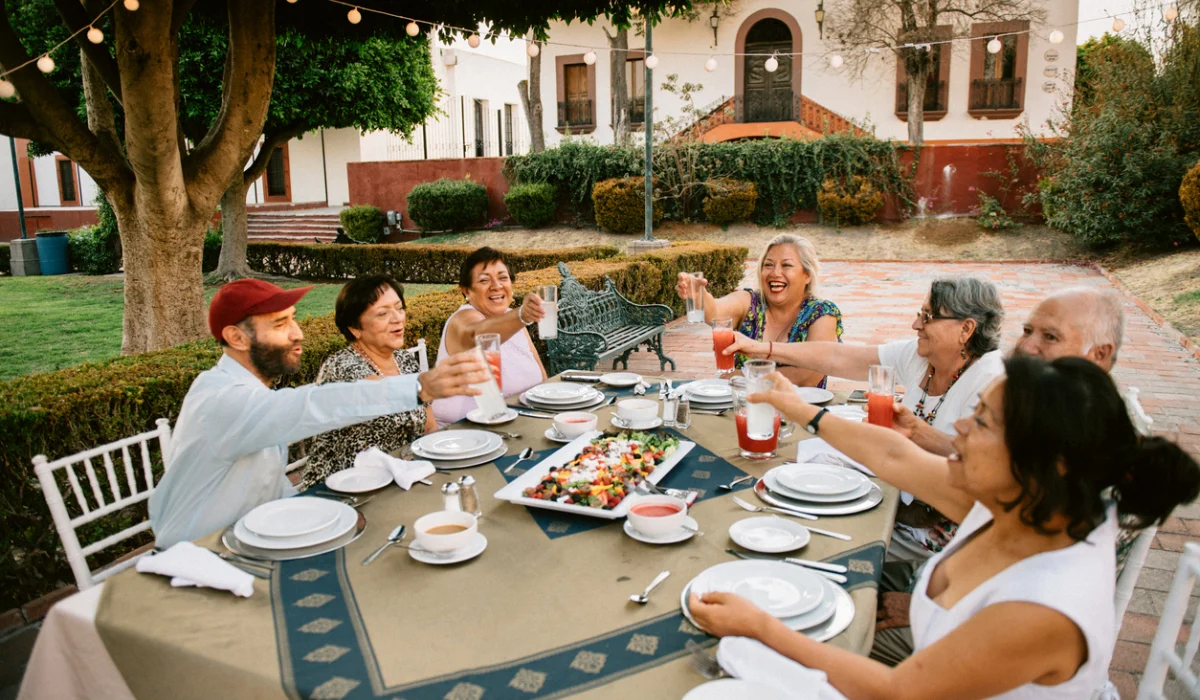
Five hours. The food came in waves — mezze to start, then slow-roasted lamb, then salads, then cheese, then fruit, then sweets, then coffee, then a small glass of raki. Between each course the conversation continued and the wine was refilled and someone told a story that made everyone argue cheerfully and then someone else told a better story.
At one point Giorgos's grandson — a boy of about eight — fell asleep in his chair and nobody moved him. He just slept there, part of the table, while the adults talked around him.
That image has stayed with me more than anything else from that afternoon. A child asleep at the table, included in the gathering even in sleep, because the table is where life happens and you don't remove children from life — you let them inhabit it at their own pace.
A restaurant has a turn. A restaurant has a bill and a next booking waiting. A family table in Crete has neither. It has only the day, and the people in it, and the entirely reasonable conviction that there is nowhere else anyone needs to be.
The Sixth Lesson: Eating Together Is a Political Act
In Addis Ababa, Ethiopia, I shared a meal with a family who practised gursha — the act of placing food directly into another person's mouth as an expression of love and trust.
I knew about gursha before this meal. I had read about it. And still, when my host Dawit loaded a piece of injera with stew and held it out to place in my mouth, something in me instinctively pulled back. Not from rudeness — from the sheer unfamiliarity of the gesture. It was intimate in a way I hadn't anticipated.
Dawit noticed my hesitation and smiled. 'It means I trust you,' he said. 'And I am saying you are welcome here — not as a guest, but as family.'
I accepted the gursha. And understood, immediately, why it matters so much.
Because the distance between people — cultural, historical, political, social — collapses completely in that gesture. You cannot perform gursha across a barrier. You cannot offer it insincerely. It is, by its nature, an act of genuine human closeness.
No restaurant teaches you that. A restaurant keeps the distance comfortable and appropriate. A family table, sometimes, asks you to close it entirely.

What All of This Actually Means for How We Travel
I am not suggesting restaurants are unimportant. They are extraordinary — the best ones are genuine works of art and culture, and I have no intention of stopping eating in them.
But a restaurant, by its nature, presents a country's food the way a museum presents its art — curated, considered, prepared for an audience. What you get in a home is the unedited version. The real recipes, the real rhythms, the real arguments about whether the sauce needs more salt.
Every family meal I have eaten abroad has taught me something a guidebook couldn't. In Morocco I learned that generosity is a physical act, not a sentiment. In Japan I learned that the way you begin a meal reflects the way you think a day should begin. In India I learned that being fed well by someone with little is one of the most humbling experiences available to a traveller. In Mexico I learned that cooking is its own language. In Crete I learned that time is not a resource to be managed but a gift to be spent. In Ethiopia I learned that trust can be offered in a single gesture.
These are not small things. These are the things that change how you move through the world.
How to Actually Make This Happen When You Travel
The most common question I get about this is: how? How do you get invited into someone's home? The answer is simpler — and less glamorous — than people expect.
Show genuine curiosity. Ask about food specifically — it is one of the subjects most people everywhere are genuinely proud of and happy to discuss. In markets, ask stallholders how they cook what they're selling. In neighbourhoods, ask locals where they eat rather than where tourists eat. These conversations, pursued with real interest, have a way of leading somewhere.
Look for organised home dining experiences. In many countries, community networks and social enterprises connect travellers with local families for meals — these are structured, mutually agreed arrangements that benefit both sides. They are not the same as a spontaneous invitation but they are genuinely valuable and often equally revealing.
Accept invitations when they come. This is the most important one. The instinct to politely decline — to avoid imposing, to protect your plans for the evening — is the instinct that costs you the most extraordinary experiences travel has to offer. When someone invites you to eat with their family, say yes.
Come with nothing and eat everything. Don't bring expectations about what the food will be. Don't bring dietary requirements you haven't genuinely negotiated in advance. Come open-handed and open-mouthed and let what arrives be what it is.
The Thing Restaurants Cannot Teach You
Here is what I have come to believe after years of eating at strangers' tables in countries I was still learning to navigate:
The world is not as divided as it looks from the outside. The same instincts are everywhere — the desire to feed people you care about, the pride in a dish made well, the specific pleasure of watching someone eat something you made and seeing that it is good. These things cross every border and every language and every cultural difference I have ever encountered.
A restaurant shows you a country's cuisine. A family table shows you its soul.
If you get the chance — and if you travel with any openness at all, you will get the chance — sit down, unfold your napkin, and stay as long as they'll have you.
You will leave knowing something you didn't know before. And it will not be about food.
Frequently Asked Questions
1. How do you get invited to eat with a local family when travelling?
Show genuine curiosity about food and ask questions in markets, neighbourhoods, and local restaurants. Many invitations come naturally from conversations that started with food. Organised home dining platforms and community networks in many countries also connect travellers with local hosts for shared meals — these are structured but genuinely valuable. The most important thing is to say yes when an invitation comes, which it will if you travel openly.
2. Is it appropriate to bring a gift when invited to a family home for dinner?
In most cultures, yes — and it is almost always appreciated. The specific gift varies: sweets or pastries work well in Morocco and the Middle East; fruit or good quality tea in Japan; something from your home country is universally well received as it carries a personal story. Avoid alcohol unless you are certain it will be welcome. The gesture matters far more than the value — arriving with something shows you understood that the invitation was significant.
3. What if you have dietary restrictions or allergies?
Genuine allergies must be communicated clearly in advance — use a translation app or card if language is a barrier, as this is a health matter that any host will take seriously. Preferences and mild intolerances are more nuanced — in many cultures, declining food that has been prepared specifically for you is genuinely hurtful, and a flexible approach serves everyone better. The best advice is to communicate any serious restrictions before the meal, and then eat as openly as you can within those limits.
4. How is eating with a local family different from eating at a local restaurant?
A restaurant presents food for an audience — curated, portioned, and separated from the context of daily life. A family meal is the unedited version of a culture: the real recipes, the actual rhythms of how people eat, the rituals and rules that never appear on a menu. You also participate differently — you are a guest, not a customer, which changes the entire dynamic of the experience. The food often tastes different too, for reasons that are partly practical and partly impossible to fully explain.
5. What is the most important thing to remember when eating as a guest in someone's home abroad?
Eat. This sounds obvious but it is the most important thing. Your host has prepared this food with care and often at real expense. Eating well — with visible enjoyment, with second helpings where offered, with genuine appreciation — is the most direct way to honour that. In most cultures around the world, a guest who eats heartily is a guest who has paid the highest compliment. Everything else — the right fork, the correct custom, the proper toast — matters far less than showing up hungry and leaving full.
Join the discussion