




-
It Started in Mesoamerica — And Nobody Was Sharing
-
Europe Got It First — And Mostly Misunderstood It
-
India: The Country That Made It Its Own Faster Than Anywhere Else
-
Korea: The Pepper That Arrived and Never Left
-
China: When Two Spicy Things Met and Made a Third
-
The Middle East and North Africa: Slow Burn, Deep Color
-
Britain: The Chili's Most Complicated Relationship
-
What This One Fruit Tells Us About Us
-
FAQs
Picture your grandmother's kitchen. The smell that hits you before you even open the door.
For a Korean grandmother, it's the deep, fermented punch of gochujang bubbling on the stove. For an Indian grandmother, it's dried red chilies crackling in hot oil, filling the whole house with something between warmth and a warning. For a Mexican grandmother in Oaxaca, it's the slow, smoky perfume of dried anchos soaking in water before they become mole.
Three grandmothers. Three continents. One ingredient — dressed up so differently that you'd never guess they were all cooking with the same fruit.
That's the chili pepper's genius.
It crossed one ocean roughly 500 years ago, landed in dozens of kitchens, and then disappeared so completely into each cuisine that every culture looked up one day and said: this has always been ours.
Let's trace it. Border by border.
It Started in Mesoamerica — And Nobody Was Sharing
The chili pepper is native to Mexico and Central America. Humans have been eating it for at least 6,000 years — possibly longer. Archaeological evidence from Mexican caves shows chili seeds dating back to around 4,000 BCE.
For the Aztecs, it wasn't just food. It was medicine, currency, and ritual. Aztec healers used it to treat infections. Merchants traded dried chilies like we trade stock. Children who misbehaved were sometimes punished by being held near burning chilies — a kind of ancient pepper spray.
The Aztec word for chili was chīlli. The Spanish heard something close to that and called it chile. The name stuck in most of the world, though the English eventually shortened it further and added their own confusion: chile, chili, chilli — all the same fruit, spelled three different ways depending on which passport you're holding.
When Hernán Cortés arrived in Mexico in 1519, chili was already everywhere. It flavored chocolate drinks. It went into stews. It was eaten fresh, dried, smoked, and ground. The Spanish took seeds back to Europe, and everything changed.
Europe Got It First — And Mostly Misunderstood It
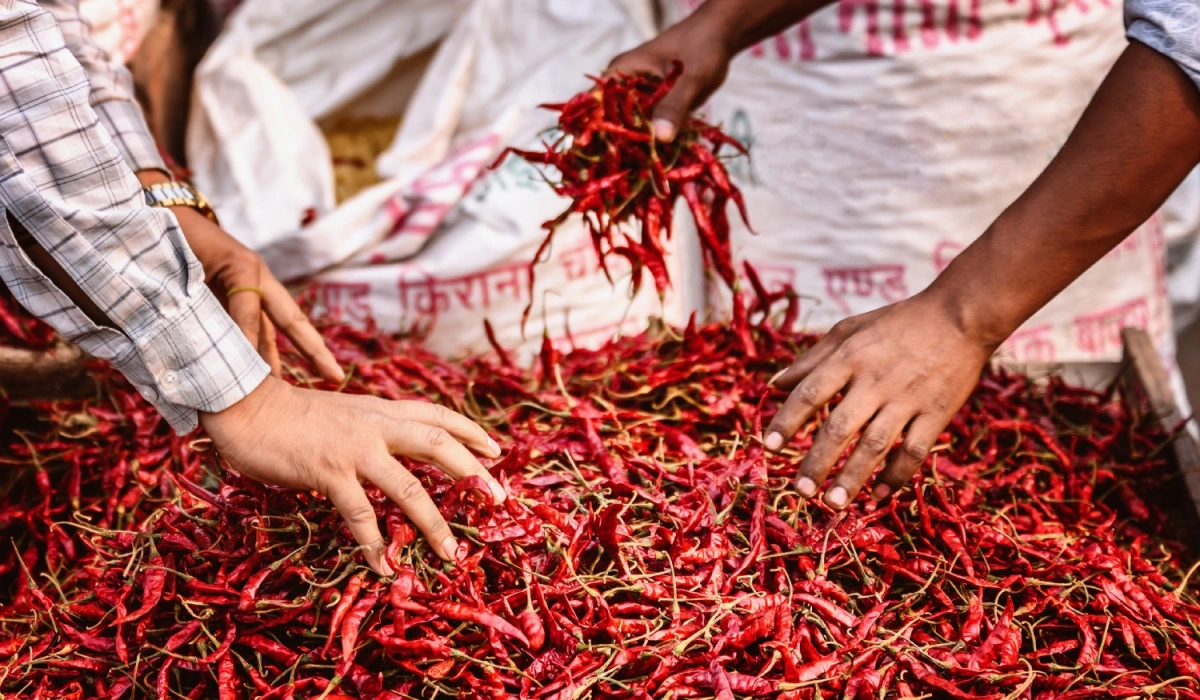
Here's something nobody tells you: Europe had the chili before India, before Korea, before China. The Spanish brought it to the Iberian Peninsula around 1500. And Europe, for the most part, shrugged.
They called it "Indian pepper," confusing it with the black pepper that was already wildly expensive and in high demand. The name is a small fossil of Columbus's famous navigation error.
The chili grew easily in European soil. It was cheap, pungent, and available to people who couldn't afford real black pepper. But European aristocratic kitchens mostly ignored it. It was peasant food, spice-of-the-poor, not worthy of fine dining.
That dismissal was, in retrospect, one of the great culinary miscalculations in history.
Because as European traders carried the chili east through Africa, around the Indian subcontinent, into Southeast Asia and China, every culture they passed through fell completely in love with it.
India: The Country That Made It Its Own Faster Than Anywhere Else
Ask most people where the chili comes from, and they'll say India. Ask them which cuisine is synonymous with chili heat, and they'll say Indian food.
Neither association is wrong — but both need an asterisk.
The Portuguese brought the chili to Goa in the early 1500s. Indian cooks, who had been using black pepper and long pepper for centuries to add heat to food, recognized something immediately: this new fruit was cheaper, more intense, and grew everywhere.
Within a hundred years, the chili had spread across the entire subcontinent. It wove itself into every regional cuisine so completely that Indian food without chili became almost unimaginable.
Here's what's remarkable about how India adopted the chili: it didn't just use it the same way everywhere. Each region built an entirely different relationship with it.
In Rajasthan, where the land is dry, and refrigeration was historically impossible, cooks learned to use chili as a preservative. Laal maas — a fiery red meat curry — uses Mathania chilies not just for heat but to keep the dish from spoiling in the desert heat.
In Kerala, the chili met coconut milk and became something gentle, something that burns slowly rather than immediately.
In Kashmir, the chili lost almost all its heat. Kashmiri chili is grown for its deep, brick-red color more than its fire. It's what gives rogan josh its gorgeous hue. You could eat a spoonful of Kashmiri chili powder and barely feel a thing.
One ingredient. One country. Dozens of different philosophical relationships with heat.

Korea: The Pepper That Arrived and Never Left
Korea didn't get the chili until around 1600, roughly a hundred years after India. The leading theory is that Japanese soldiers introduced it during the Imjin War (1592–1598), though some historians argue that Portuguese traders brought it through Japan earlier.
Regardless of how it arrived, what Korea did with it is extraordinary.
Before the chili, Korean food was seasoned with black pepper, ginger, and wild mountain greens. It was good. But when Koreans started fermenting the chili — mixing it with salt, garlic, and glutinous rice, and leaving it to sit for months — they created gochujang, a paste with a complexity that no single ingredient should be able to achieve.
Today, gochujang is more than a condiment. It's a foundational flavor, the same way butter is in French cooking or soy sauce is in Japanese cuisine. It sits on tables in every Korean home. It's the base of tteokbokki (spicy rice cakes), bibimbap sauce, and countless marinades.
I spoke once to a Korean food writer who told me her grandmother would check gochujang pots the way a winemaker checks barrels — sniffing, tasting, adjusting. "She treated it like a living thing," she said. "Because it is."
That's what Korea gave the chili: fermentation, patience, and the dignity of a long process.
China: When Two Spicy Things Met and Made a Third
The chili arrived in China probably through trade routes in the late 1500s. What happened in Sichuan province is one of the great culinary chemistry experiments in history.
Sichuan already had its own native spice: the Sichuan peppercorn. It doesn't taste like heat exactly — it creates a numbing, tingling sensation on the lips and tongue, like a mild electric buzz. Locals call the feeling má (numbing). When the chili arrived and brought là (spicy heat), cooks started combining them.
Málà. Numbing-and-hot together.
The combination is disorienting in the best possible way. The numbness from the peppercorn opens up the tongue and lips; the heat from the chili floods in behind it; then the numbing returns to cool things down. It cycles. It's addictive. Food scientists have studied it and confirmed that the two sensations genuinely interact neurologically — each amplifying the other.
Sichuan hotpot, mapo tofu, dan dan noodles — these dishes are now known globally. But they're not just "spicy food." They're the product of a very specific, very Sichuan conversation between a native spice and a traveling one.

The Middle East and North Africa: Slow Burn, Deep Color
The chili moved through the Ottoman Empire and down into North Africa, where it transformed again.
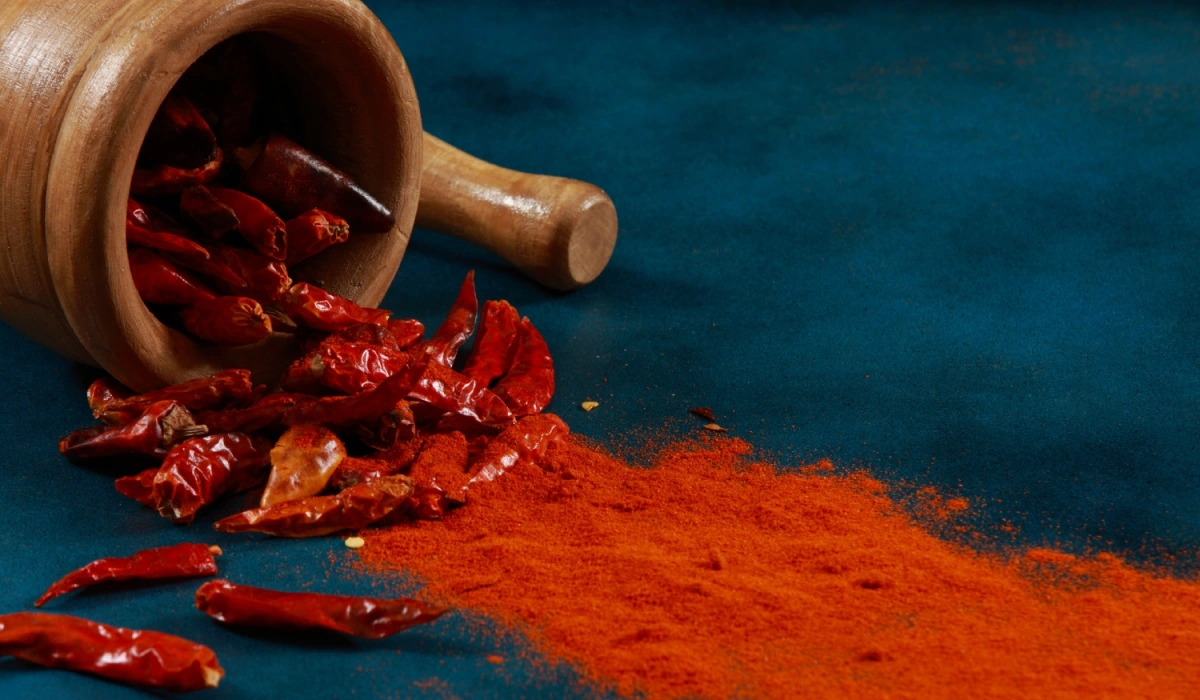
In Morocco, it became part of the preserved food culture. Harissa — a paste of dried chilies, garlic, olive oil, and spices — became a pantry staple across the Maghreb. It's spread on bread, stirred into couscous, spooned over eggs. It's not aggressively hot; it's layered, oily, complex.
In Turkey, the chili became Urfa biber: a dark, almost black dried pepper with a smoky, raisin-like sweetness. Farmers in the Urfa region dry their peppers in the sun by day and wrap them at night — the condensation creating a distinctly moist, oily texture found nowhere else.
At each stop on this journey, the chili was being asked: " Who are you here? And each time, it answered differently.
Britain: The Chili's Most Complicated Relationship
No story about the Chili's global journey is complete without stopping in Britain — specifically, at the dish that became Britain's unofficial national meal.
Chicken tikka masala.
The dish doesn't exist in India. It was invented, most likely, by South Asian immigrants and their descendants in British cities — adapting Indian cooking techniques to British tastes, which historically preferred milder, saucier, more tomato-forward food. The chili is there, but it's been negotiated.
Britain's relationship with chili is a story about immigration, adaptation, and who gets to define what's "authentic." The curry houses of Birmingham, Bradford, and East London created something genuinely new — a cuisine born from two worlds meeting. The chili, as always, crossed the border and became something it had never been before.
What This One Fruit Tells Us About Us
Here's what I think about when I trace the Chili's journey.
Every culture that adopted it had an existing flavor vocabulary — a set of tastes it already understood and loved. And the chili didn't replace that vocabulary. It learned to speak it.
In Korea, it became patient and fermented. In Sichuan, it became electric and numbing. In India, it became regional and medicinal. In Morocco, it became smoky and preserved. In Britain, it became mild enough for a country that once shuddered at the thought of spice.
The chili is a mirror. What you do with it tells you something about your climate, your history, your relationship with preservation and patience, and heat.
And the most remarkable thing? Every one of these cultures is absolutely convinced that the chili belongs to them.
They're all right.
FAQs
1. Where did the chili pepper originally come from?
The chili pepper originated in Mesoamerica — modern-day Mexico and Central America. Humans have been cultivating and eating chilies there for at least 6,000 years. Spanish conquistadors brought the fruit to Europe in the early 1500s, from where it spread across Africa, Asia, and the Middle East through trade routes.
2. Why does chili taste so different in different countries?
Because each culture didn't just adopt the chili — it transformed it. Differences in climate, drying methods, companion ingredients, and cooking techniques all change the final flavor dramatically. A chili dried in the Turkish sun tastes nothing like one fermented in Korean salt brine, even if they started as similar varieties. Soil, altitude, and local agriculture also affect the fruit itself.
3. Which country uses the most chili pepper in its cuisine?
By per capita consumption, South Korea and Mexico are consistently at the top. Koreans consume an estimated 2–4 grams of chili per person per day when you account for gochujang, kimchi, and daily cooking. India has the highest total volume of chili production globally, producing around 2 million metric tons per year and consuming most of it domestically.
4. Is the heat in chili actually a flavor, or is it a sensation?
Technically, it's a sensation, not a taste. The compound responsible — capsaicin — doesn't activate taste receptors. It activates pain receptors (specifically TRPV1 receptors) that normally respond to heat and physical damage. Your brain interprets it as burning. The reason people love it anyway is partly psychological, partly the endorphin release that follows. Regular chili eaters develop tolerance, which is why what seems intolerably hot to one person is "mild" to another.
5. Did Indian food always use chili, or was there a "before chili" period?
There was absolutely a before-chili period in Indian cuisine, though it's hard to picture now. Before the 1500s, Indian cooks added heat using long pepper (a relative of black pepper), black pepper itself, and ginger. Some ancient Indian recipes survive that show this older flavor profile — they're still complex and aromatic, but the heat is quieter and more diffuse. The chili arrived and, within a couple of centuries, became so dominant that the older spices faded from everyday use.

Join the discussion